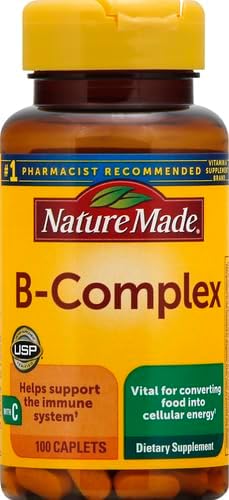
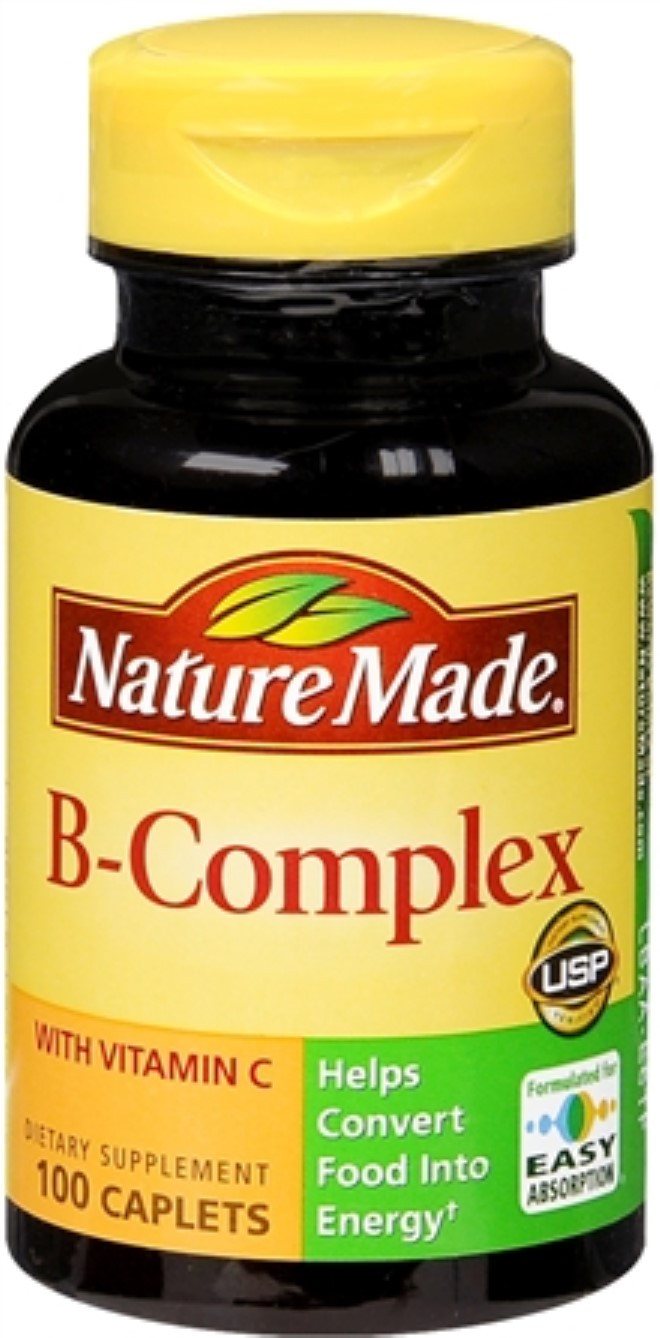
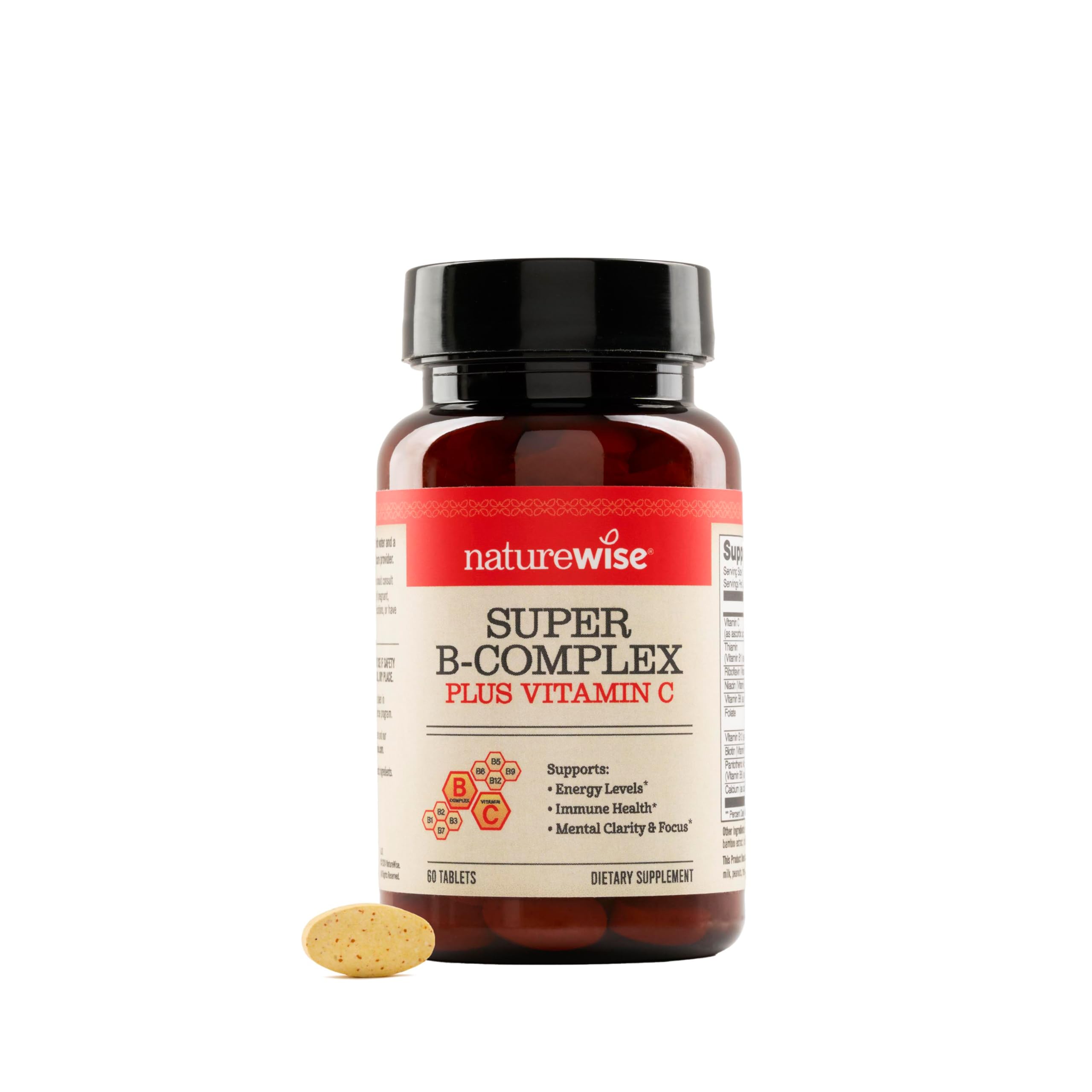
Despite the name, this B complex is missing two key players: **Vitamin B12** and **Folate** are completely absent. Of the B vitamins included, only **Niacin** at 50mg lands within the typical clinical range (25–500mg). **Thiamine**, **Riboflavin**, **Vitamin B6**, and **Pantothenic Acid** are all dosed at 20–60% of the studied effective range, so you're getting partial amounts across the board.
**Vitamin C** at 300mg is the strongest ingredient here — a reasonable daily dose for immune and antioxidant support, though the ascorbic acid form absorbs less efficiently at higher doses. The 175mg of **Calcium** from carbonate requires stomach acid to absorb and covers less than 18% of your daily needs.
The biggest gap is the missing B12 and folate. These two work together in red blood cell formation and nervous system function, and their absence means this product can't serve as a complete B complex. If you're looking for full B-vitamin coverage, you'd need to supplement those separately.
BioStacks
Best for
Ingredients (7)
Niacin
100%Dose
50 mg
Target
25–500 mg
Form
Standard
Pantothenic Acid
20%Dose
10 mg
Target
50–500 mg
Form
Premium
Vitamin B6
20%Dose
5 mg
Target
25–100 mg
Form
Premium
Vitamin C
100%Dose
300 mg
Target
250–2000 mg
Form
Budget
Riboflavin
57%Dose
14.3 mg
Target
25–100 mg
Form
Budget
Other Ingredients (3)
Microcrystalline CelluloseBinder
Plant-derived cellulose used as a binder and filler in supplements
Croscarmellose SodiumDisintegrant
Cross-linked cellulose derivative used as a superdisintegrant
Stearic AcidLubricant
Saturated fatty acid used as tablet lubricant
How to Take It
Best taken in the morning
Many people prefer B-vitamins earlier in the day; take with food to avoid nausea.
With food
Keep it away from high-oxalate foods like spinach
Space it a couple of hours from Iron, Magnesium and Zinc
On the label
Directions: As a vitamin supplement, adults take one (1) tablet daily with any meal or as directed by a healthcare provider. Do not exceed recommended dosage.
General guidance based on the ingredients, not a substitute for the label or your doctor.
Price Check
$7.49
Cheaper than 96% of 375 vitamin C supplements
Track this supplement in your stack
Get personalized insights, interactions, and coverage recommendations.
Get Started FreeSimilar Supplements
Sources & Scoring
Nutrient data (RDA, UL, and safety thresholds) sourced from the NIH Office of Dietary Supplements and the National Academies Dietary Reference Intakes (DRI).
This is not medical advice. Consult a healthcare provider before making changes to your supplement routine.
The score analyzes what's on the label: ingredient doses vs. studied ranges, chemical forms, evidence levels, and known interactions. It does not verify label accuracy or test for contaminants — for that, look for third-party certifications like USP or NSF.