All-in-one supplement companion app

Look up any supplement.
Supplements, nutrients, brands, and health areas — every active scored and cited.
Most looked-up nutrients
Top products in Magnesium
 SuperiorLabsMagnesium Glycinate100/100
 Natures CraftMagnesium Glycinate Powder100/100
 XYMOGENOptiMag Neuro (Mixed Berry)100/100
 Sports ResearchMagnesium Glycinate Chelated100/100
 Dr. MercolaMagnesium L-Threonate100/100
 Natural FactorsMagnesium Glycinate 200 mg100/100
 SwansonMagnesium L-Threonate100/100
 Webber NaturalsMagnesium Glycinate Complex 200 mg100/100
Common questions
Questions, answered.
BioStacks scans any supplement — by barcode or by photographing the Supplement Facts label — and scores it 0–100 against published clinical research: trial doses, form bioavailability, and evidence strength. Unlike barcode-only scanners, it never dead-ends on products missing from a database. Learn more →
Each ingredient is scored on three multiplied factors: clinical dose (your dose vs. the range used in human trials), form and bioavailability (magnesium glycinate scores far above oxide), and evidence weight (RCTs and meta-analyses count more than mechanism or tradition). A separate safety score — overdoses, interactions, inactive-ingredient ratings — can only lower the final number, never raise it. Learn more →
Yes. Point the camera at the Supplement Facts panel and BioStacks reads the ingredients, doses, and forms straight off the label, then scores the product on the spot — new launches, indie brands, and imported bottles included. Learn more →
The Stack Safety analysis sums every ingredient across all the products you take and flags totals above tolerable upper limits plus known risky combinations, like long-term zinc without copper. For prescription-drug interactions, share your stack link with a pharmacist. Learn more →
The dose range used in published clinical trials — not the Daily Value. Ashwagandha stress trials used 300–600 mg of root extract; berberine metabolic studies used 900–1,500 mg per day. A product with 5–10% of the studied dose is flagged as underdosed. Learn more →
Well-absorbed forms — glycinate or citrate — at 200–400 mg elemental magnesium match what sleep trials used. Oxide is poorly absorbed. The evidence is moderate: meta-analyses show modest improvements in sleep onset, mainly in older adults and people with low intake. Learn more →
A proprietary blend lists a total weight but hides each ingredient's dose, so you can't verify whether anything reaches a clinical dose. Unverifiable doses can't earn efficacy credit — blends are flagged and scored conservatively. Learn more →
Inactive ingredients are rated Safe / Caution / Avoid with plain-English explanations — for example titanium dioxide, banned as a food additive in the EU in 2022 over unresolved genotoxicity concerns, or purely cosmetic FD&C dyes. Learn more →
The app is free to download on iOS and Android, and scanning and scoring work without payment. An optional premium subscription unlocks the advanced analysis features.
The manifesto
The label is legal. The dose is too small to work.
Certified means a product is what it says it is. It never meant it was enough. We score what is actually in the bottle against published trials — dose, form, safety — so you know what works before you pay for it.
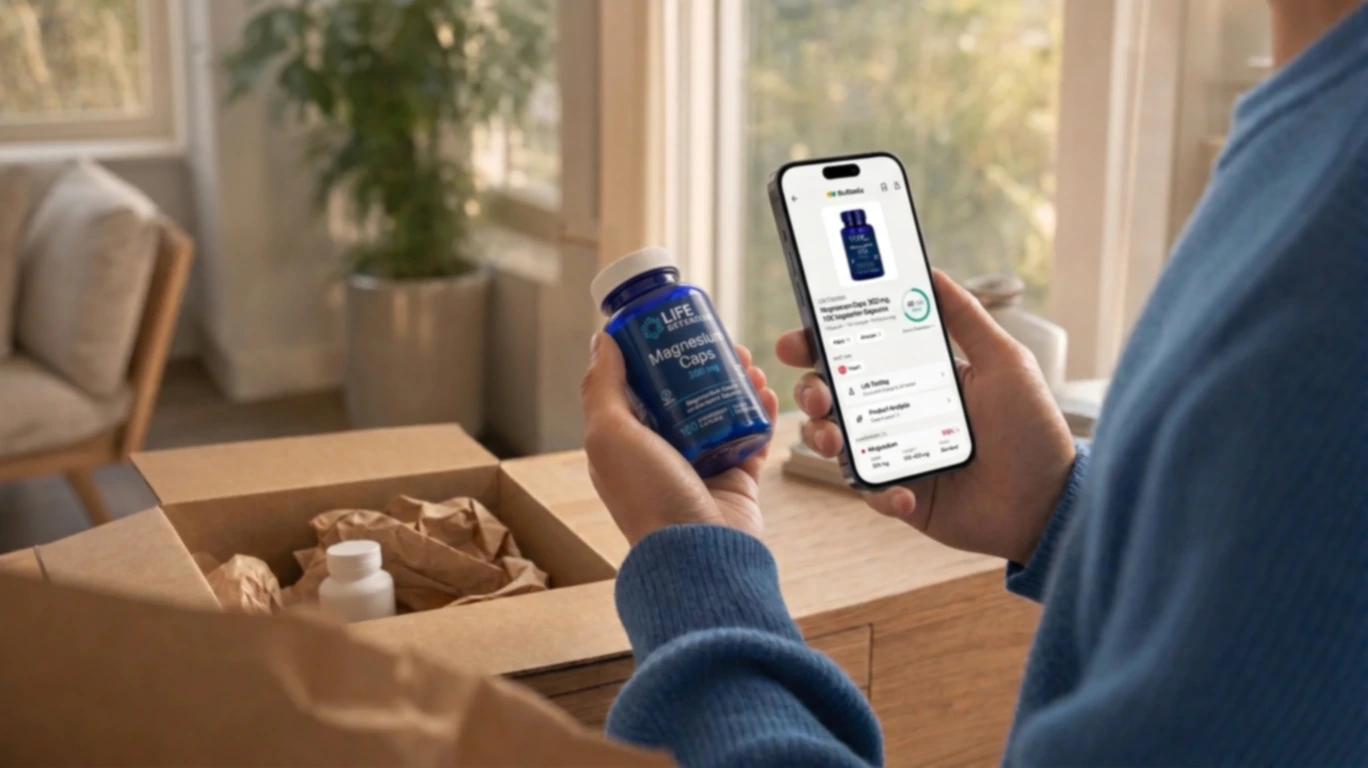
Next time you're holding a bottle
Scan it. Score it. Decide in seconds.
Not medical advice. Talk to a clinician before changing what you take.