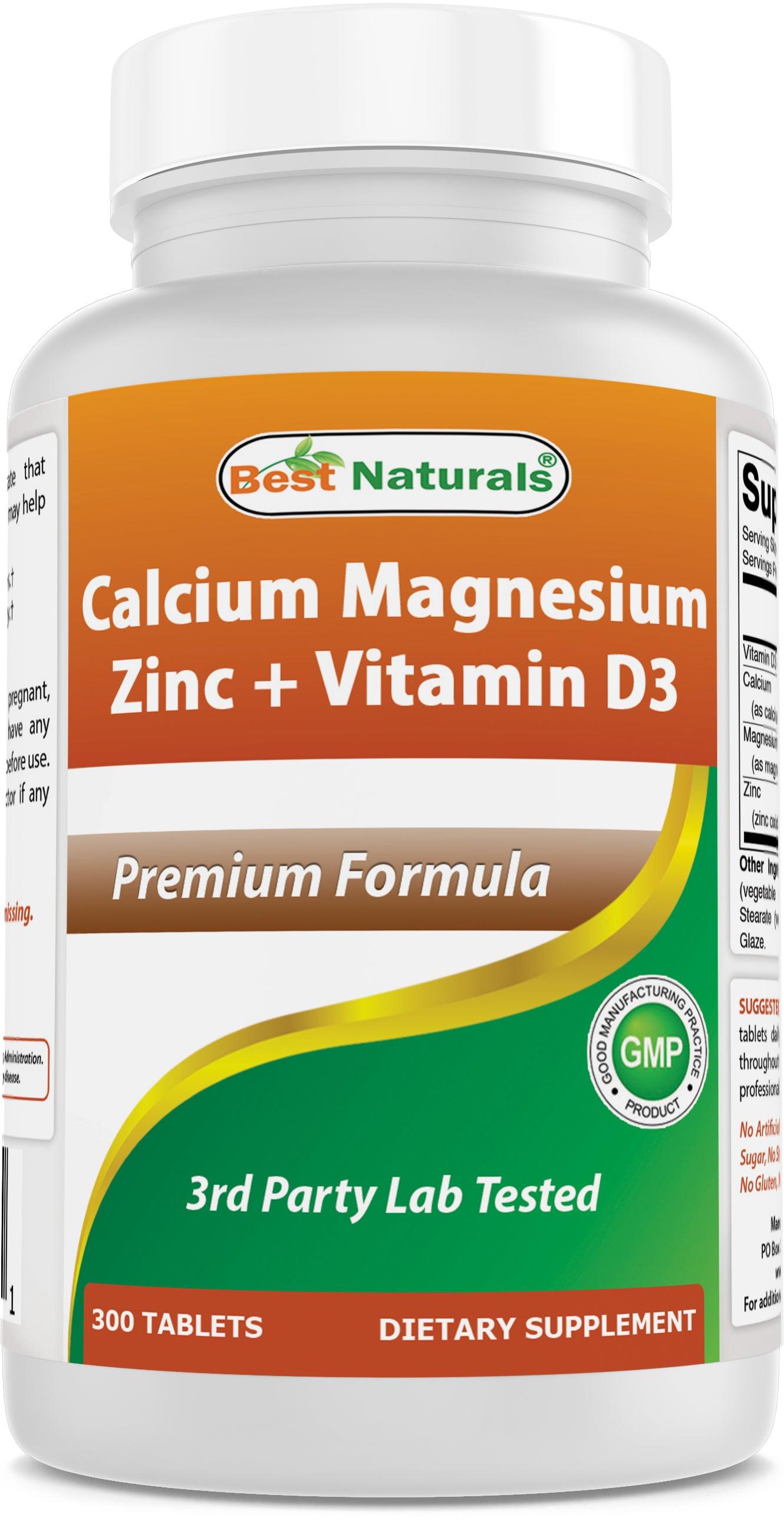
This bone-support combo delivers 1,000mg of **Calcium**, 400mg of **Magnesium**, and 15mg of **Zinc** alongside 400 IU of **Vitamin D3** — a formula that looks solid on the label but has a significant absorption gap. All three minerals use oxide or carbonate forms, which are the least bioavailable options. **Magnesium Oxide** absorbs at roughly 4%, meaning your body may only use a fraction of that 400mg. **Calcium Carbonate** requires stomach acid to break down, so you'll need to take it with meals.
**Vitamin D3** at 400 IU falls short of the 1,000–5,000 IU range supported by clinical consensus for maintaining healthy blood levels. Since vitamin D is essential for calcium absorption — without enough, your body absorbs only 10–15% of the calcium — this underdose limits the formula's primary purpose. The magnesium-D3 synergy is a plus in theory, since magnesium activates vitamin D, but both are held back by low dosing or poor form.
The 3-tablet serving size also means you're getting 1,000mg of calcium at once, well above the 500mg threshold where absorption drops off sharply. Splitting your dose across meals would help, but the label directs you to take all three tablets together.
BioStacks
Best for
Ingredients (4)
Vitamin D3
40%Dose
400 IU
Target
1000–5000 IU
Form
Premium
Calcium
100%Dose
1000 mg
Target
200–600 mg
Form
Budget
Zinc
100%Dose
15 mg
Target
15–30 mg
Form
Budget
Magnesium
100%Dose
400 mg
Target
100–400 mg
Form
Budget
Other Ingredients (3)
MaltodextrinBinder
Spikes blood sugar faster than table sugar (glycemic index 85–105). Research links it to gut bacteria changes that may promote intestinal inflammation (Nickerson et al. 2015). Used as a cheap filler — adds nothing beneficial.
Microcrystalline CelluloseBinder
Plant-derived cellulose used as a binder and filler in supplements
Croscarmellose SodiumDisintegrant
Cross-linked cellulose derivative used as a superdisintegrant
How to Take It
Best taken in the evening
The Magnesium in it is what pulls this toward the evening. Take it with a meal containing fat — the vitamin D in it absorbs poorly without one.
With a meal containing fat
Keep it away from high-oxalate foods like spinach
Space it a couple of hours from Iron
On the label
Directions: As a mineral supplement, adults take three (3) tablets daily with any meal or as directed by a healthcare provider. Do not exceed recommended dosage.
General guidance based on the ingredients, not a substitute for the label or your doctor.
Price Check
$5.49
Cheaper than 96% of 294 calcium supplements
Track this supplement in your stack
Get personalized insights, interactions, and coverage recommendations.
Get Started FreeSimilar Supplements

Sources & Scoring
Nutrient data (RDA, UL, and safety thresholds) sourced from the NIH Office of Dietary Supplements and the National Academies Dietary Reference Intakes (DRI).
This is not medical advice. Consult a healthcare provider before making changes to your supplement routine.
The score analyzes what's on the label: ingredient doses vs. studied ranges, chemical forms, evidence levels, and known interactions. It does not verify label accuracy or test for contaminants — for that, look for third-party certifications like USP or NSF.