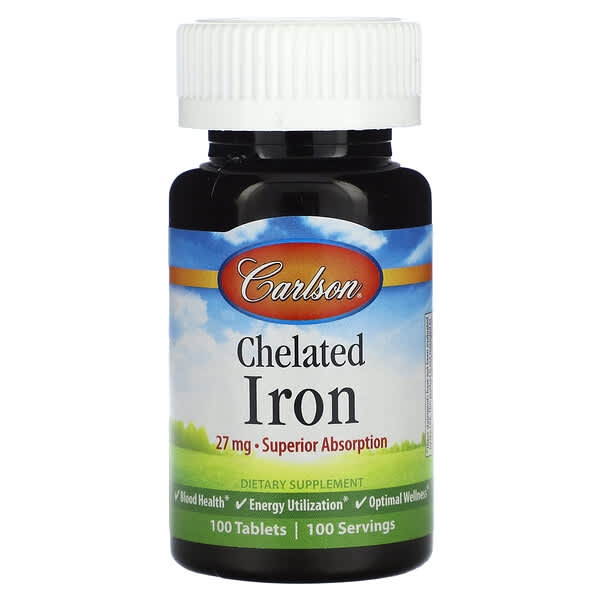
If you're addressing an iron deficiency, this product delivers 65 mg of **Iron** per tablet — right at the top of the 15–45 mg clinical range and well above the tolerable upper limit of 45 mg for general supplementation. At this dose, you're getting a therapeutic amount typically used for deficiency correction, not daily maintenance.
The form you're getting is ferrous sulfate, which is one of the most studied iron forms and reasonably well-absorbed, but it's also the form most associated with GI side effects like constipation and nausea. More bioavailable forms like iron bisglycinate can achieve similar absorption at much lower doses with fewer stomach issues.
This is an aggressive dose that makes sense if your doctor has confirmed low iron levels. For routine supplementation or mild deficiency prevention, 65 mg of ferrous sulfate may be more than you need and harder on your stomach than necessary.
BioStacks
Best for
Ingredients (1)
Iron
100%Dose
65 mg
Target
15–45 mg
Form
Budget
Other Ingredients (13)
Artificial ColorsColorant
May trigger hyperactivity in sensitive children; potential link to allergic reactions
Artificial ColorsColorant
May trigger hyperactivity in sensitive children; potential link to allergic reactions
TalcAnti-caking
IARC classifies cosmetic-grade talc not containing asbestos as Group 2B (possibly carcinogenic to humans); perineal talc use as Group 2A (probably carcinogenic). Johnson & Johnson voluntarily withdrew talc-based baby powder from US/Canada in 2020 and globally in 2022 after extensive litigation tied to ovarian-cancer and mesothelioma cases. The 2018 FDA contamination survey found asbestos in 9 of 52 cosmetic talc products tested. As a supplement excipient talc is a pure manufacturing convenience — no nutritional or functional benefit to the user — so the asbestos-exposure risk has no offsetting upside. Safer alternatives (silicon dioxide, microcrystalline cellulose, rice hulls) are widely available.
Titanium DioxideColorant
Banned in the EU (2022) over concerns that its ultra-fine particles may damage DNA in gut cells. Still allowed in the US. Used only for white coloring — provides no health benefit.
SorbitolSweetener
A FODMAP sugar alcohol that may trigger GI discomfort (bloating, gas) in individuals with IBS or sorbitol malabsorption, even at small amounts found in supplements. Avoided in low-FODMAP diets.
DextroseSweetener
A simple glucose sugar used as a bulking agent, sweetener, and tablet diluent
Magnesium StearateLubricant
A salt of stearic acid used as a lubricant in tablet and capsule production
Polyethylene Glycol (Coating)Coating
A polyether polymer used as a tablet coating and plasticizer
How to Take It
Best taken in the morning
Ferrous sulfate is the form most likely to upset your stomach. Food costs you some absorption but is usually the difference between sticking with it and quitting.
With food
Keep it away from coffee, tea and dairy
Space it a couple of hours from Calcium, Zinc, Magnesium, Manganese and Green Tea Leaf Extract
On the label
Directions: As a mineral supplement, adults take one (1) tablet daily with any meal or as directed by a healthcare provider. Do not exceed recommended dosage. Individuals results may vary.
General guidance based on the ingredients, not a substitute for the label or your doctor.
Price Check
$5.49
Cheaper than 97% of 138 iron supplements
Track this supplement in your stack
Get personalized insights, interactions, and coverage recommendations.
Get Started FreeSimilar Supplements
Sources & Scoring
Nutrient data (RDA, UL, and safety thresholds) sourced from the NIH Office of Dietary Supplements and the National Academies Dietary Reference Intakes (DRI).
This is not medical advice. Consult a healthcare provider before making changes to your supplement routine.
The score analyzes what's on the label: ingredient doses vs. studied ranges, chemical forms, evidence levels, and known interactions. It does not verify label accuracy or test for contaminants — for that, look for third-party certifications like USP or NSF.