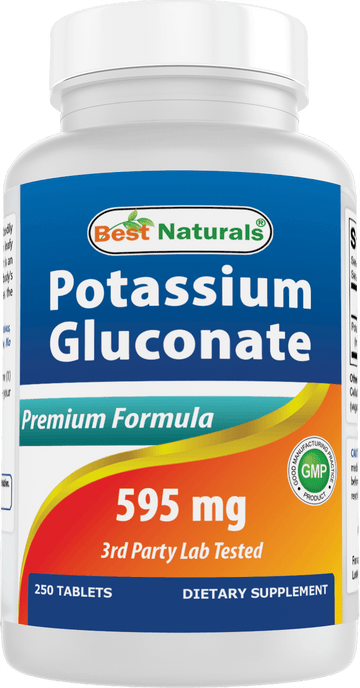
The label says 595mg, but that's the weight of the **Potassium Gluconate** compound — your actual potassium per tablet is 99mg. That's the FDA's legal ceiling for over-the-counter potassium supplements, so you're getting as much as any single tablet can deliver. But it's still well below the 200–500mg supplemental range studied for blood pressure and muscle function support.
Potassium works by helping your body excrete excess sodium, which is why higher intake is linked to healthier blood pressure. At 99mg per tablet, you'd need two to three tablets to reach the minimum studied supplemental dose — though most of your potassium should come from food sources like potatoes, bananas, and leafy greens.
If you're specifically supplementing for heart or muscle support, know that this covers only about 3% of the 3,400mg daily adequate intake. It's a top-up, not a replacement for dietary potassium.
BioStacks
Ingredients (1)
Potassium
100%Dose
99 mg
Target
99–500 mg
Form
Standard
Other Ingredients (5)
Magnesium StearateLubricant
A salt of stearic acid used as a lubricant in tablet and capsule production
Silicon DioxideAnti-caking
Fine silica powder used to prevent clumping
Microcrystalline CelluloseBinder
Plant-derived cellulose used as a binder and filler in supplements
Croscarmellose SodiumDisintegrant
Cross-linked cellulose derivative used as a superdisintegrant
Stearic AcidLubricant
Saturated fatty acid used as tablet lubricant
How to Take It
Take it anytime
Take with food — potassium salts on an empty stomach commonly cause nausea.
With food
On the label
Directions: As a mineral supplement, adults take one (1) tablet daily with any meal or as directed by a healthcare provider. Do not exceed recommended dosage.
General guidance based on the ingredients, not a substitute for the label or your doctor.
Track this supplement in your stack
Get personalized insights, interactions, and coverage recommendations.
Get Started FreeSimilar Supplements
Sources & Scoring
Nutrient data (RDA, UL, and safety thresholds) sourced from the NIH Office of Dietary Supplements and the National Academies Dietary Reference Intakes (DRI).
This is not medical advice. Consult a healthcare provider before making changes to your supplement routine.
The score analyzes what's on the label: ingredient doses vs. studied ranges, chemical forms, evidence levels, and known interactions. It does not verify label accuracy or test for contaminants — for that, look for third-party certifications like USP or NSF.