For joint comfort and connective tissue support, you're getting 3,000mg of **MSM** daily at the suggested two tablets — right in the middle of the 1,000–3,000mg range studied in clinical research. Even a single tablet puts you at the minimum clinical dose, so you can adjust based on your needs.
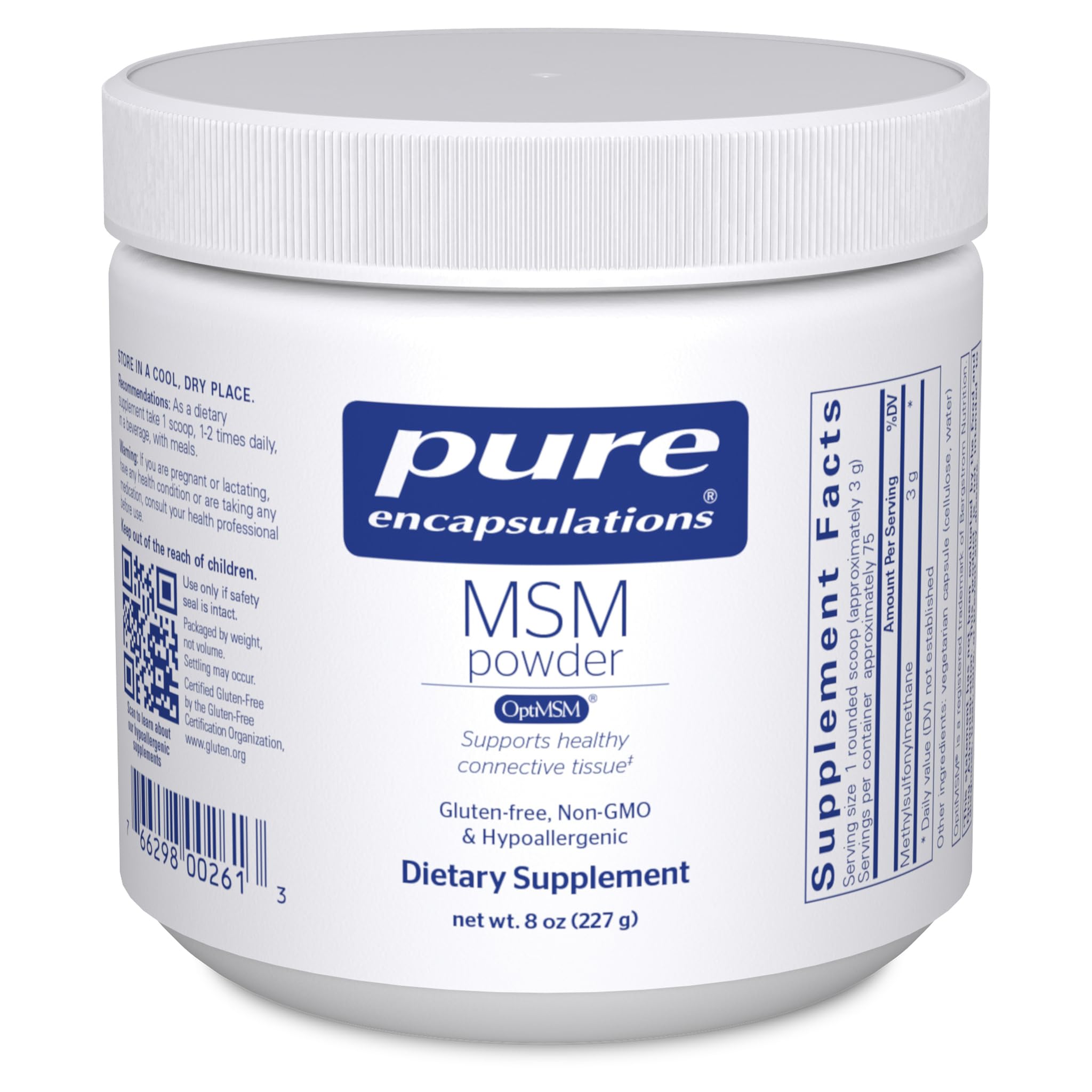
This uses OptiMSM, a branded form purified through distillation rather than crystallization. That distinction matters for purity — distillation removes contaminants more effectively, and OptiMSM is the specific form used in most published MSM clinical trials. You're getting the exact material the research was conducted on.
MSM's evidence base is moderate — several RCTs show benefits for joint stiffness and discomfort, but the studies are relatively small. What this means for you: expect gradual improvement over weeks rather than immediate results, and keep in mind that MSM works best as part of a broader joint support approach.
BioStacks
Best for
Ingredients (1)
MSM
100%Dose/day
3000 mg
Target
1000–3000 mg
Form
—
Other Ingredients (5)
Magnesium StearateLubricant
A salt of stearic acid used as a lubricant in tablet and capsule production
Silicon DioxideAnti-caking
Fine silica powder used to prevent clumping
HypromelloseCapsule
Plant-derived capsule material from cellulose
Microcrystalline CelluloseBinder
Plant-derived cellulose used as a binder and filler in supplements
Stearic AcidLubricant
Saturated fatty acid used as tablet lubricant
How to Take It
Take it anytime
Timing doesn't matter; take it with food if it upsets your stomach.
With food
Split into 2 doses across the day
On the label
Suggested Adult Use: Take 1 tablet twice daily with food, or as recommended by a nutritionally informed physician.
General guidance based on the ingredients, not a substitute for the label or your doctor.
Price Check
$11.99
Cheaper than 85% of 66 MSM supplements
Track this supplement in your stack
Get personalized insights, interactions, and coverage recommendations.
Get Started FreeSimilar Supplements
Sources & Scoring
Nutrient data (RDA, UL, and safety thresholds) sourced from the NIH Office of Dietary Supplements and the National Academies Dietary Reference Intakes (DRI).
This is not medical advice. Consult a healthcare provider before making changes to your supplement routine.
The score analyzes what's on the label: ingredient doses vs. studied ranges, chemical forms, evidence levels, and known interactions. It does not verify label accuracy or test for contaminants — for that, look for third-party certifications like USP or NSF.