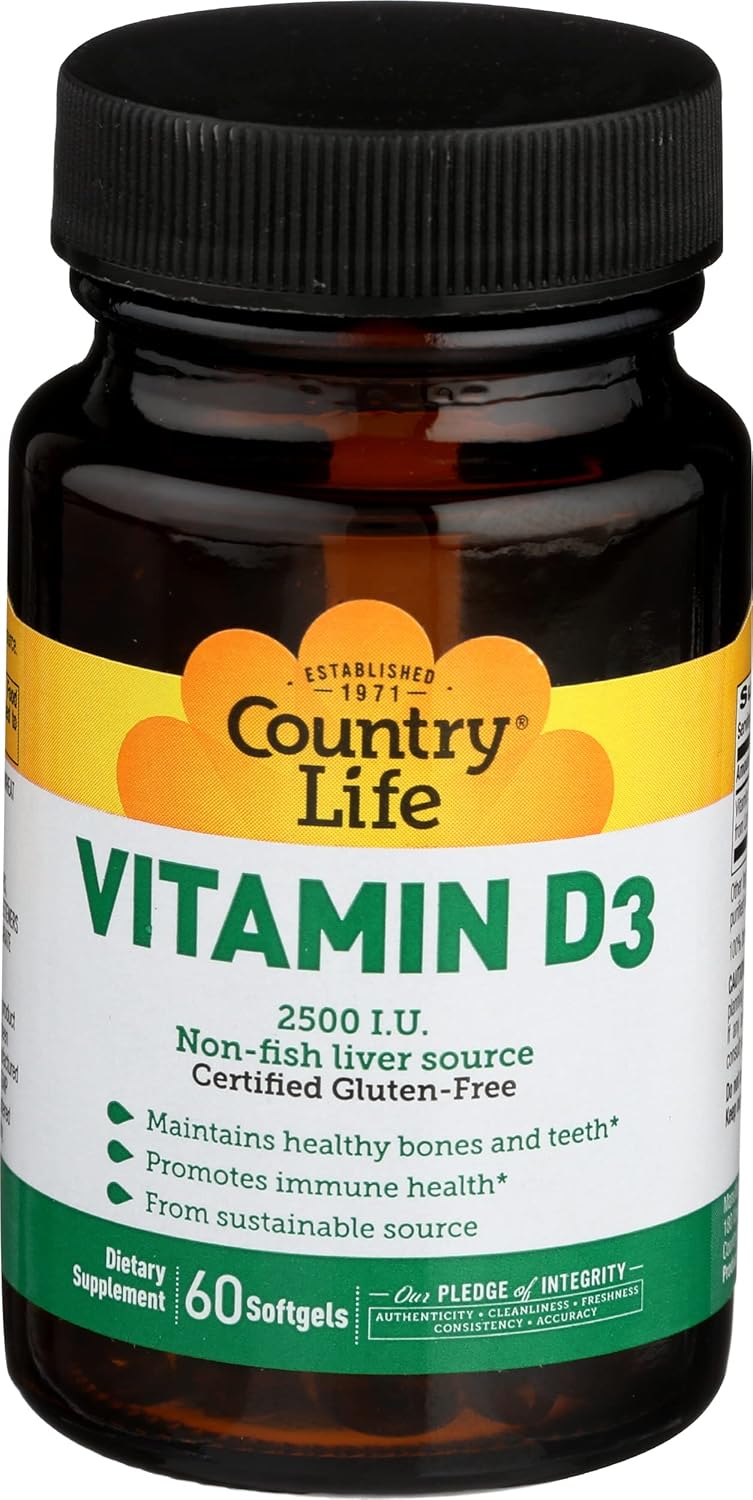
**Vitamin D3** at 5,000 IU per softgel puts you at the top of the clinically studied range (1,000–5,000 IU/day) for supporting bone health, immune function, and mood. The form is cholecalciferol — the D3 form your body produces from sunlight and absorbs far more efficiently than D2. With extra virgin olive oil as the carrier, you're getting a built-in fat source that helps your body absorb this fat-soluble vitamin without needing to time it with a meal.
At this dose, you're well-covered across vitamin D's broad range of roles — from calcium absorption and bone density to immune regulation and muscle function. Deficiency is extremely common, especially if you have limited sun exposure, darker skin, or live at higher latitudes, and 5,000 IU is the dose many practitioners recommend for people with low baseline levels.
This dose sits above the 4,000 IU tolerable upper limit set by health authorities, so it's worth checking your blood levels periodically to confirm you're in the optimal range and not overshooting. A 180-softgel bottle gives you a six-month supply at one per day.
BioStacks
Best for
Ingredients (1)
Vitamin D3
100%Dose
5000 IU
Target
1000–5000 IU
Form
Premium
Other Ingredients (2)
Extra Virgin Olive OilCarrier
Cold-pressed olive oil used as a carrier and filler in softgel capsules for fat-soluble nutrients
SoftgelCapsule
One-piece gelatin capsule shell with a plasticizer (typically glycerin), used to encapsulate liquid or oil-based supplements
How to Take It
Take it anytime
Fat-soluble — take with your largest fat-containing meal. Time of day doesn't matter.
With a meal containing fat
On the label
Suggested Adult Use: Take 1 softgel daily with food, or as recommended by a nutritionally informed physician.
General guidance based on the ingredients, not a substitute for the label or your doctor.
Price Check
$9.99
Cheaper than 80% of 552 vitamin D supplements
Track this supplement in your stack
Get personalized insights, interactions, and coverage recommendations.
Get Started FreeSimilar Supplements
Sources & Scoring
Nutrient data (RDA, UL, and safety thresholds) sourced from the NIH Office of Dietary Supplements and the National Academies Dietary Reference Intakes (DRI).
This is not medical advice. Consult a healthcare provider before making changes to your supplement routine.
The score analyzes what's on the label: ingredient doses vs. studied ranges, chemical forms, evidence levels, and known interactions. It does not verify label accuracy or test for contaminants — for that, look for third-party certifications like USP or NSF.