You're getting **50 billion CFU** per capsule from 16 probiotic species — right in the middle of the 1–100 billion CFU range used in clinical research for digestive and immune support. The blend leans heavily toward Lactobacillus strains (40 billion CFU), with 10 billion from Bifidobacterium, giving you broad coverage across the two most-studied probiotic families for women's gut and vaginal health.
The formula includes an **Organic Prebiotic Fiber Blend** of potato resistant starch and acacia fiber to feed the probiotics. It's a logical pairing, though at 377mg the prebiotic dose is well below the 5–10g clinical range — more of a token inclusion than a functional dose. The one-capsule-per-day format and shelf-stable design (no refrigeration needed) make this easy to stick with.
The biggest gap: none of the 16 species list strain IDs. Probiotic research is strain-specific — **Lactobacillus rhamnosus GG** behaves differently from a generic **L. rhamnosus**. Without strain identification, you're trusting the blend's overall diversity rather than clinically validated strains.
BioStacks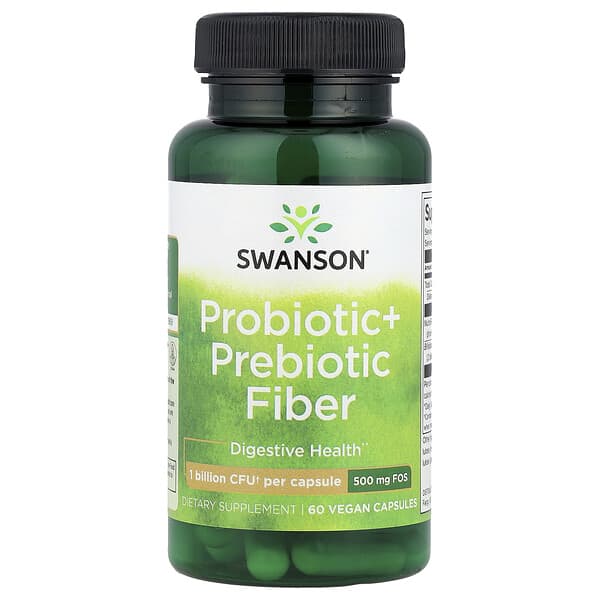
Best for
Ingredients (2)
Women's Probiotic Blend
94%Dose
40 B CFU
Target
1–100 B CFU
Form
Standard
Organic Prebiotic Fiber Blend
8%Dose
377 mg
Target
5000–10000 mg
Form
—
Other Ingredients (1)
Microcrystalline CelluloseBinder
Plant-derived cellulose used as a binder and filler in supplements
How to Take It
Best taken in the morning
Live strains survive stomach acid best taken with or just before a meal — after a meal is the worst option. Consistency matters more than the clock.
With food
Keep it away from hot food or drink
On the label
Suggested Use: Adults take 1 capsule daily. May be taken with or without food. Capsules can be opened. Contents can be taken directly with water or juice.
General guidance based on the ingredients, not a substitute for the label or your doctor.
Price Check
$32.19
Near the median of 137 probiotics supplements
Track this supplement in your stack
Get personalized insights, interactions, and coverage recommendations.
Get Started FreeSimilar Supplements
Garden of Life Dr. Formulated Probiotics
Once Daily Men's 50 Billion Guaranteed
🍏 for Digestion
63
NaturesPlus GI Natural
Pro-Biotic Mega
🍏 for Digestion
63
Swanson
Probiotic + Prebiotic Fiber
🍏 for Digestion
59
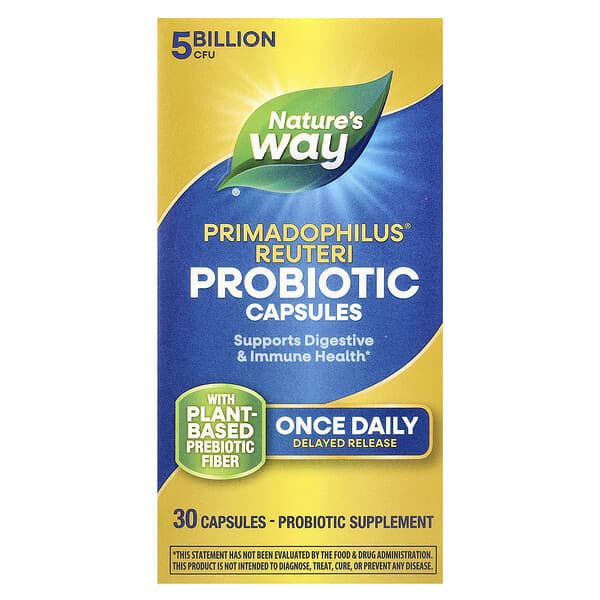
Nature's Way
Primadophilus® Reuteri Probiotic, 5 Billion CFU
🍏 for Digestion
53
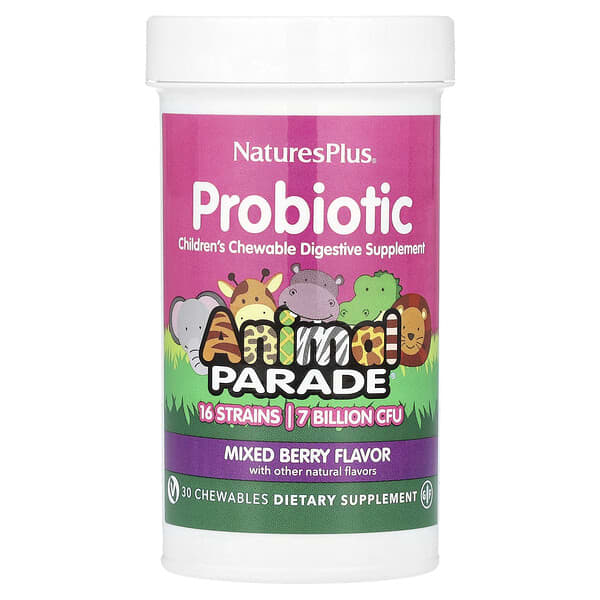
NaturesPlus
Probiotic, Children's Chewable Digestive Supplement, Mixed Berry, 7 Billion CFU
🍏 for Digestion
52
Sources & Scoring
Nutrient data (RDA, UL, and safety thresholds) sourced from the NIH Office of Dietary Supplements and the National Academies Dietary Reference Intakes (DRI).
This is not medical advice. Consult a healthcare provider before making changes to your supplement routine.
The score analyzes what's on the label: ingredient doses vs. studied ranges, chemical forms, evidence levels, and known interactions. It does not verify label accuracy or test for contaminants — for that, look for third-party certifications like USP or NSF.