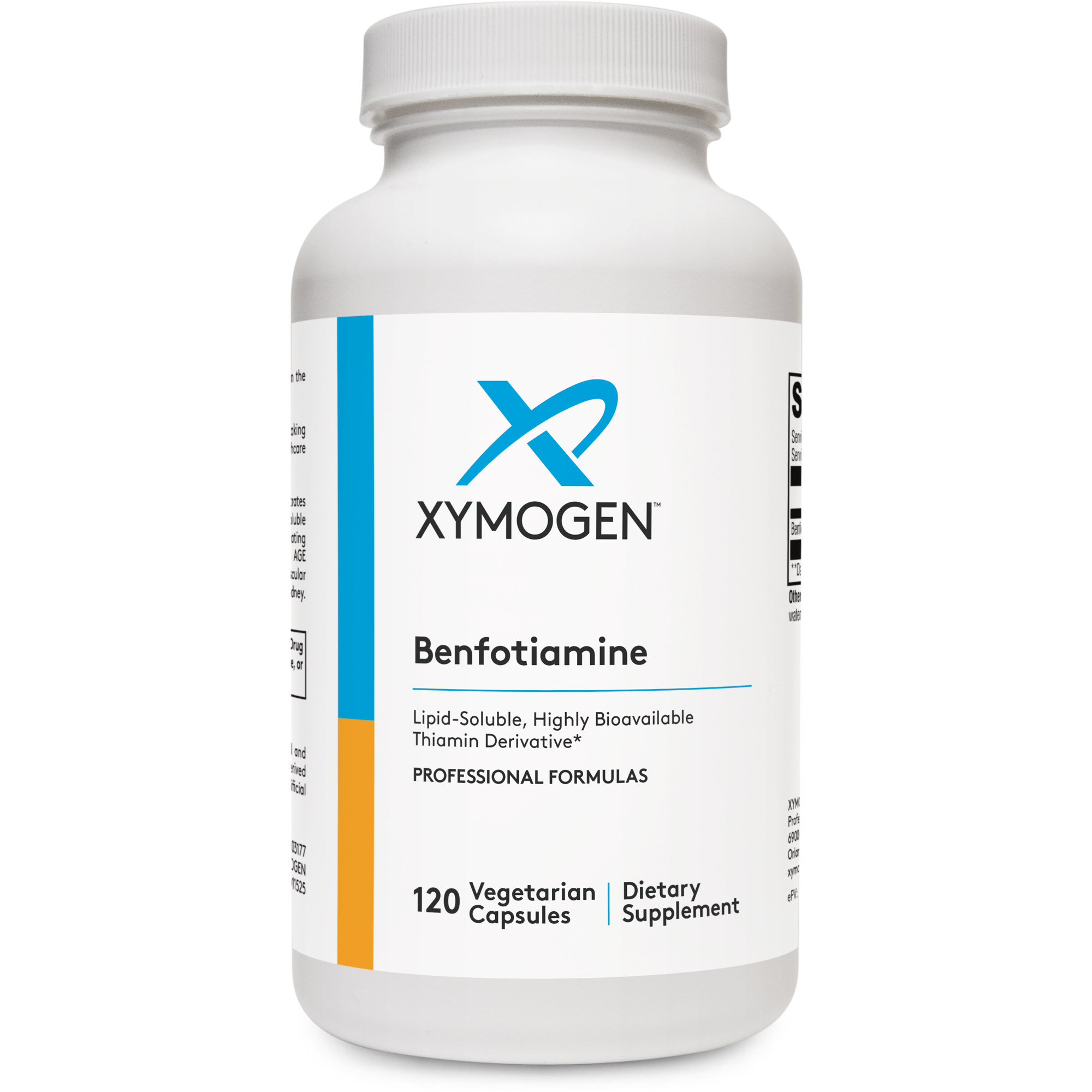
Each capsule delivers 100mg of **Benfotiamine** — a fat-soluble form of vitamin B1 that absorbs up to 5x better than standard thiamine because it bypasses the intestinal transport bottleneck. At one capsule you're already within the clinical range (80–300mg), and the label's four-capsule daily recommendation puts you at 400mg, well above what most studies use for supporting healthy blood sugar metabolism and protecting nerve tissue from glycation damage.
The 25mg of standard **Thiamine Hydrochloride** per capsule adds a water-soluble baseline, giving your body both absorption pathways. At the full daily dose of 100mg thiamine HCl, you're at the top of the typical B1 supplement range — though benfotiamine is doing the heavy lifting here for energy and nerve support.
The tradeoff is pill burden. Four capsules a day is the label recommendation, and skipping down to one or two still keeps you in a useful range for benfotiamine — but you'd lose the higher-end thiamine coverage. If you're taking this specifically for nerve health or blood sugar support, the full four capsules is where the research points.
BioStacks
Best for
Ingredients (2)
Benfotiamine
100%Dose/day
400 mg
Target
80–300 mg
Form
Premium
Thiamine
100%Dose/day
100 mg
Target
25–100 mg
Form
Premium
Other Ingredients (4)
Silicon DioxideAnti-caking
Fine silica powder used to prevent clumping
Magnesium StearateLubricant
A salt of stearic acid used as a lubricant in tablet and capsule production
Microcrystalline CelluloseBinder
Plant-derived cellulose used as a binder and filler in supplements
Microcrystalline CelluloseBinder
Plant-derived cellulose used as a binder and filler in supplements
How to Take It
Best taken in the morning
Many people prefer B-vitamins earlier in the day; take with food to avoid nausea.
With food
Label directs 4 servings — keep one for the morning
On the label
Directions: Take one (1) capsule four times daily, or as recommended by a healthcare practitioner.
General guidance based on the ingredients, not a substitute for the label or your doctor.
Price Check
$15.00
Near the median of 57 vitamin B1 supplements
Track this supplement in your stack
Get personalized insights, interactions, and coverage recommendations.
Get Started FreeSimilar Supplements
Sources & Scoring
Nutrient data (RDA, UL, and safety thresholds) sourced from the NIH Office of Dietary Supplements and the National Academies Dietary Reference Intakes (DRI).
This is not medical advice. Consult a healthcare provider before making changes to your supplement routine.
The score analyzes what's on the label: ingredient doses vs. studied ranges, chemical forms, evidence levels, and known interactions. It does not verify label accuracy or test for contaminants — for that, look for third-party certifications like USP or NSF.