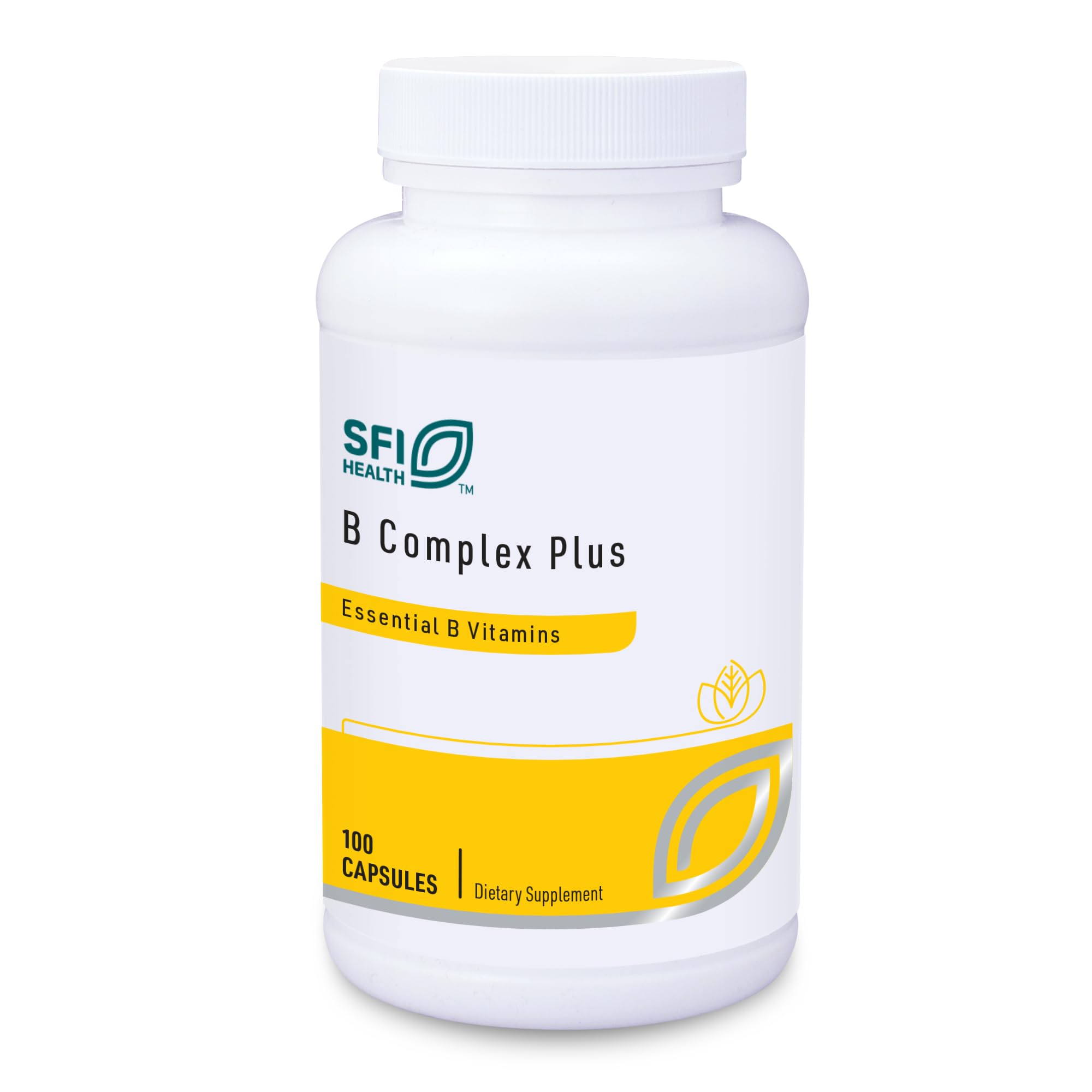
This B-complex hits clinical-strength doses across the board for energy, brain function, and nervous system support. You're getting 100 mg each of **Thiamine**, **Vitamin B6**, and **Niacin**, plus 500 mg of **Pantothenic Acid** — all at or near the top of their studied ranges. **Folate** at 680 mcg comes as methylfolate, the bioactive form, which is a real advantage if your body doesn't convert folic acid efficiently.
**Vitamin B12** gives you methylcobalamin at 300 mcg — within clinical range but on the lower end. **Riboflavin** at 75 mg uses a mix of standard and active forms. The formula also includes 1,000 mcg of **Biotin** and 100 mg of **Inositol**, though the inositol is well below the 2,000–4,000 mg range used in mood and hormonal research.
The main tradeoff is B6 at 100 mg, which sits right at the tolerable upper limit. If you're taking other supplements containing B6, keep an eye on your total daily intake to avoid the risk of nerve-related side effects over time.
BioStacks
Best for
Ingredients (11)
Pantothenic Acid
100%Dose
500 mg
Target
50–500 mg
Form
Premium
Folate
100%Dose
680 mcg DFE
Target
400–800 mcg
Form
Premium
Vitamin B12
100%Dose
300 mcg
Target
250–5000 mcg
Form
Premium
Thiamine
100%Dose
100 mg
Target
25–100 mg
Form
Premium
Vitamin B6
100%Dose
100 mg
Target
25–100 mg
Form
Premium
Other Ingredients (5)
Silicon DioxideAnti-caking
Fine silica powder used to prevent clumping
Microcrystalline CelluloseBinder
Plant-derived cellulose used as a binder and filler in supplements
Purified WaterSolvent
Water meeting USP specifications used as solvent/vehicle in gummies and liquids
Stearic AcidLubricant
Saturated fatty acid used as tablet lubricant
Microcrystalline CelluloseBinder
Plant-derived cellulose used as a binder and filler in supplements
How to Take It
Take it anytime
No evidence a formula this broad works better at any particular hour. What's in this is easier on the stomach taken with food.
With food
On the label
Read the entire label and follow the directions carefully prior to use. Directions: Take two (2) capsules daily with food, or as recommended by a healthcare practitioner.
General guidance based on the ingredients, not a substitute for the label or your doctor.
Price Check
$9.00
Cheaper than 96% of 239 energy supplements
Track this supplement in your stack
Get personalized insights, interactions, and coverage recommendations.
Get Started FreeSimilar Supplements
Sources & Scoring
Nutrient data (RDA, UL, and safety thresholds) sourced from the NIH Office of Dietary Supplements and the National Academies Dietary Reference Intakes (DRI).
This is not medical advice. Consult a healthcare provider before making changes to your supplement routine.
The score analyzes what's on the label: ingredient doses vs. studied ranges, chemical forms, evidence levels, and known interactions. It does not verify label accuracy or test for contaminants — for that, look for third-party certifications like USP or NSF.