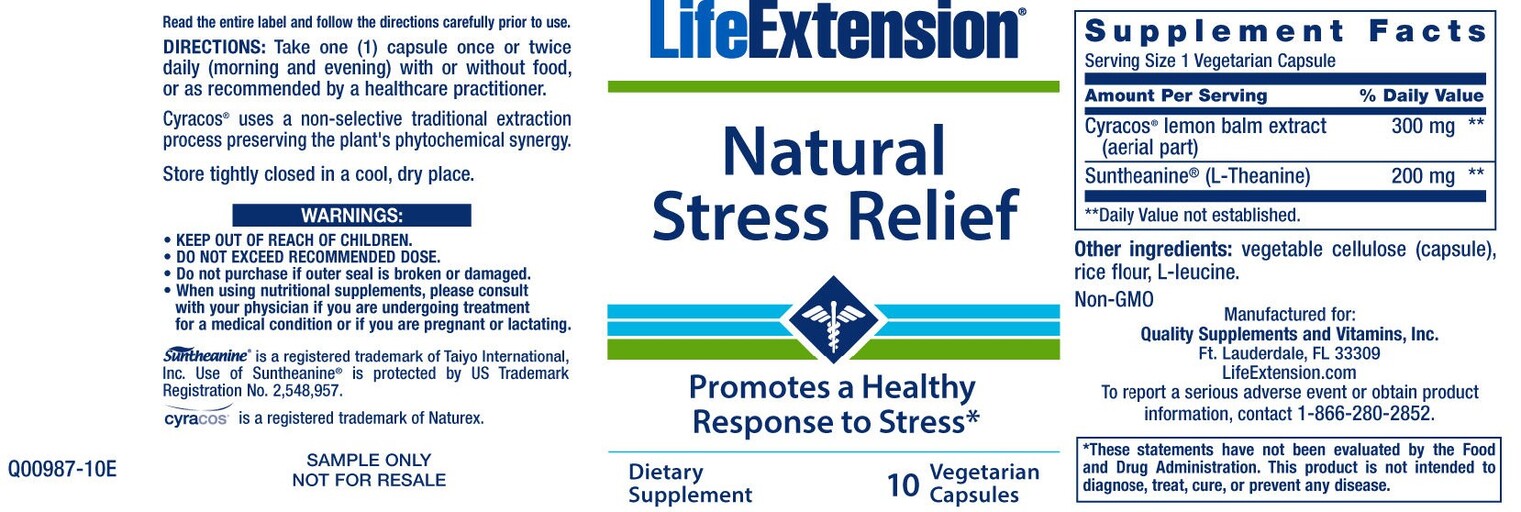
If you want calm focus without drowsiness, this pairs **L-Theanine** at 200 mg with **Lemon Balm Extract** at 300 mg — both dosed right at their most commonly studied levels. The 200 mg theanine dose is the exact amount used in most relaxation and focus research, so you're getting the full studied effect in a single capsule.
The lemon balm extract is standardized to rosmarinic acid and hydroxycinnamic acid, the active compounds linked to its mild calming properties. At 300 mg you're at the low end of the clinical range (300–600 mg), and the label allows a second capsule daily, which would bring you to 600 mg — the top of the studied dose.
Keep in mind that lemon balm has limited clinical evidence — only a handful of small trials support its calming effects. If you're dealing with significant stress, one capsule daily gives you a gentle starting point, but the research behind this herb is still catching up to its traditional reputation.
BioStacksAsk AI about this product
What it does
A combination of 2 label ingredients.
Lemon Balm
Form not confirmedGrade —
Some studies suggest reduced anxiety symptoms, but evidence is limited and heterogeneous; effects depend on the preparation.
Theanine
Form not confirmedGrade —
May improve sleep quality and responses to short-term stress in adults; evidence remains limited.
Ingredients (2)
Other ingredients
Silicon DioxideAnti-caking
Fine silica powder used to prevent clumping
Vegetable StearateLubricant
A plant-derived salt of stearic acid (typically magnesium or calcium) used as a tablet lubricant
Microcrystalline CelluloseBinder
Plant-derived cellulose used as a binder and filler in supplements
Microcrystalline CelluloseBinder
Plant-derived cellulose used as a binder and filler in supplements
Lab testing
How to take it
With or without food
On the label
Take one (1) capsule once or twice daily (morning and evening), or as recommended by a healthcare practitioner.
Price check
$21.00
$0.70 / serving
Pricier than 83% of 13 lemon balm supplements
Similar products
Sources & Scoring
Nutrient data (RDA, UL, and safety thresholds) sourced from the NIH Office of Dietary Supplements and the National Academies Dietary Reference Intakes (DRI).
This is not medical advice. Consult a healthcare provider before making changes to your supplement routine.
The score analyzes what's on the label: ingredient doses vs. studied ranges, chemical forms, evidence levels, and known interactions. It does not verify label accuracy or test for contaminants — for that, look for third-party certifications like USP or NSF.
Not medical advice. Consult your healthcare professional.