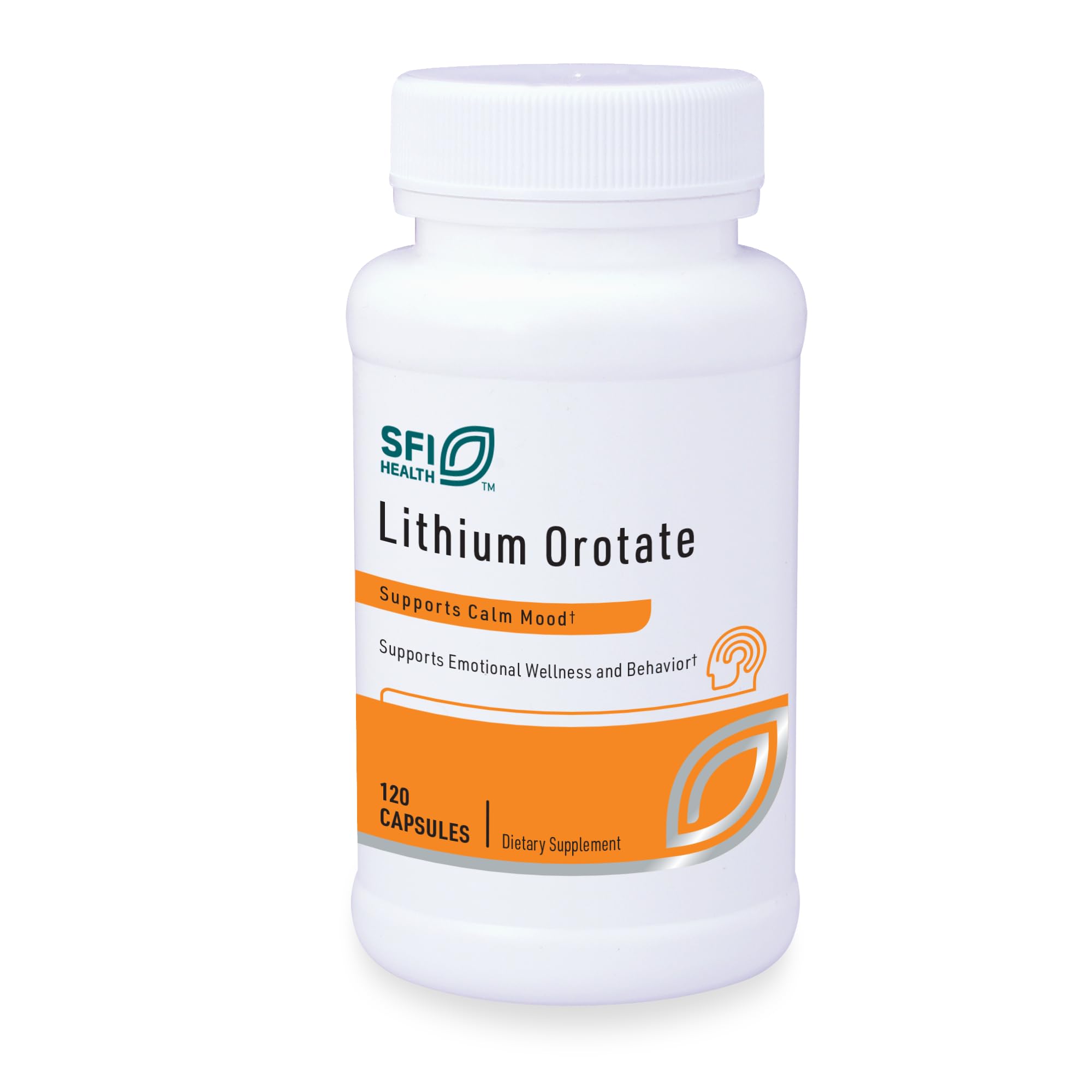
This provides 1,000 mcg (1 mg) of **Lithium** as lithium orotate — a trace mineral your body encounters naturally in drinking water and certain foods. At this dose, lithium sits in the low-to-mid range of what supplements typically deliver (500–5,000 mcg). Epidemiological studies have linked higher trace lithium intake from water supplies to better mood outcomes in populations, and small clinical studies suggest low-dose lithium may help protect brain cells from age-related decline.
The orotate form is the standard carrier used in nutritional lithium supplements. It delivers elemental lithium at doses hundreds of times lower than prescription lithium carbonate (which runs 600–1,800 mg for psychiatric use), so the safety profile is very different. At 1,000 mcg, you're firmly in the nutritional range — there is no established upper limit or RDA for lithium at these trace doses, and side effects at this level are uncommon.
The formula is straightforward: one active ingredient with minimal excipients (just cellulose). If you're exploring low-dose lithium for mood balance or cognitive support, this gives you a focused, single-ingredient option at a moderate dose. Keep in mind that the clinical evidence at nutritional doses, while promising, is still emerging — most robust lithium research has been conducted at much higher prescription levels.
BioStacks
Best for
Ingredients (1)
Lithium
100%Dose
1000 mcg
Target
500–5000 mcg
Form
Standard
Other Ingredients (2)
Microcrystalline CelluloseBinder
Plant-derived cellulose used as a binder and filler in supplements
Microcrystalline CelluloseBinder
Plant-derived cellulose used as a binder and filler in supplements
How to Take It
Take it anytime
Timing doesn't matter for this one — taking it consistently does.
With or without food
On the label
Directions: Take one (1) capsule daily or as recommended by a healthcare practitioner.
General guidance based on the ingredients, not a substitute for the label or your doctor.
Price Check
$12.00
Cheaper than 77% of 22 lithium supplements
Track this supplement in your stack
Get personalized insights, interactions, and coverage recommendations.
Get Started FreeSimilar Supplements
Sources & Scoring
Nutrient data (RDA, UL, and safety thresholds) sourced from the NIH Office of Dietary Supplements and the National Academies Dietary Reference Intakes (DRI).
This is not medical advice. Consult a healthcare provider before making changes to your supplement routine.
The score analyzes what's on the label: ingredient doses vs. studied ranges, chemical forms, evidence levels, and known interactions. It does not verify label accuracy or test for contaminants — for that, look for third-party certifications like USP or NSF.