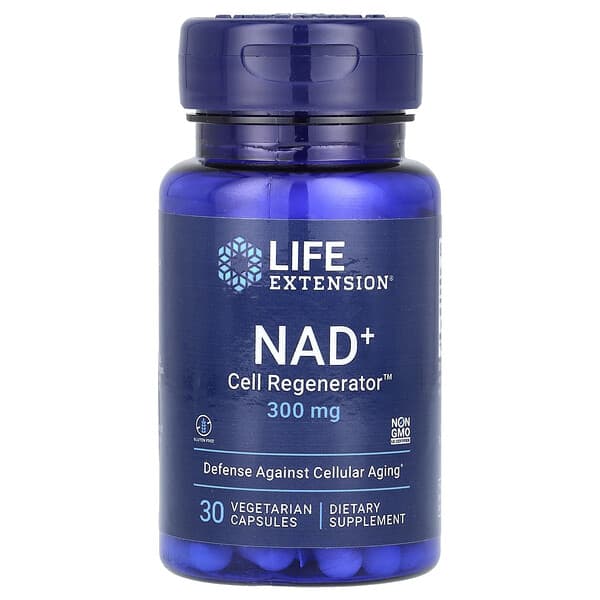
Life Extension uses **NIAGEN**, the patented nicotinamide riboside form behind virtually every published human trial on NR. That's the gold standard for raising NAD+ levels — the coenzyme your cells rely on for energy production, DNA repair, and activating the sirtuin pathways linked to healthy aging. The form quality here is as good as it gets.
The issue is dose. At 100 mg per capsule with a one-capsule daily serving, you're getting well below the 250–1,000 mg range used in clinical research. Human studies show NR raises blood NAD+ levels in a dose-dependent manner, but the meaningful increases (50%+ above baseline) come at 300 mg and above. At 100 mg, you're at 40% of the minimum studied dose.
If you want to reach a clinically relevant intake, you'd need to take 3 capsules daily — which burns through the 30-capsule bottle in 10 days. Life Extension also makes a 300 mg version of this product, which gets you into the studied range in a single capsule.
BioStacks
Best for
Ingredients (1)
NIAGEN Nicotinamide Riboside
40%Dose
100 mg
Target
250–1000 mg
Form
Premium
Other Ingredients (4)
Silicon DioxideAnti-caking
Fine silica powder used to prevent clumping
Vegetable StearateLubricant
A plant-derived salt of stearic acid (typically magnesium or calcium) used as a tablet lubricant
Microcrystalline CelluloseBinder
Plant-derived cellulose used as a binder and filler in supplements
Microcrystalline CelluloseBinder
Plant-derived cellulose used as a binder and filler in supplements
How to Take It
Take it anytime
Timing doesn't matter for this one — taking it consistently does.
With or without food
On the label
Read the entire label and follow the directions carefully prior to use. Directions: Take one (1) capsule daily, or as recommended by a healthcare practitioner.
General guidance based on the ingredients, not a substitute for the label or your doctor.
Price Check
$18.00
Cheaper than 99% of 17 NAD+ precursor (NR) supplements
Track this supplement in your stack
Get personalized insights, interactions, and coverage recommendations.
Get Started FreeSimilar Supplements
Sources & Scoring
Nutrient data (RDA, UL, and safety thresholds) sourced from the NIH Office of Dietary Supplements and the National Academies Dietary Reference Intakes (DRI).
This is not medical advice. Consult a healthcare provider before making changes to your supplement routine.
The score analyzes what's on the label: ingredient doses vs. studied ranges, chemical forms, evidence levels, and known interactions. It does not verify label accuracy or test for contaminants — for that, look for third-party certifications like USP or NSF.