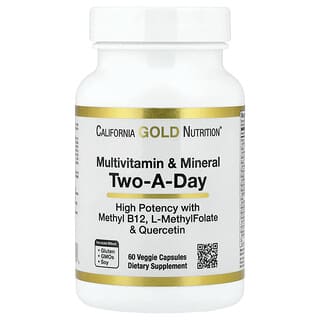
This multivitamin hits clinical doses where it counts most for your daily foundation. Your B-vitamins are well-dosed — 75mg **Thiamine**, 75mg **Vitamin B6** (partly as the active P5P form), and 680mcg **Folate** as methylfolate, which your body can use directly without conversion. **Vitamin D3** at 2,000 IU and **Selenium** at 200mcg both land squarely in their clinical ranges.
You're also getting 470mg **Vitamin C** and 67mg **Vitamin E** in its natural d-alpha form, plus extras like **Lutein** (5mg from marigold) for eye support. The formula uses multiple bioavailable forms across several nutrients — partly active P5P for B6, methylfolate for B9 — which helps your body absorb more of what's on the label.
The main gap for you is **Zinc** at just 2.5mg — only about 17% of the minimum clinical dose. **Magnesium** is 100mg in the oxide form, which is the least absorbable option. And the antioxidant add-ons like **Alpha Lipoic Acid** (25mg) and **Quercetin** (5mg) are dosed far too low to deliver the benefits they're studied for.
BioStacks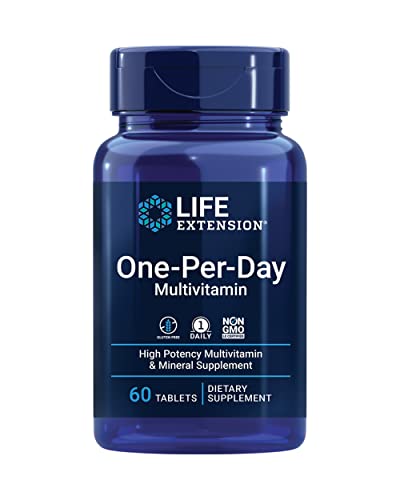
Best for
Ingredients (23)
Molybdenum
100%Dose
100 mcg
Target
45–75 mcg
Form
—
Folate
100%Dose
680 mcg
Target
400–800 mcg
Form
Premium
Vitamin D3
100%Dose
2000 IU
Target
1000–5000 IU
Form
Premium
Marigold extract
100%Dose
11.1 mg
Target
10–20 mg
Form
—
Iodine
100%Dose
150 mcg
Target
150–500 mcg
Form
Premium
Other Ingredients (11)
MaltodextrinBinder
Spikes blood sugar faster than table sugar (glycemic index 85–105). Research links it to gut bacteria changes that may promote intestinal inflammation (Nickerson et al. 2015). Used as a cheap filler — adds nothing beneficial.
Coating (unspecified)Coating
Generic tablet coating declaration where the label does not itemize the coating's components; modern aqueous film coatings are typically cellulose-based (HPMC) with a plasticizer
Silicon DioxideAnti-caking
Fine silica powder used to prevent clumping
Vegetable StearateLubricant
A plant-derived salt of stearic acid (typically magnesium or calcium) used as a tablet lubricant
Croscarmellose SodiumDisintegrant
Cross-linked cellulose derivative used as a superdisintegrant
Dicalcium PhosphateBinder
Calcium and phosphorus compound used as binder
StarchBinder
Carbohydrate polymer used as a binder, filler, and disintegrant in tablets and capsules
Microcrystalline CelluloseBinder
Plant-derived cellulose used as a binder and filler in supplements
How to Take It
Best taken in the evening
Used before bed for sleep. Take it with a meal containing fat — the vitamins A, D and E in it absorb poorly without one.
With a meal containing fat
Space it a couple of hours from Iron and Calcium
General guidance based on the ingredients, not a substitute for the label or your doctor.
Price Check
$18.38
Cheaper than 71% of 798 multivitamins
Track this supplement in your stack
Get personalized insights, interactions, and coverage recommendations.
Get Started FreeSimilar Supplements
Life Extension
One-Per-Day Tablets
🛡️ for Immune
76
Life Extension
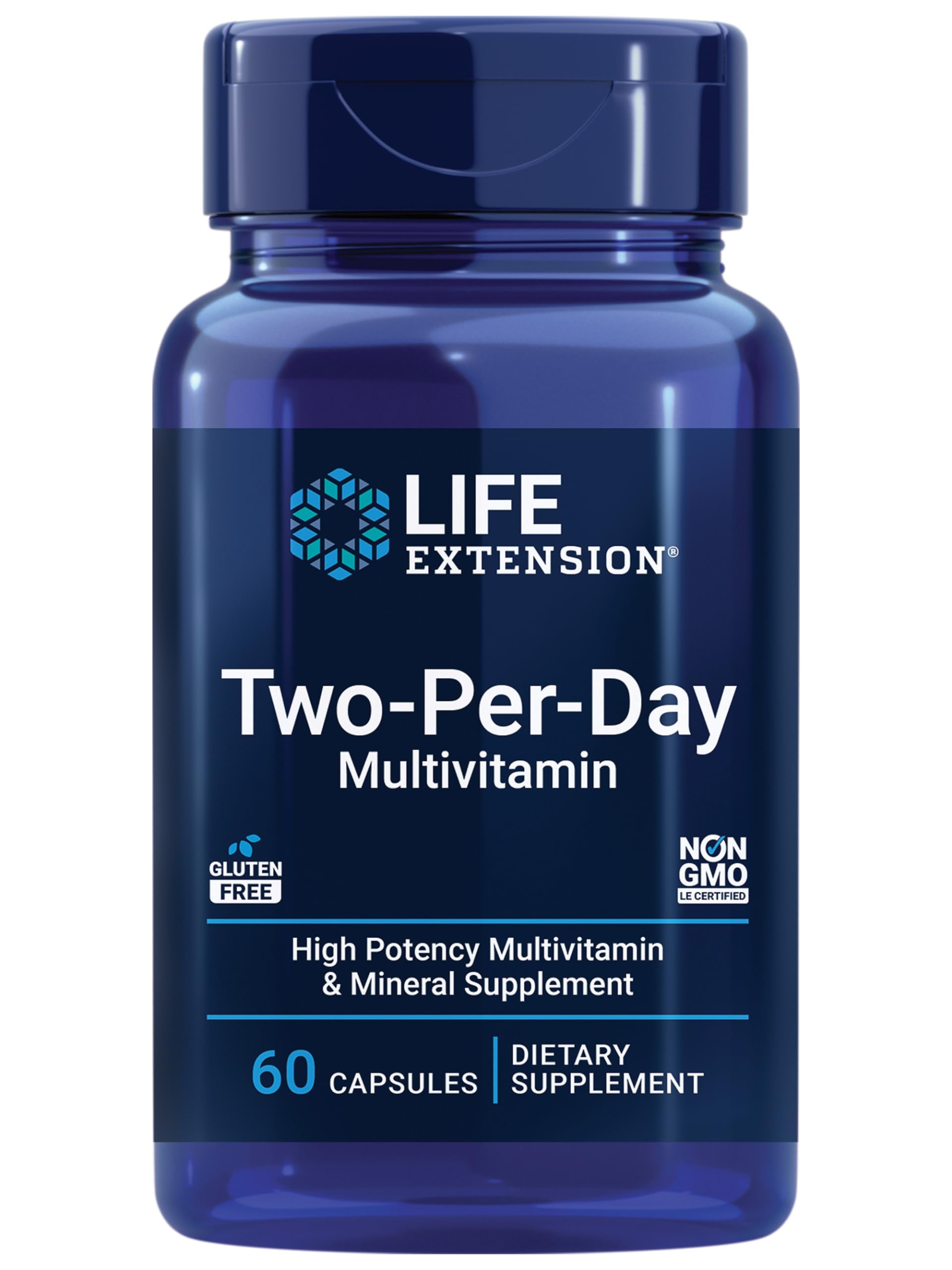
Two-Per-Day Multivitamin Capsules
🛡️ for Immune
76
Life Extension
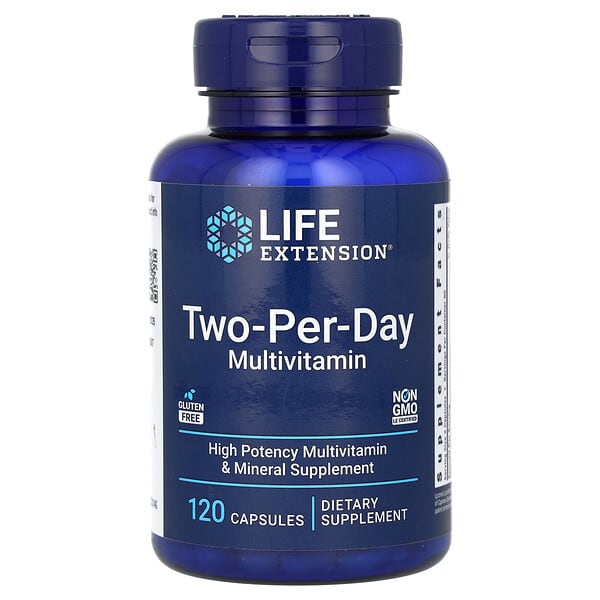
Two-Per-Day Multivitamin, 120 Capsules
🛡️ for Immune
72
Life Extension
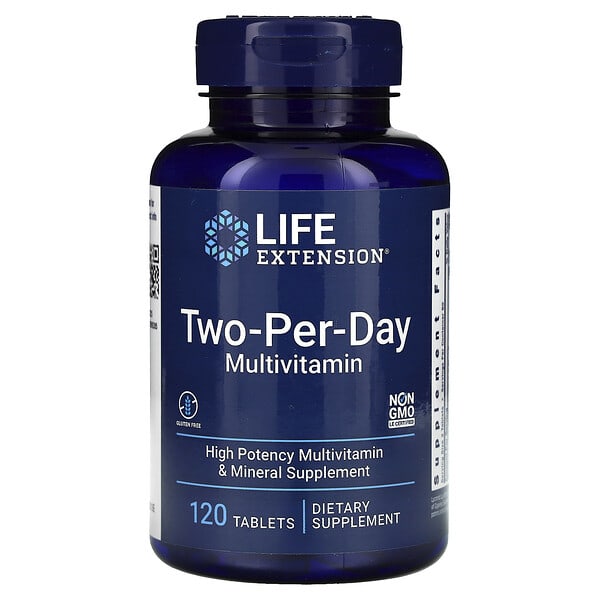
Two-Per-Day Multivitamin, 120 Tablets
🛡️ for Immune
72
California Gold Nutrition
Daily Multivitamins
🛡️ for Immune
86
Sources & Scoring
Nutrient data (RDA, UL, and safety thresholds) sourced from the NIH Office of Dietary Supplements and the National Academies Dietary Reference Intakes (DRI).
This is not medical advice. Consult a healthcare provider before making changes to your supplement routine.
The score analyzes what's on the label: ingredient doses vs. studied ranges, chemical forms, evidence levels, and known interactions. It does not verify label accuracy or test for contaminants — for that, look for third-party certifications like USP or NSF.