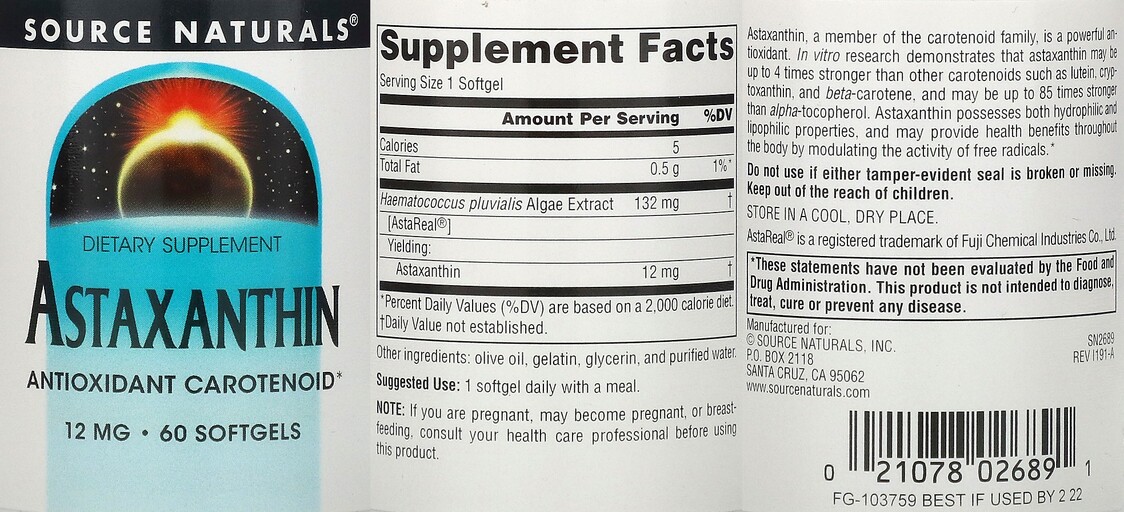
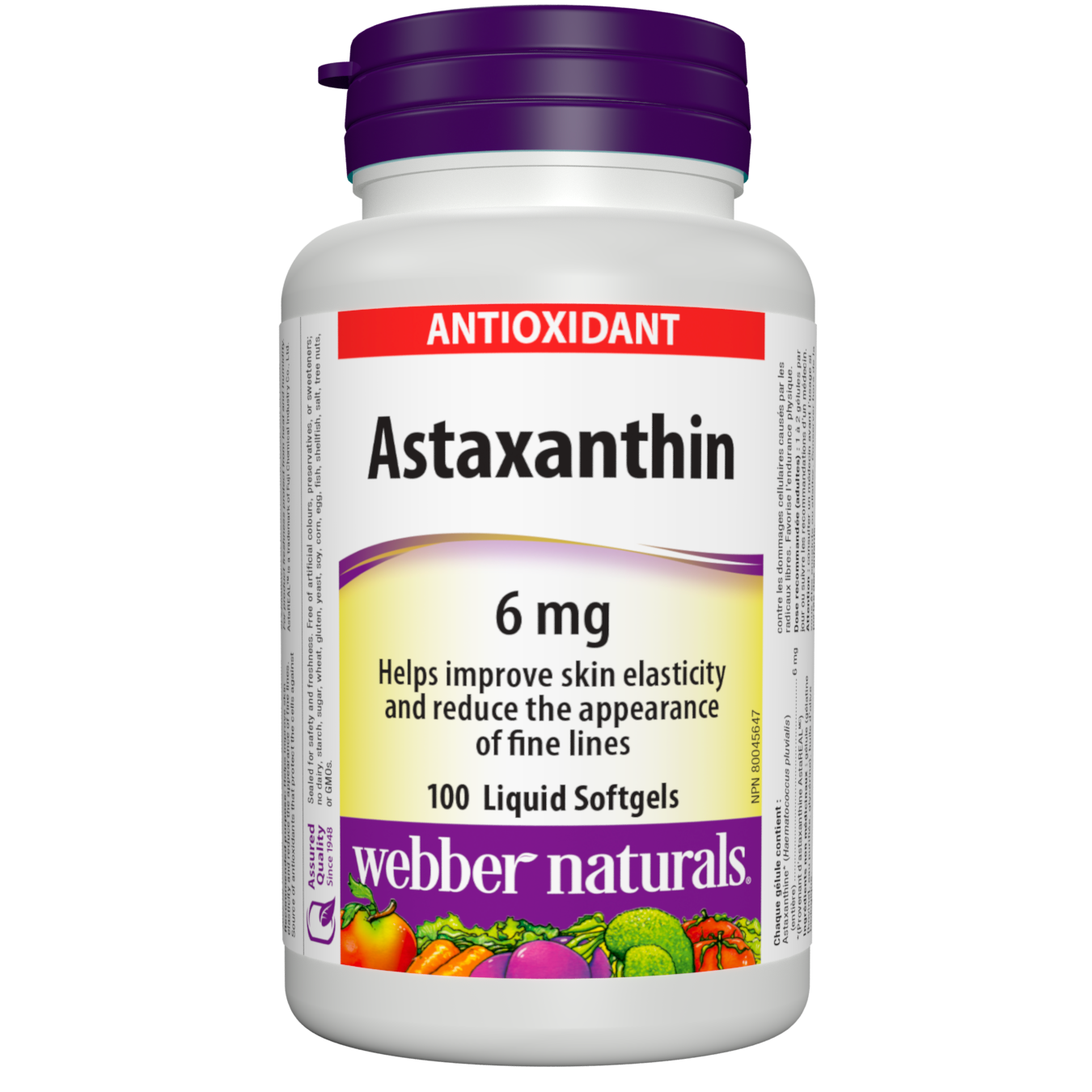
For skin protection, antioxidant defense, and eye health, this delivers **Astaxanthin** at 12mg per softgel — right at the top of the 4–12mg clinical range. You're getting a full effective dose in a single softgel, which is as high as most research protocols go. The source — Haematococcus pluvialis microalgae — is the natural form used in the majority of clinical trials.
Astaxanthin is a carotenoid antioxidant with moderate clinical evidence for reducing UV-induced skin damage, improving skin elasticity, and supporting visual comfort during screen use. What this means for you: the effects are cumulative, typically showing up after 4–12 weeks of daily use. The softgel format paired with sunflower seed oil supports absorption, since astaxanthin is fat-soluble.
One consideration: 12mg is the ceiling of the studied range, not the middle. Most positive skin trials used 4–6mg daily. You're getting more than you likely need, though no safety concerns have been reported at this dose.
BioStacks
Best for
Ingredients (1)
Astaxanthin
100%Dose
12 mg
Target
4–12 mg
Form
Not listed
Other Ingredients (2)
SoftgelCapsule
One-piece gelatin capsule shell with a plasticizer (typically glycerin), used to encapsulate liquid or oil-based supplements
Sunflower Seed OilCarrier
Common vegetable oil from sunflower seeds used as a carrier in softgels for fat-soluble nutrients
How to Take It
Take it anytime
Fat-soluble — take with a meal containing fat for better absorption. Time of day doesn't matter.
With a meal containing fat
On the label
As a dietary supplement, adults take 1 softgel daily. For best results, please consult your physician.
General guidance based on the ingredients, not a substitute for the label or your doctor.
Price Check
$34.95
Pricier than 70% of 54 natural astaxanthin supplements
Track this supplement in your stack
Get personalized insights, interactions, and coverage recommendations.
Get Started FreeSimilar Supplements
Sources & Scoring
Nutrient data (RDA, UL, and safety thresholds) sourced from the NIH Office of Dietary Supplements and the National Academies Dietary Reference Intakes (DRI).
This is not medical advice. Consult a healthcare provider before making changes to your supplement routine.
The score analyzes what's on the label: ingredient doses vs. studied ranges, chemical forms, evidence levels, and known interactions. It does not verify label accuracy or test for contaminants — for that, look for third-party certifications like USP or NSF.