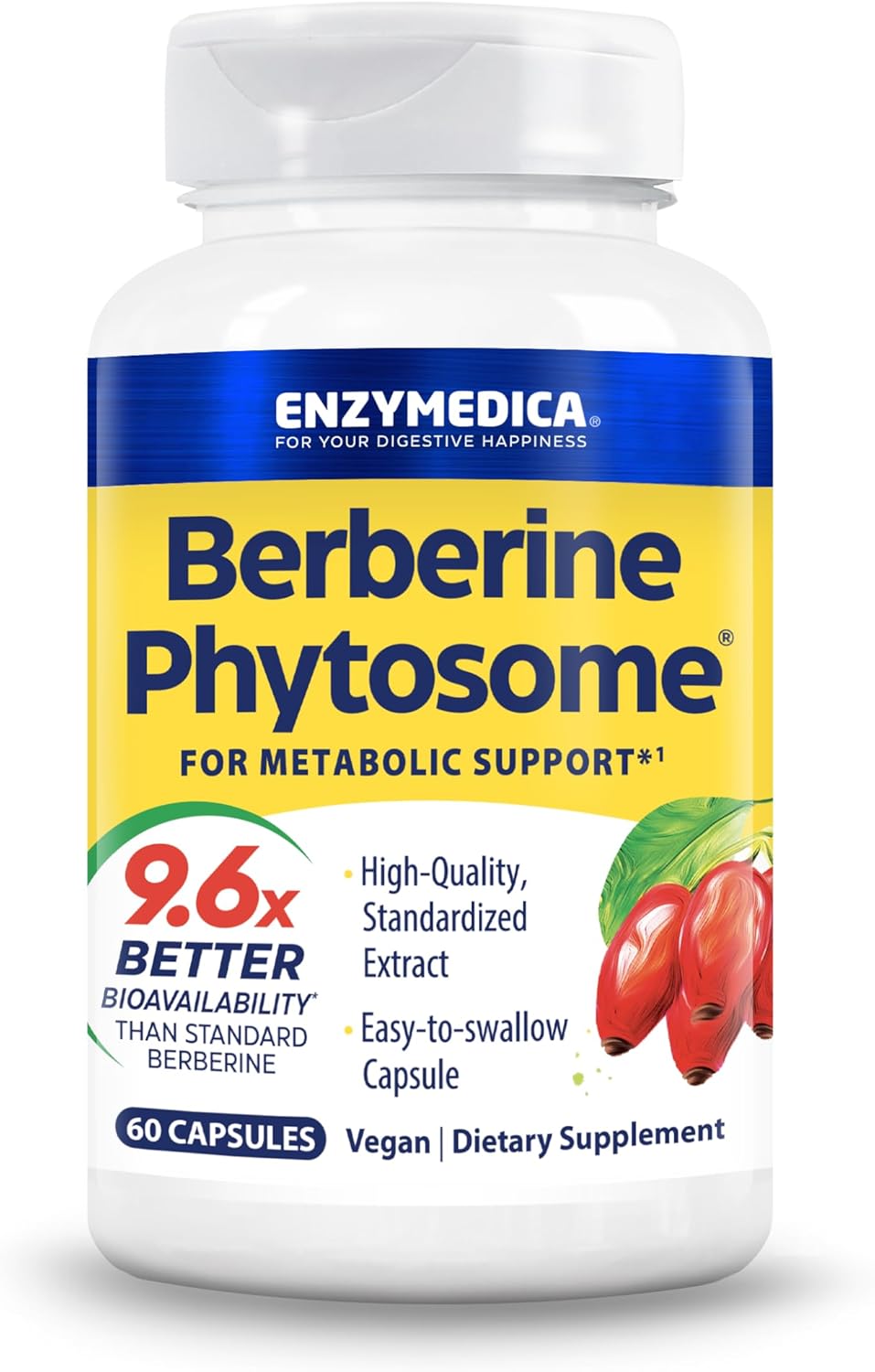
**Berberine** at 500mg per capsule, with a label recommendation of two daily — putting you at 1,000mg, right in the middle of the 500–1,500mg range used in clinical studies for blood sugar and lipid support. At that dose, you're getting strong metabolic coverage — multiple meta-analyses show meaningful effects on fasting glucose, insulin sensitivity, and triglyceride levels.
The form here is berberine hydrochloride, which is the standard form used in most clinical research. It has relatively low oral bioavailability (~5%), so taking it with meals as directed helps both absorption and reduces the GI discomfort that berberine is known for at higher doses.
If you only take one capsule daily, you're at the very bottom of the studied range — enough for mild support, but the two-capsule dose is where the stronger clinical results come from. Worth noting: berberine can interact with several medications, so check with your doctor if you're on anything for blood sugar or cholesterol.
BioStacks
Best for
Ingredients (1)
Berberine
100%Dose/day
1000 mg
Target
500–1500 mg
Form
Premium
Other Ingredients (5)
Magnesium StearateLubricant
A salt of stearic acid used as a lubricant in tablet and capsule production
Silicon DioxideAnti-caking
Fine silica powder used to prevent clumping
Microcrystalline CelluloseBinder
Plant-derived cellulose used as a binder and filler in supplements
Stearic AcidLubricant
Saturated fatty acid used as tablet lubricant
Capsule ShellCapsule
Generic capsule shell where the label does not specify the material. Common materials are hypromellose (HPMC) for vegetarian capsules and gelatin for traditional capsules — both are GRAS-listed and safe. Fish gelatin and pullulan variants also exist.
How to Take It
Take it anytime
Take with meals — its glucose effects act on the food you're eating. Usually split 2–3 times daily.
With food
Split into 2 doses across the day
On the label
Suggested usage: 1 capsule 2 times per day or as directed by a health professional.
General guidance based on the ingredients, not a substitute for the label or your doctor.
Price Check
$34.97
Pricier than 70% of 81 berberine HCl supplements
Track this supplement in your stack
Get personalized insights, interactions, and coverage recommendations.
Get Started FreeSimilar Supplements
Sources & Scoring
Nutrient data (RDA, UL, and safety thresholds) sourced from the NIH Office of Dietary Supplements and the National Academies Dietary Reference Intakes (DRI).
This is not medical advice. Consult a healthcare provider before making changes to your supplement routine.
The score analyzes what's on the label: ingredient doses vs. studied ranges, chemical forms, evidence levels, and known interactions. It does not verify label accuracy or test for contaminants — for that, look for third-party certifications like USP or NSF.