This multivitamin covers a wide range of vitamins and minerals, with a few meaningful doses. You're getting 2,000 IU of **Vitamin D3** (a well-absorbed form within the clinical range), 200mcg of **Selenium**, and 18mg of **Iron** — all at levels that can make a real difference if you're not getting enough from food. The B vitamins are each dosed at 50mg, which is solid for general energy support, though most are in budget forms your body has to convert before using.
The mineral side is more of a mixed bag. **Calcium** at 500mg is delivered as carbonate and **Magnesium** at 100mg as oxide — both among the least absorbable forms available. **Zinc** at 15mg hits the bottom of the clinical range but is also zinc oxide. You're absorbing meaningfully less than the label suggests for these three minerals.
The "Women's Proprietary Blend" (160mg total for collagen, resveratrol, CoQ10, and lutein) and the "Herbal Blend" (50mg split across 12 botanicals) are too small to deliver any clinical benefit — each ingredient gets just a few milligrams, far below studied doses. These look good on the label but won't do much for you.
BioStacks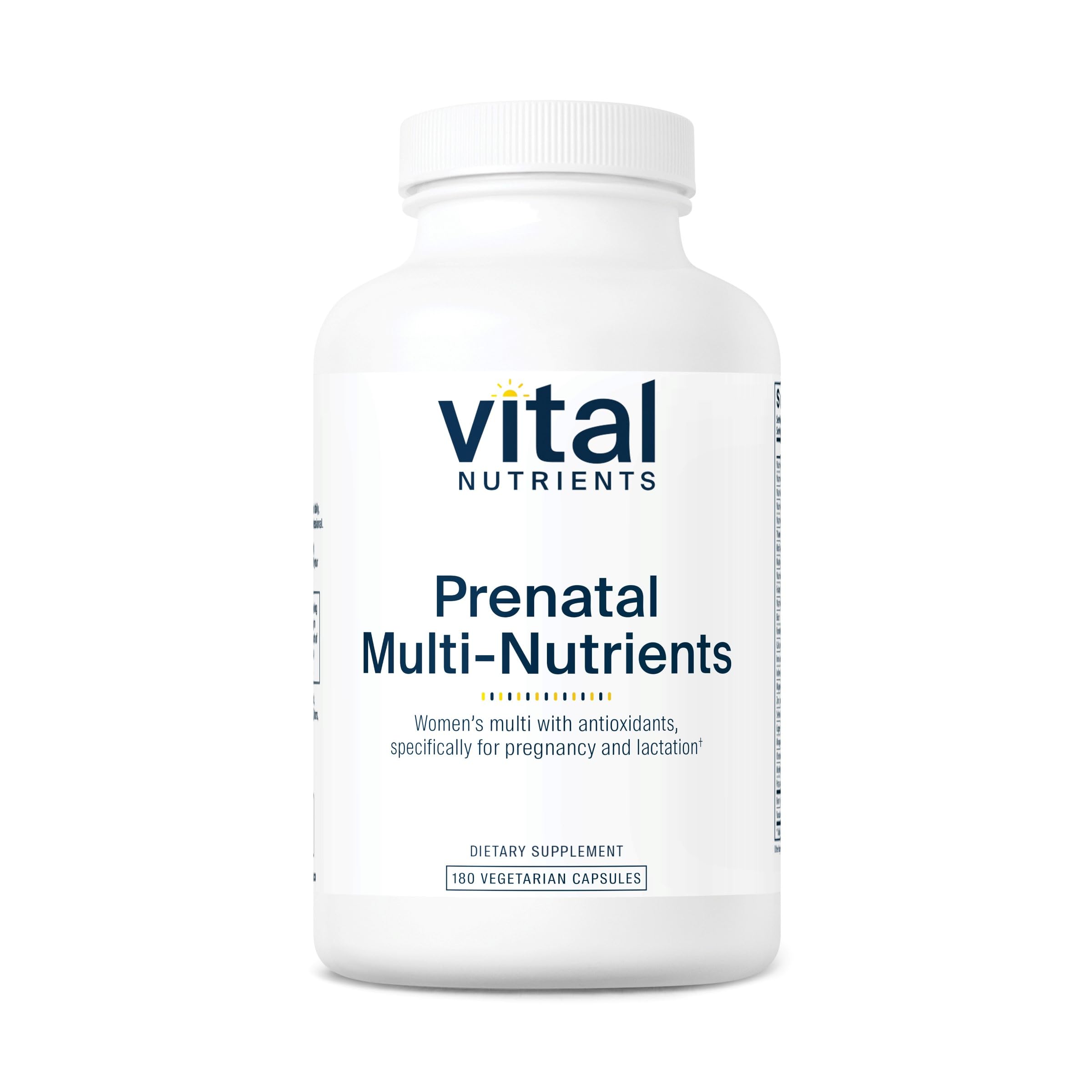
Nature's Bounty
Women's Multi, Complete Multivitamin, High Potency
2 Caplets · 60 servings · $0.11/serving
Best for
Ingredients (30)
Vitamin D
100%Dose
2000 IU
Target
1000–5000 IU
Form
Premium
Vitamin B-6
100%Dose
50 mg
Target
1.3–25 mg
Form
Premium
Pantothenic Acid
100%Dose
50 mg
Target
50–500 mg
Form
Premium
Iodine
100%Dose
150 mcg
Target
150–500 mcg
Form
Premium
Niacin
100%Dose
50 mg
Target
25–500 mg
Form
Standard
Other Ingredients (9)
MaltodextrinBinder
Spikes blood sugar faster than table sugar (glycemic index 85–105). Research links it to gut bacteria changes that may promote intestinal inflammation (Nickerson et al. 2015). Used as a cheap filler — adds nothing beneficial.
MannitolSweetener
A FODMAP sugar alcohol that can cause GI distress (bloating, gas, diarrhea) at higher doses. Supplement amounts are typically small, but individuals with IBS or sugar alcohol sensitivity may react even at low doses.
Silicon DioxideAnti-caking
Fine silica powder used to prevent clumping
Magnesium StearateLubricant
A salt of stearic acid used as a lubricant in tablet and capsule production
Carnauba WaxCoating
Hard plant wax from the carnauba palm used to glaze gummies and tablets
GelatinCapsule
Protein derived from collagen, used in traditional capsule shells
VanillinFlavor
The primary flavor compound of vanilla, used as a flavoring agent
Microcrystalline CelluloseBinder
Plant-derived cellulose used as a binder and filler in supplements
How to Take It
Take it anytime
No evidence a formula this broad works better at any particular hour. Take it with a meal containing fat — the vitamins A, D, E and K in it absorb poorly without one.
With a meal containing fat
Keep it away from coffee, tea and dairy
Space it a couple of hours from Green Tea Leaf Extract
General guidance based on the ingredients, not a substitute for the label or your doctor.
Price Check
$6.68
Cheaper than 97% of 798 multivitamins
Track this supplement in your stack
Get personalized insights, interactions, and coverage recommendations.
Get Started FreeSimilar Supplements
Vital Nutrients
PreNatal Multi-Nutrients
🤰 for Pregnancy
63
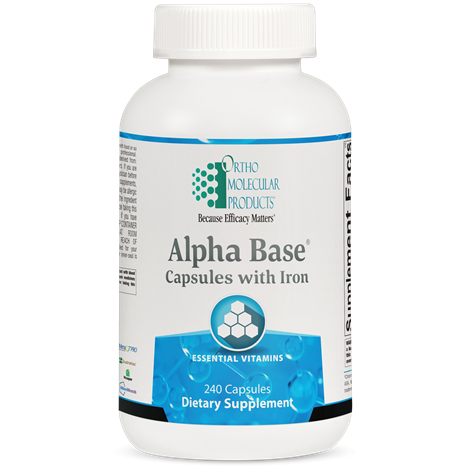
Ortho Molecular Products
Alpha Base® Capsules with Iron
💊 for General Health
74
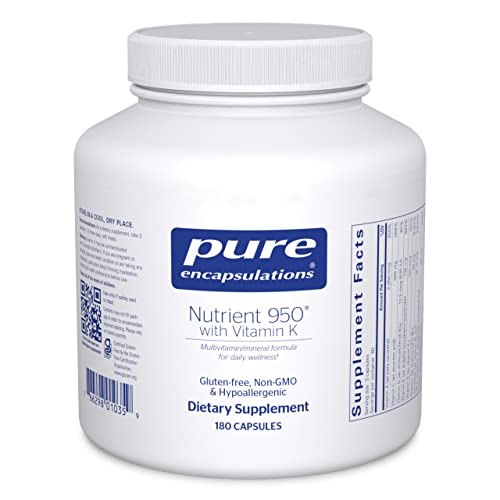
Pure Encapsulations
Nutrient 950 with Vitamin K
💊 for General Health
65
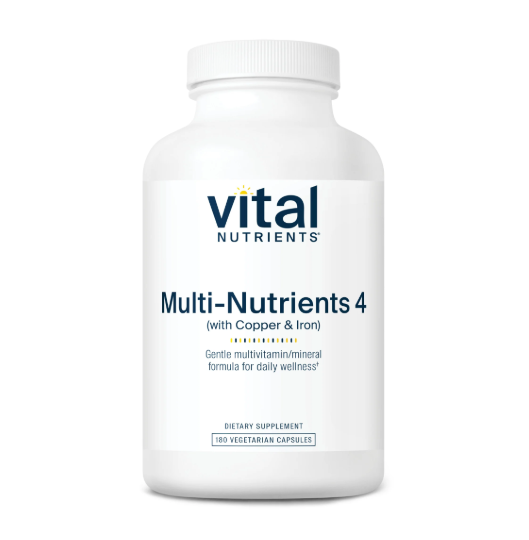
Vital Nutrients
Multi-Nutrients 4 (with Copper & Iron)
💊 for General Health
64
Ortho Molecular Products
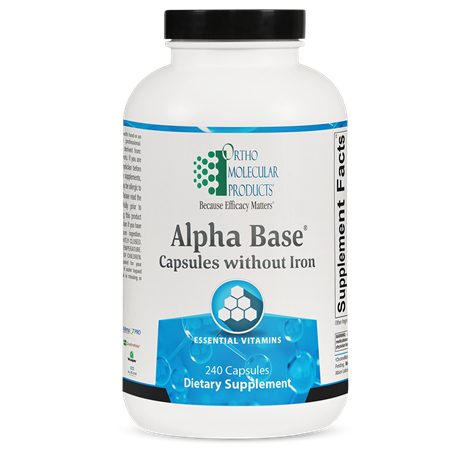
Alpha Base Capsules Without Iron
💊 for General Health
82
Sources & Scoring
Nutrient data (RDA, UL, and safety thresholds) sourced from the NIH Office of Dietary Supplements and the National Academies Dietary Reference Intakes (DRI).
This is not medical advice. Consult a healthcare provider before making changes to your supplement routine.
The score analyzes what's on the label: ingredient doses vs. studied ranges, chemical forms, evidence levels, and known interactions. It does not verify label accuracy or test for contaminants — for that, look for third-party certifications like USP or NSF.