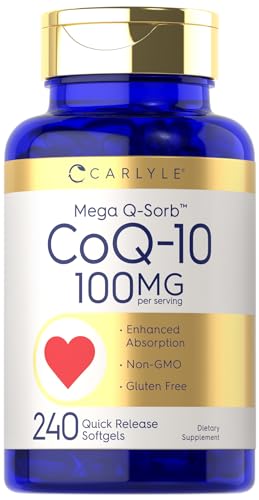
For heart health and cellular energy support, this gives you 200mg of **Coenzyme Q10** per softgel — right in the sweet spot of the 100–300mg clinical range. At the suggested one-to-two daily dose, you're getting 200–400mg, which covers the range used in most cardiovascular research.
The addition of **Black Pepper Extract** (piperine) is worth noting. What this means for you: piperine has been shown to improve absorption of various compounds, and the softgel format with rice bran oil provides the fat-soluble environment CoQ10 needs for uptake.
The main limitation is that this uses ubiquinone, the oxidized form of CoQ10. Your body must convert it to ubiquinol (the active form) before it can be used. If you're over 40, that conversion becomes less efficient, and a ubiquinol-based product would give you more per milligram.
BioStacks
Nature's Truth
CoQ-10 200 mg plus Black Pepper Extract
Capsule · 1 Softgel · 92 servings · $0.50/serving
Best for
Ingredients (2)
Coenzyme Q-10
100%Dose
200 mg
Target
100–300 mg
Form
—
Black Pepper Fruit Extract
4%Dose
0.2 mg
Target
5–20 mg
Form
—
Other Ingredients (6)
Titanium DioxideColorant
Banned in the EU (2022) over concerns that its ultra-fine particles may damage DNA in gut cells. Still allowed in the US. Used only for white coloring — provides no health benefit.
AnnattoColorant
Natural yellow-orange colorant derived from the seeds of the achiote tree (Bixa orellana)
Rice Bran OilCarrier
An oil pressed from rice bran, used as a carrier and emollient
GelatinCapsule
Protein derived from collagen, used in traditional capsule shells
GlycerinHumectant
Sweet-tasting liquid used in soft capsules and liquids
Sunflower LecithinEmulsifier
Non-GMO, non-allergenic emulsifier derived from sunflower seeds
How to Take It
Take it anytime
Fat-soluble — absorbs far better with a fat-containing meal. Time of day doesn't matter.
With a meal containing fat
On the label
Directions: For adults, take one (1) quick release softgel one to two times daily, preferably with meals.
General guidance based on the ingredients, not a substitute for the label or your doctor.
Price Check
$45.83
Pricier than 87% of 38 black pepper extract supplements
Track this supplement in your stack
Get personalized insights, interactions, and coverage recommendations.
Get Started FreeSimilar Supplements
Sources & Scoring
Nutrient data (RDA, UL, and safety thresholds) sourced from the NIH Office of Dietary Supplements and the National Academies Dietary Reference Intakes (DRI).
This is not medical advice. Consult a healthcare provider before making changes to your supplement routine.
The score analyzes what's on the label: ingredient doses vs. studied ranges, chemical forms, evidence levels, and known interactions. It does not verify label accuracy or test for contaminants — for that, look for third-party certifications like USP or NSF.