If you need to build up your iron stores, this is a seriously dosed product. You're getting 85mg of **Iron** per tablet — nearly double the 45mg tolerable upper limit, which signals this is designed for correcting deficiency under professional guidance, not casual daily use. The slow-release format helps reduce the GI distress common at this dose.
**Vitamin C** at 300mg supports your iron absorption, and the B-vitamin complex is well built: **Folate** as methylfolate (400mcg), **Vitamin B12** as methylcobalamin (500mcg), and B1/B2/B6 all at 25mg. These are the active, body-ready forms, and the doses align with clinical supplement ranges. **Copper** at 2mg rounds out the formula since it's essential for iron transport in your blood.
This is a therapeutic-dose product, not a maintenance supplement. The iron level alone means you should only take it if a healthcare provider has confirmed your need for aggressive iron repletion.
BioStacks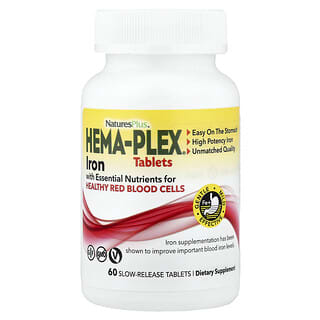
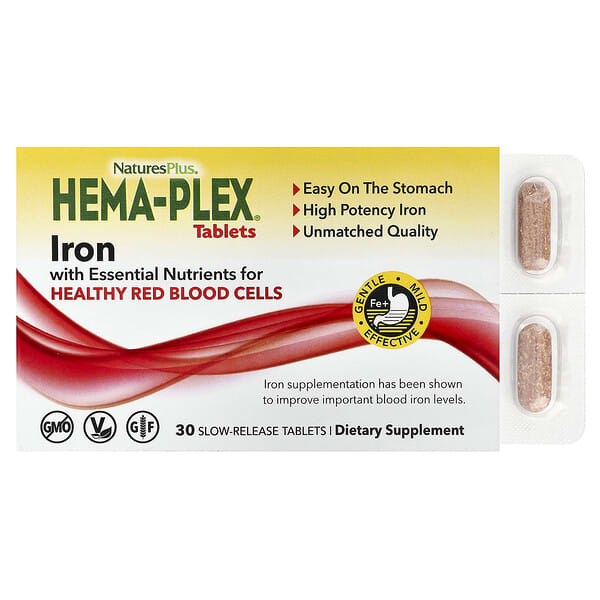
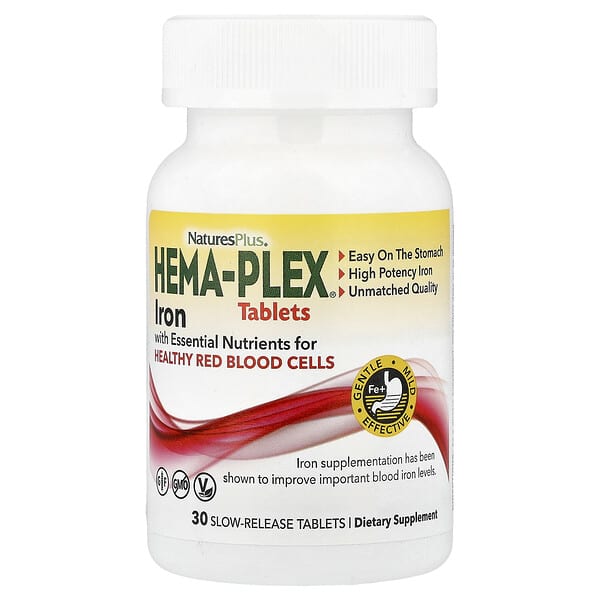
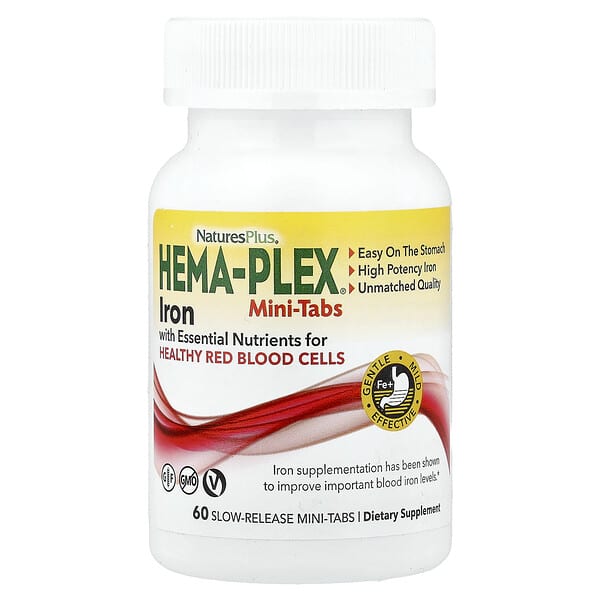
NaturesPlus
Hema-Plex Iron with Essential Nutrients for Healthy Red Blood Cells, 10 Slow Release Tablets
1 Tablet · 10 servings · $0.68/serving
Best for
Ingredients (19)
Folate
100%Dose
667 mcg
Target
400–800 mcg
Form
Premium
Vitamin B12
100%Dose
500 mcg
Target
250–5000 mcg
Form
Premium
Iron
100%Dose
85 mg
Target
15–45 mg
Form
Standard
Copper
100%Dose
2000 mcg
Target
1000–2000 mcg
Form
Standard
Manganese
100%Dose
5 mg
Target
1.8–5 mg
Form
Standard
Other Ingredients (15)
Magnesium StearateLubricant
A salt of stearic acid used as a lubricant in tablet and capsule production
ShellacCoating
Natural resin secreted by the lac bug, used as a coating and glazing agent for tablets and pills
Silicon DioxideAnti-caking
Fine silica powder used to prevent clumping
SpinachFood
Dried spinach (Spinacia oleracea) leaf powder, a whole-food green.
Spirulina Extract (Color)Colorant
Natural blue colorant derived from the cyanobacterium Arthrospira platensis (spirulina); the pigment is phycocyanin
Calcium CarbonateBuffer
Common calcium salt used as a buffering agent, filler, or mineral fortification in supplements
Sodium Copper ChlorophyllinColor
Water-soluble semisynthetic chlorophyll derivative used as a green colorant
Calcium CarbonateBuffer
Common calcium salt used as a buffering agent, filler, or mineral fortification in supplements
How to Take It
Take it anytime
No evidence a formula this broad works better at any particular hour. Take it with a meal containing fat — the vitamin E in it absorbs poorly without one.
With a meal containing fat
Keep it away from coffee, tea and dairy
Space it a couple of hours from Calcium, Magnesium and Green Tea Leaf Extract
On the label
As a dietary supplement, one tablet daily or as directed by your qualified healthcare practitioner.
General guidance based on the ingredients, not a substitute for the label or your doctor.
Price Check
$6.76
Cheaper than 97% of 798 multivitamins
Track this supplement in your stack
Get personalized insights, interactions, and coverage recommendations.
Get Started FreeSimilar Supplements
NaturesPlus
Hema-Plex Tablets
⚡ for Energy
63
NaturesPlus
Hema-Plex Iron, 30 Slow-Release Tablets
⚡ for Energy
61
NaturesPlus
Hema-Plex®, Iron with Essential Nutrients for Healthy Red Blood Cells, 30 Slow Release Tablets
⚡ for Energy
61
NaturesPlus
Hema-Plex®, 60 Slow Release Mini Tabs
⚡ for Energy
61
NaturesPlus
Hema-Plex Softgels
⚡ for Energy
52
Sources & Scoring
Nutrient data (RDA, UL, and safety thresholds) sourced from the NIH Office of Dietary Supplements and the National Academies Dietary Reference Intakes (DRI).
This is not medical advice. Consult a healthcare provider before making changes to your supplement routine.
The score analyzes what's on the label: ingredient doses vs. studied ranges, chemical forms, evidence levels, and known interactions. It does not verify label accuracy or test for contaminants — for that, look for third-party certifications like USP or NSF.