This is an iron-recovery formula built around 85mg of **Iron** in a chelated amino acid form — nearly double the 45mg tolerable upper limit, which puts it squarely in therapeutic territory for treating diagnosed deficiency or anemia. If your ferritin levels are normal, this dose is more than you need, so check with your doctor before starting. The 300mg of **Vitamin C** is a smart pairing — it significantly boosts iron absorption, and the two have established clinical synergy.
The B-vitamin complex adds meaningful support for blood cell formation. **Vitamin B12** (500mcg as methylcobalamin) and **Folate** (400mcg as L-methylfolate) are both in bioactive forms your body can use directly — important because B12 and folate deficiencies often accompany iron-deficiency anemia. **Thiamine**, **Riboflavin**, **Vitamin B6**, and **Niacin** are all dosed at standard B-complex levels.
The minerals beyond iron are present in token amounts. **Zinc** at 5mg is a third of the typical supplement dose, **Selenium** at 10mcg is a tenth of the studied range, and **Calcium** at 25mg is negligible. These won't move the needle — the value here is the high-dose iron with absorption-enhancing cofactors, not broad mineral coverage.
BioStacks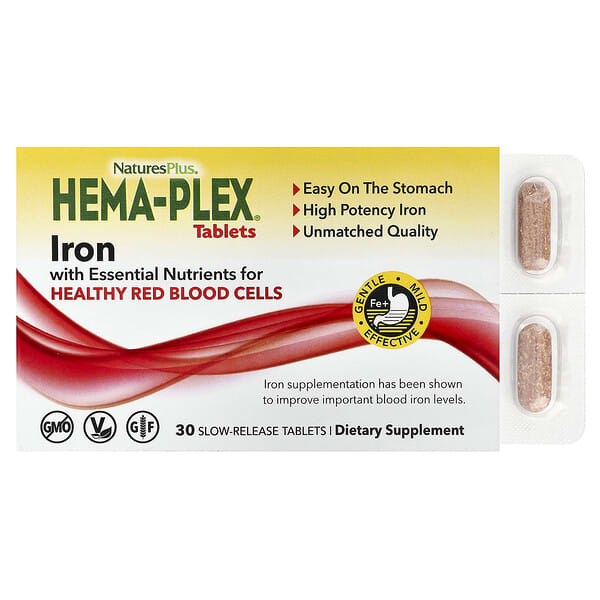
Best for
Ingredients (19)
Vitamin B12
100%Dose
500 mcg
Target
250–5000 mcg
Form
Premium
Folate
100%Dose
400 mcg
Target
400–800 mcg
Form
Premium
Thiamine
100%Dose
25 mg
Target
25–100 mg
Form
Premium
Vitamin B6
100%Dose
25 mg
Target
25–100 mg
Form
Premium
Iron
100%Dose
85 mg
Target
15–45 mg
Form
Standard
Other Ingredients (15)
Magnesium StearateLubricant
A salt of stearic acid used as a lubricant in tablet and capsule production
ShellacCoating
Natural resin secreted by the lac bug, used as a coating and glazing agent for tablets and pills
Silicon DioxideAnti-caking
Fine silica powder used to prevent clumping
SpinachFood
Dried spinach (Spinacia oleracea) leaf powder, a whole-food green.
Spirulina Extract (Color)Colorant
Natural blue colorant derived from the cyanobacterium Arthrospira platensis (spirulina); the pigment is phycocyanin
Calcium CarbonateBuffer
Common calcium salt used as a buffering agent, filler, or mineral fortification in supplements
Sodium Copper ChlorophyllinColor
Water-soluble semisynthetic chlorophyll derivative used as a green colorant
Dicalcium PhosphateBinder
Calcium and phosphorus compound used as binder
How to Take It
Take it anytime
No evidence a formula this broad works better at any particular hour. Take it with a meal containing fat — the vitamin E in it absorbs poorly without one.
With a meal containing fat
Keep it away from coffee, tea and dairy
Space it a couple of hours from Calcium, Magnesium and Green Tea Leaf Extract
On the label
Directions: As a dietary supplement, one tablet daily or as directed by your qualified healthcare practitioner.
General guidance based on the ingredients, not a substitute for the label or your doctor.
Price Check
$22.48
Near the median of 798 multivitamins
Track this supplement in your stack
Get personalized insights, interactions, and coverage recommendations.
Get Started FreeSimilar Supplements
NaturesPlus
Hema-Plex Iron, 30 Slow-Release Tablets
⚡ for Energy
61
NaturesPlus
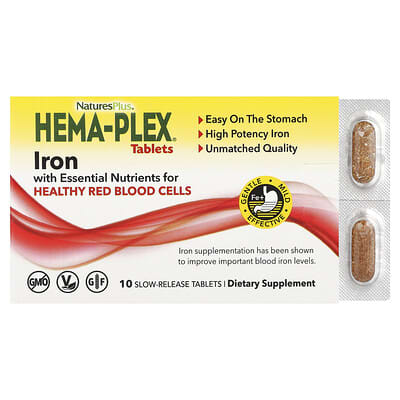
Hema-Plex Iron with Essential Nutrients for Healthy Red Blood Cells, 10 Slow Release Tablets
⚡ for Energy
61
NaturesPlus
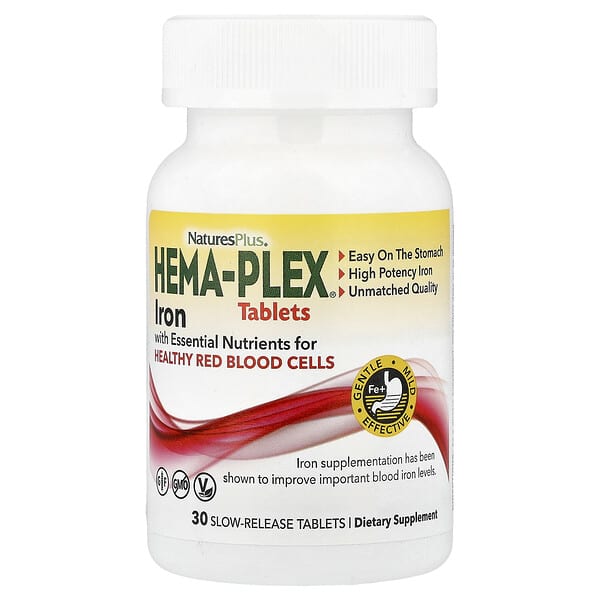
Hema-Plex®, Iron with Essential Nutrients for Healthy Red Blood Cells, 30 Slow Release Tablets
⚡ for Energy
61
NaturesPlus
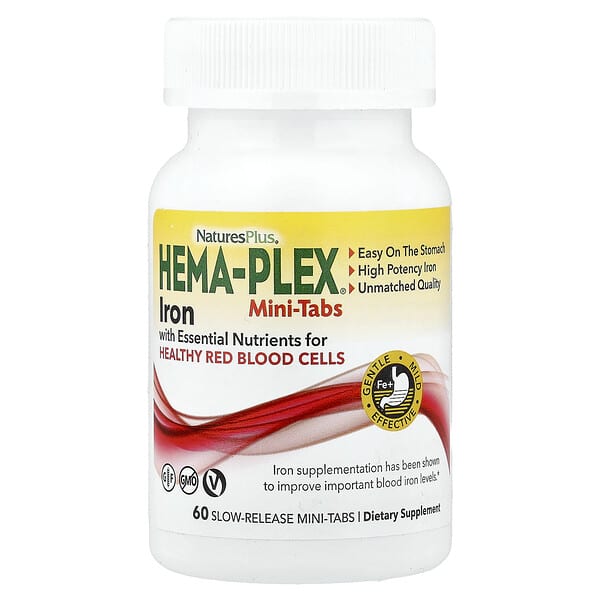
Hema-Plex®, 60 Slow Release Mini Tabs
⚡ for Energy
61
NaturesPlus
Hema-Plex Softgels
⚡ for Energy
52
Sources & Scoring
Nutrient data (RDA, UL, and safety thresholds) sourced from the NIH Office of Dietary Supplements and the National Academies Dietary Reference Intakes (DRI).
This is not medical advice. Consult a healthcare provider before making changes to your supplement routine.
The score analyzes what's on the label: ingredient doses vs. studied ranges, chemical forms, evidence levels, and known interactions. It does not verify label accuracy or test for contaminants — for that, look for third-party certifications like USP or NSF.