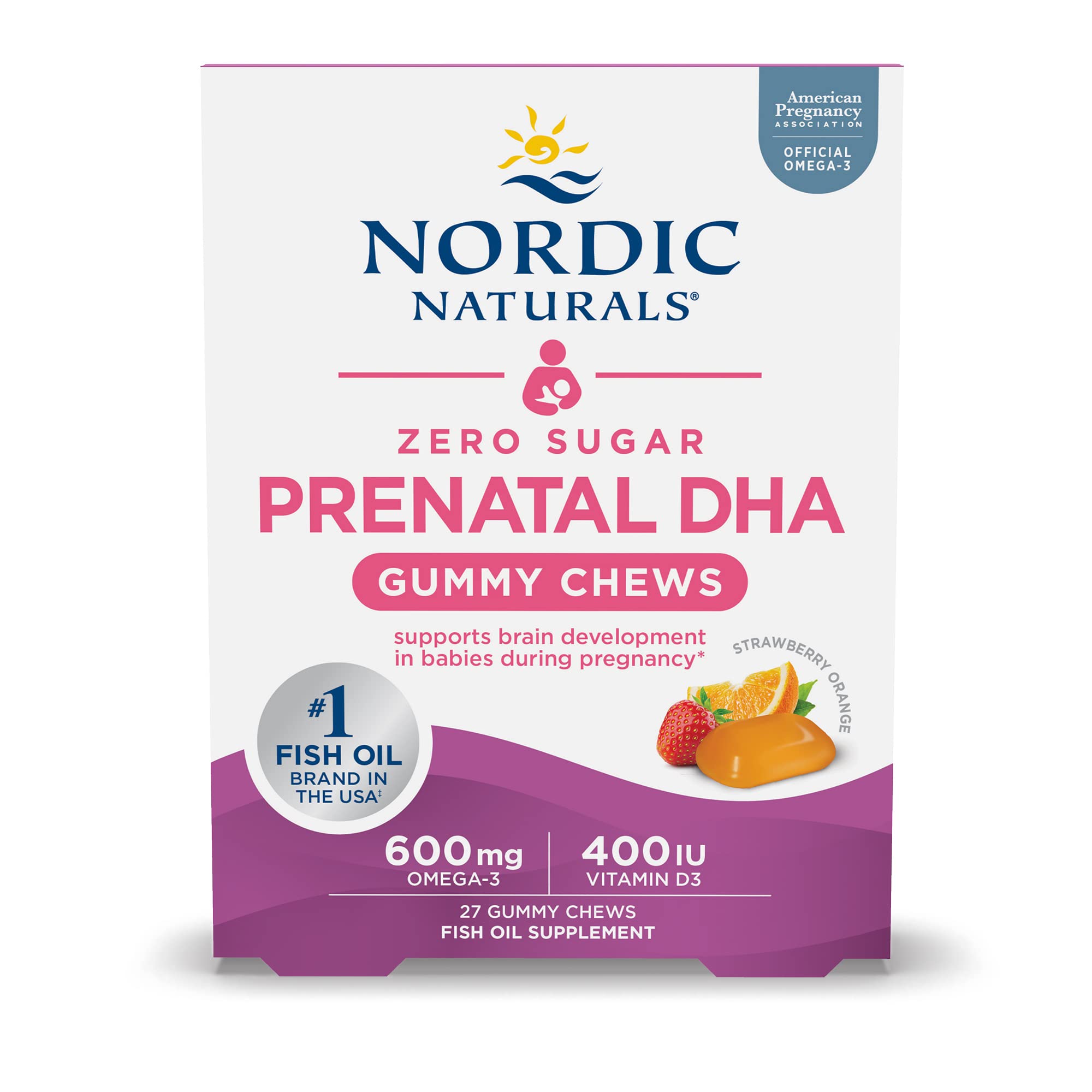
You're getting 600mg of total **Omega-3s** per gummy — with 355mg of **DHA** and 145mg of **EPA**. For children ages 2–6, this is a solid dose: pediatric research on cognitive and visual development typically uses 300–600mg of DHA daily, so one gummy puts your child right in that range. The DHA-heavy ratio makes sense here, since DHA is the omega-3 most concentrated in brain and retinal tissue.
The zero-sugar formula uses xylitol and sorbitol instead of added sugars, which is a practical win for a daily children's supplement. The fish oil source is purified deep sea fish oil, though the label doesn't specify whether it's in triglyceride or ethyl ester form — triglyceride absorbs meaningfully better, and Nordic Naturals typically uses triglyceride form across their line.
For adults or older children with higher omega-3 needs, 600mg falls well short of the 1,000–3,000mg clinical range for heart and mood support. This is sized specifically for young kids — if your child is over 6, you may want to look at a higher-potency option.
BioStacks
Nordic Naturals
Zero Sugar Children's DHA Gummy Chews Tropical Punch
1 Gummy · 30 servings · $0.62/serving
Best for
Ingredients (2)
DHA
100%Dose
355 mg
Target
250–1000 mg
Form
—
EPA
29%Dose
145 mg
Target
500–2000 mg
Form
—
Children's product — scores and dose assessments use adult reference ranges. Actual adequacy may differ for children.
Nutrition
Calories, macros & sodium.
- Calories10
- Total Fat1 Gram(s)
- Sodium10 mg
Other Ingredients (10)
SorbitolSweetener
A FODMAP sugar alcohol that may trigger GI discomfort (bloating, gas) in individuals with IBS or sorbitol malabsorption, even at small amounts found in supplements. Avoided in low-FODMAP diets.
XylitolSweetener
A FODMAP sugar alcohol that can cause GI distress (bloating, gas, diarrhea) at moderate doses (>10-20g/day), though supplement amounts are typically small. Extremely toxic to dogs — households with pets should store securely.
Natural FlavorsFlavor
Broad regulatory category of flavor constituents derived from natural sources. Composition is proprietary and not disclosed — 'Natural Flavors' can include several hundred different compounds depending on the target flavor profile, including hexane-extracted constituents and proprietary carrier solvents. 'Natural' is a regulatory definition (21 CFR §101.22), not a safety guarantee.
Paprika OleoresinColorant
Natural orange-red colorant extracted from sweet red peppers (Capsicum annuum); the pigments are capsanthin and capsorubin
GelatinCapsule
Protein derived from collagen, used in traditional capsule shells
Malic AcidAcidulant
Naturally occurring organic acid found in apples, used as a flavor enhancer and acidulant in supplements
Fish Oil, PurifiedLipid Base
Purified oil from fish used as a carrier and lipid base in omega-3 and fat-soluble supplements
Purified WaterSolvent
Water meeting USP specifications used as solvent/vehicle in gummies and liquids
How to Take It
Take it anytime
Take with a meal — absorption improves with dietary fat and it prevents fishy burps.
With food
On the label
Suggested Use: For ages 2-6 years, one gummy daily, or as directed by your health care professional. Chew and enjoy!
General guidance based on the ingredients, not a substitute for the label or your doctor.
Price Check
$18.66
Cheaper than 85% of 47 brain supplements
Track this supplement in your stack
Get personalized insights, interactions, and coverage recommendations.
Get Started FreeSimilar Supplements
Sources & Scoring
Nutrient data (RDA, UL, and safety thresholds) sourced from the NIH Office of Dietary Supplements and the National Academies Dietary Reference Intakes (DRI).
This is not medical advice. Consult a healthcare provider before making changes to your supplement routine.
The score analyzes what's on the label: ingredient doses vs. studied ranges, chemical forms, evidence levels, and known interactions. It does not verify label accuracy or test for contaminants — for that, look for third-party certifications like USP or NSF.