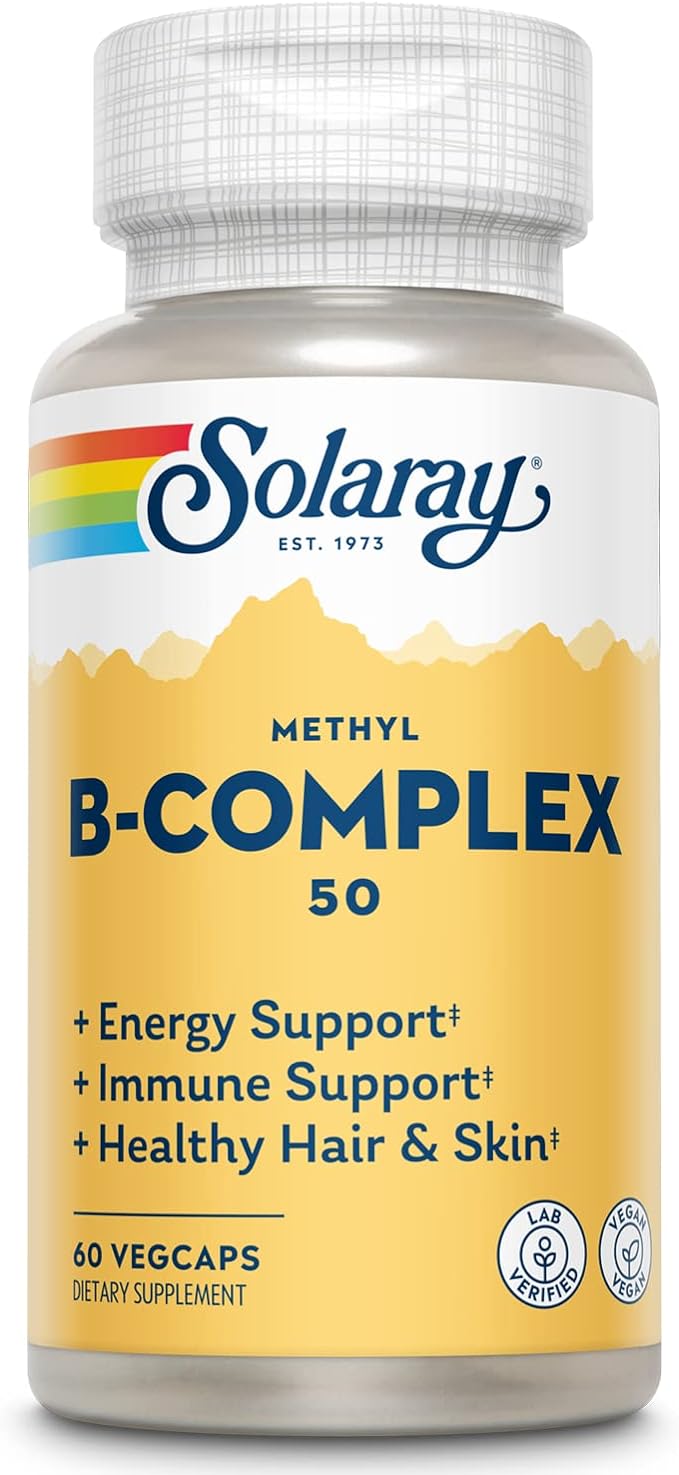
This B-complex delivers a uniform 50mg or 50mcg dose across all eight B vitamins, which works well for some but leaves others far short. **Thiamine**, **Riboflavin**, and **Pantothenic Acid** all land squarely within their clinical ranges for energy metabolism and stress support. **Vitamin B6** at 50mg is solidly dosed for neurotransmitter production, though it uses pyridoxine — a form your body must convert before it can use.
**Vitamin B12** is the biggest gap. At 50mcg, you're getting just a fraction of the 250–5,000mcg range typically used in supplements — B12 absorbs poorly, which is exactly why most B-complexes dose it much higher. The form here is cyanocobalamin, which requires an extra conversion step. **Folate** is provided as synthetic folic acid at 400mcg, which covers the RDA but may not serve you well if you carry common MTHFR gene variants that impair folic acid conversion.
The uniform "50 across the board" concept is the core tradeoff. It gives you strong doses where 50mg is clinically meaningful (B1, B2, B5, B6) but leaves B12 significantly underdosed for anyone relying on this as their primary source.
BioStacks
Best for
Ingredients (11)
Niacin
100%Dose
50 mg
Target
25–500 mg
Form
—
Pantothenic Acid
100%Dose
50 mg
Target
50–500 mg
Form
Premium
Vitamin B6
100%Dose
50 mg
Target
25–100 mg
Form
Premium
Biotin
5%Dose
50 mcg
Target
1000–5000 mcg
Form
—
Riboflavin
100%Dose
50 mg
Target
25–100 mg
Form
Budget
Other Ingredients (4)
Magnesium StearateLubricant
A salt of stearic acid used as a lubricant in tablet and capsule production
Silicon DioxideAnti-caking
Fine silica powder used to prevent clumping
HypromelloseCapsule
Plant-derived capsule material from cellulose
Microcrystalline CelluloseBinder
Plant-derived cellulose used as a binder and filler in supplements
How to Take It
Take it anytime
No evidence a formula this broad works better at any particular hour. Take it with food — the niacin and choline in it are what makes this kind of product feel nauseating on an empty stomach.
With food
On the label
Suggested Usage: Take 1 capsule daily with a meal.
General guidance based on the ingredients, not a substitute for the label or your doctor.
Price Check
$11.62
Cheaper than 88% of 239 energy supplements
Track this supplement in your stack
Get personalized insights, interactions, and coverage recommendations.
Get Started FreeSimilar Supplements
Sources & Scoring
Nutrient data (RDA, UL, and safety thresholds) sourced from the NIH Office of Dietary Supplements and the National Academies Dietary Reference Intakes (DRI).
This is not medical advice. Consult a healthcare provider before making changes to your supplement routine.
The score analyzes what's on the label: ingredient doses vs. studied ranges, chemical forms, evidence levels, and known interactions. It does not verify label accuracy or test for contaminants — for that, look for third-party certifications like USP or NSF.