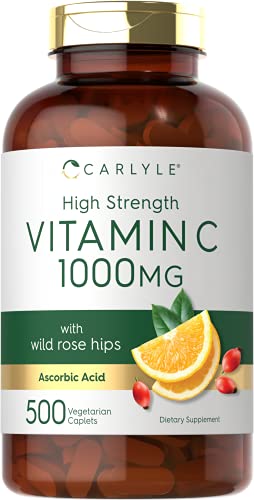
You're getting 1,000mg of **Vitamin C** per tablet — right in the middle of the clinically studied range (250–2,000mg) for immune support, collagen synthesis, and antioxidant protection. At one tablet daily, you're covered for a solid maintenance dose without approaching the 2,000mg upper limit.
The form here is standard ascorbic acid, which absorbs well at this dose level but starts to plateau around 1,000mg — your body will use most of it, but absorption efficiency drops if you take more. The 25mg of **Rose Hips** on the label is largely cosmetic at that amount, sitting at roughly 1% of the dose studied for any clinical benefit.
If you're looking for higher doses or better absorption at those levels, a buffered or liposomal form would serve you better. But at 1,000mg once daily for general immune and antioxidant support, this delivers what it promises at a straightforward dose.
BioStacks
Other Ingredients (3)
Magnesium StearateLubricant
A salt of stearic acid used as a lubricant in tablet and capsule production
Coating (unspecified)Coating
Generic tablet coating declaration where the label does not itemize the coating's components; modern aqueous film coatings are typically cellulose-based (HPMC) with a plasticizer
Microcrystalline CelluloseBinder
Plant-derived cellulose used as a binder and filler in supplements
How to Take It
Take it anytime
Plain ascorbic acid is acidic — high doses can bite on an empty stomach. Take it with food if that happens, and split doses above ~500 mg.
With or without food
On the label
Suggested usage: Take 1 tablet daily.
General guidance based on the ingredients, not a substitute for the label or your doctor.
Price Check
$19.59
Near the median of 375 vitamin C supplements
Track this supplement in your stack
Get personalized insights, interactions, and coverage recommendations.
Get Started FreeSimilar Supplements
Sources & Scoring
Nutrient data (RDA, UL, and safety thresholds) sourced from the NIH Office of Dietary Supplements and the National Academies Dietary Reference Intakes (DRI).
This is not medical advice. Consult a healthcare provider before making changes to your supplement routine.
The score analyzes what's on the label: ingredient doses vs. studied ranges, chemical forms, evidence levels, and known interactions. It does not verify label accuracy or test for contaminants — for that, look for third-party certifications like USP or NSF.