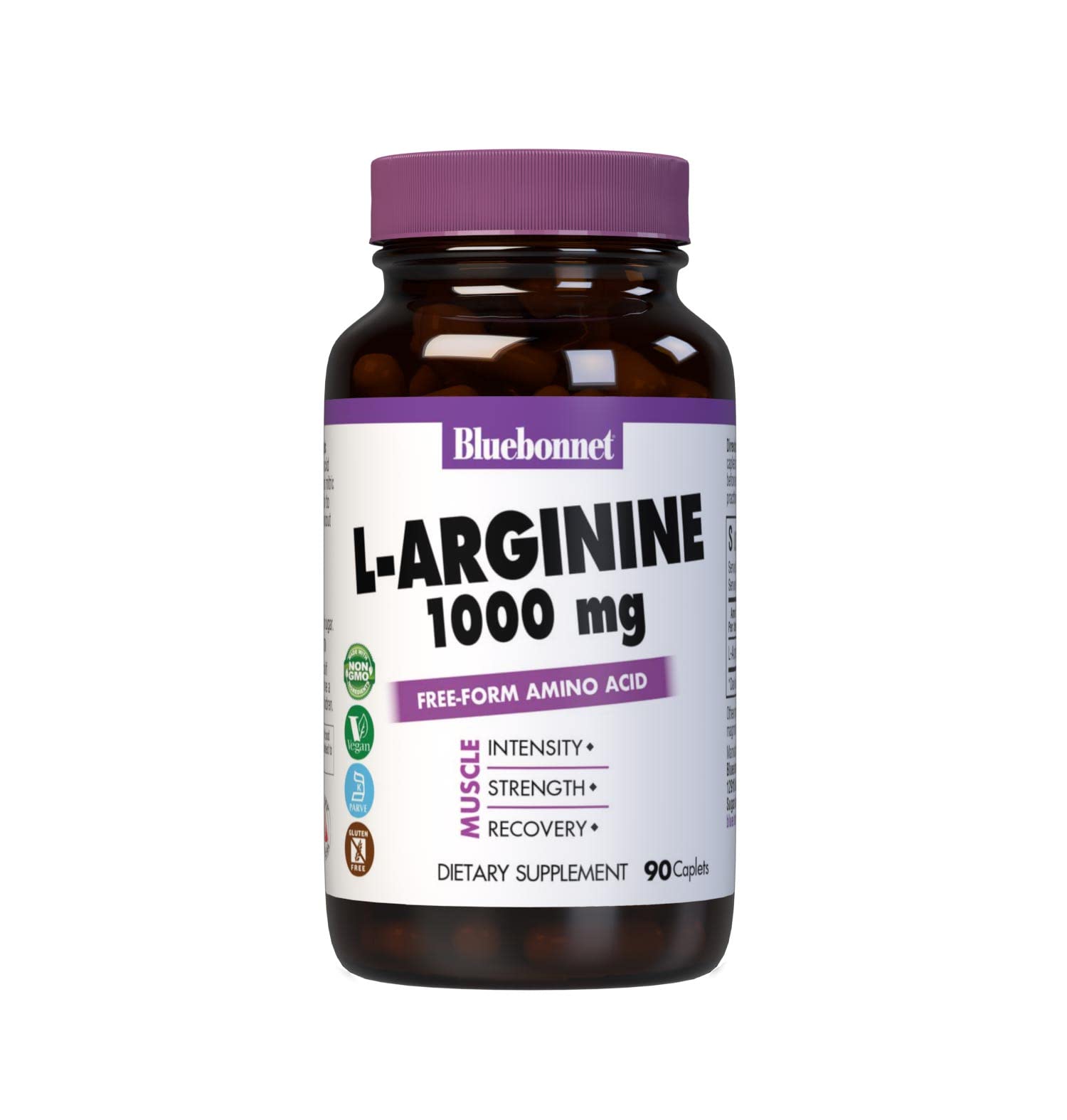
For blood flow and cardiovascular support, the suggested two tablets daily give you 2,000mg of **L-Arginine** — right at the bottom of the 2,000–6,000mg clinical range. That's enough to reach the minimum effective threshold, but most research showing clear benefits in exercise performance and circulation uses 3,000–6,000mg per day.
The form here is L-Arginine HCl, a standard and well-absorbed form. Each tablet delivers 1,000mg of free-form arginine, so you have flexibility to scale your dose up to 3–4 tablets if your goals require it — just note the label suggests taking them between meals or at bedtime for better absorption.
The label suggests taking tablets between meals or at bedtime for better absorption, and the 120-tablet bottle gives you a 60-day supply at the two-per-day dose. If you're also on blood pressure medication, check with your doctor before starting — arginine can amplify the effect of antihypertensives.
BioStacks
Other Ingredients (8)
Silicon DioxideAnti-caking
Fine silica powder used to prevent clumping
Calcium CarbonateBuffer
Common calcium salt used as a buffering agent, filler, or mineral fortification in supplements
Croscarmellose SodiumDisintegrant
Cross-linked cellulose derivative used as a superdisintegrant
GlycerinHumectant
Sweet-tasting liquid used in soft capsules and liquids
Hydroxypropyl CelluloseBinder
An inert modified-cellulose polymer used as a binder, film-former, and disintegrant.
HypromelloseCapsule
Plant-derived capsule material from cellulose
Microcrystalline CelluloseBinder
Plant-derived cellulose used as a binder and filler in supplements
Stearic AcidLubricant
Saturated fatty acid used as tablet lubricant
How to Take It
Take it anytime
Take between meals — food blunts the rise in plasma arginine.
On an empty stomach
Split into 2 doses across the day
On the label
Suggested Usage: Take 1 tablet twice daily as needed. Take between meals or at bedtime with at least 8 oz. of water or juice to facilitate absorption.
General guidance based on the ingredients, not a substitute for the label or your doctor.
Price Check
$18.36
Near the median of 64 arginine supplements
Track this supplement in your stack
Get personalized insights, interactions, and coverage recommendations.
Get Started FreeSimilar Supplements
Sources & Scoring
Nutrient data (RDA, UL, and safety thresholds) sourced from the NIH Office of Dietary Supplements and the National Academies Dietary Reference Intakes (DRI).
This is not medical advice. Consult a healthcare provider before making changes to your supplement routine.
The score analyzes what's on the label: ingredient doses vs. studied ranges, chemical forms, evidence levels, and known interactions. It does not verify label accuracy or test for contaminants — for that, look for third-party certifications like USP or NSF.