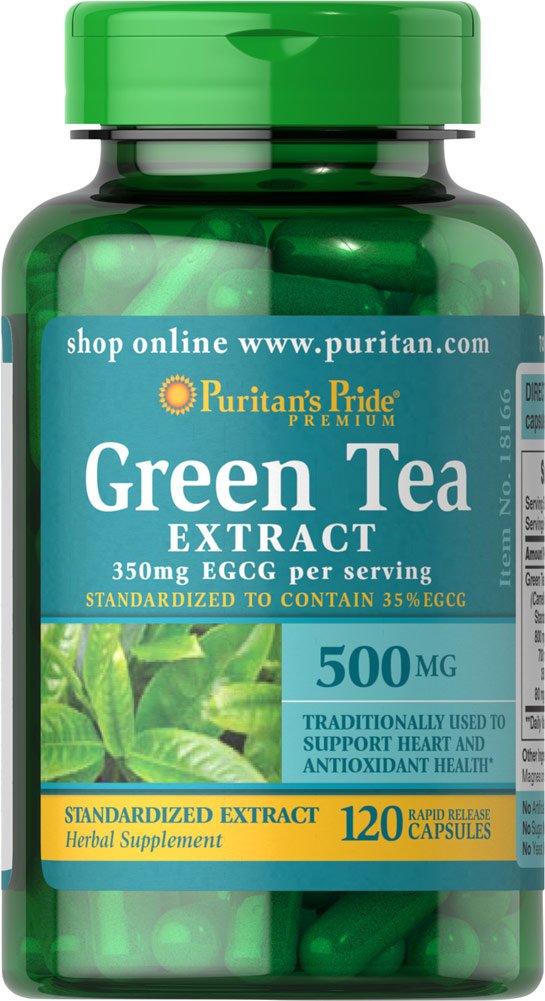
Each capsule delivers 400 mg of **green tea leaf extract** standardized to 80% total catechins, yielding 200 mg of **EGCG** (epigallocatechin gallate), the most researched catechin in green tea. Multiple meta-analyses support EGCG for modest reductions in LDL cholesterol and total cholesterol, along with potent antioxidant activity. At 200 mg EGCG per capsule, you're at the entry point of the clinically studied range (200-500 mg), so one capsule gets you started but two would bring you closer to the doses used in cardiovascular and metabolic research.
The extract is nearly caffeine-free at just 4 mg per capsule, roughly one-thirtieth of a cup of coffee. This makes it practical if you're sensitive to caffeine or taking it later in the day. An additional 50 mg of **decaffeinated green tea** adds extra polyphenols beyond the standardized EGCG content. The veg capsule shell keeps the product suitable for plant-based diets.
One important safety detail: the European Food Safety Authority sets a precautionary ceiling of 800 mg EGCG per day from supplements due to rare reports of liver stress. At 200 mg per capsule, you have wide margin below that threshold even at two capsules daily. Always take green tea extract with food, as the label directs, since fasted use is linked to the majority of reported liver-related side effects.
BioStacks
Every active here is dosed below the amount studied to work. See how each one compares in the breakdown below.
Best for
Ingredients (2)
Green Tea, Decaffeinated
25%Dose
50 mg
Target
200–500 mg
Form
—
Caffeine
4%Dose
4 mg
Target
100–400 mg
Form
—
Other Ingredients (4)
Silicon DioxideAnti-caking
Fine silica powder used to prevent clumping
HypromelloseCapsule
Plant-derived capsule material from cellulose
Microcrystalline CelluloseBinder
Plant-derived cellulose used as a binder and filler in supplements
Stearic AcidLubricant
Saturated fatty acid used as tablet lubricant
How to Take It
Best taken in the morning
Contains caffeine — keep it to the morning. Take with food; high-dose EGCG on an empty stomach stresses the liver.
With food
Keep it away from iron-rich meals
Space it a couple of hours from Iron
On the label
Take with food.
General guidance based on the ingredients, not a substitute for the label or your doctor.
Price Check
$20.81
Near the median of 58 green tea leaf extract supplements
Track this supplement in your stack
Get personalized insights, interactions, and coverage recommendations.
Get Started FreeSimilar Supplements
Sources & Scoring
Nutrient data (RDA, UL, and safety thresholds) sourced from the NIH Office of Dietary Supplements and the National Academies Dietary Reference Intakes (DRI).
This is not medical advice. Consult a healthcare provider before making changes to your supplement routine.
The score analyzes what's on the label: ingredient doses vs. studied ranges, chemical forms, evidence levels, and known interactions. It does not verify label accuracy or test for contaminants — for that, look for third-party certifications like USP or NSF.