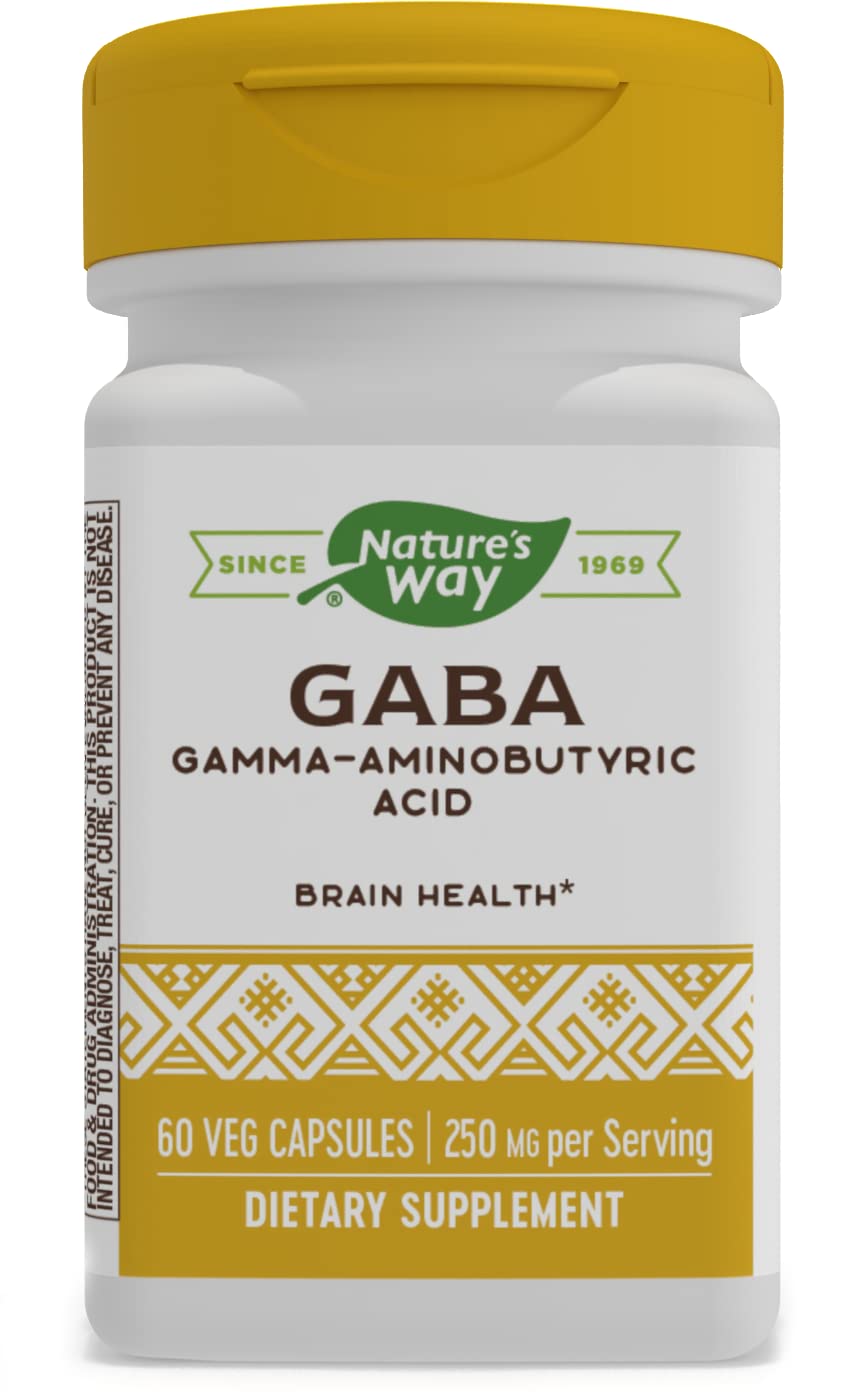
This product provides 500 mg of **GABA** (Gamma-Aminobutyric Acid) per serving in a pure powder format with no other ingredients. GABA is your brain's main calming neurotransmitter — it slows down nerve activity, which is why it's associated with relaxation and sleep. At 500 mg per serving with 2-3 daily servings recommended, this delivers a generous dose well above the commonly supplemented range of 100-300 mg.
The honest caveat: whether supplemental GABA actually crosses your blood-brain barrier is still debated among researchers. Some evidence suggests it may work indirectly through your gut's nervous system via the vagus nerve, rather than reaching the brain directly. The clinical trial data is mixed — a few small studies show modest benefits for stress reduction and sleep onset, but there are no large-scale meta-analyses confirming these effects. The evidence level remains low compared to better-studied calming compounds like magnesium or L-theanine.
The powder format gives you flexibility to adjust your dose, and taking it on an empty stomach as directed may improve absorption. If you're exploring natural options for relaxation support, this is a straightforward formulation with nothing else added — but keep your expectations grounded in the current science.
BioStacks
Other Ingredients
No other ingredients listed
How to Take It
Best taken in the evening
Used in the evening for relaxation.
With or without food
Label directs 2 servings — keep one for the evening
On the label
Suggested Usage: Take 1/4 level teaspoon 2 to 3 times daily as needed, mixed in juice or water, preferably on an empty stomach. Do not exceed recommended dosage.
General guidance based on the ingredients, not a substitute for the label or your doctor.
Price Check
$12.24
Cheaper than 75% of 48 GABA supplements
Track this supplement in your stack
Get personalized insights, interactions, and coverage recommendations.
Get Started FreeSimilar Supplements
Sources & Scoring
Nutrient data (RDA, UL, and safety thresholds) sourced from the NIH Office of Dietary Supplements and the National Academies Dietary Reference Intakes (DRI).
This is not medical advice. Consult a healthcare provider before making changes to your supplement routine.
The score analyzes what's on the label: ingredient doses vs. studied ranges, chemical forms, evidence levels, and known interactions. It does not verify label accuracy or test for contaminants — for that, look for third-party certifications like USP or NSF.