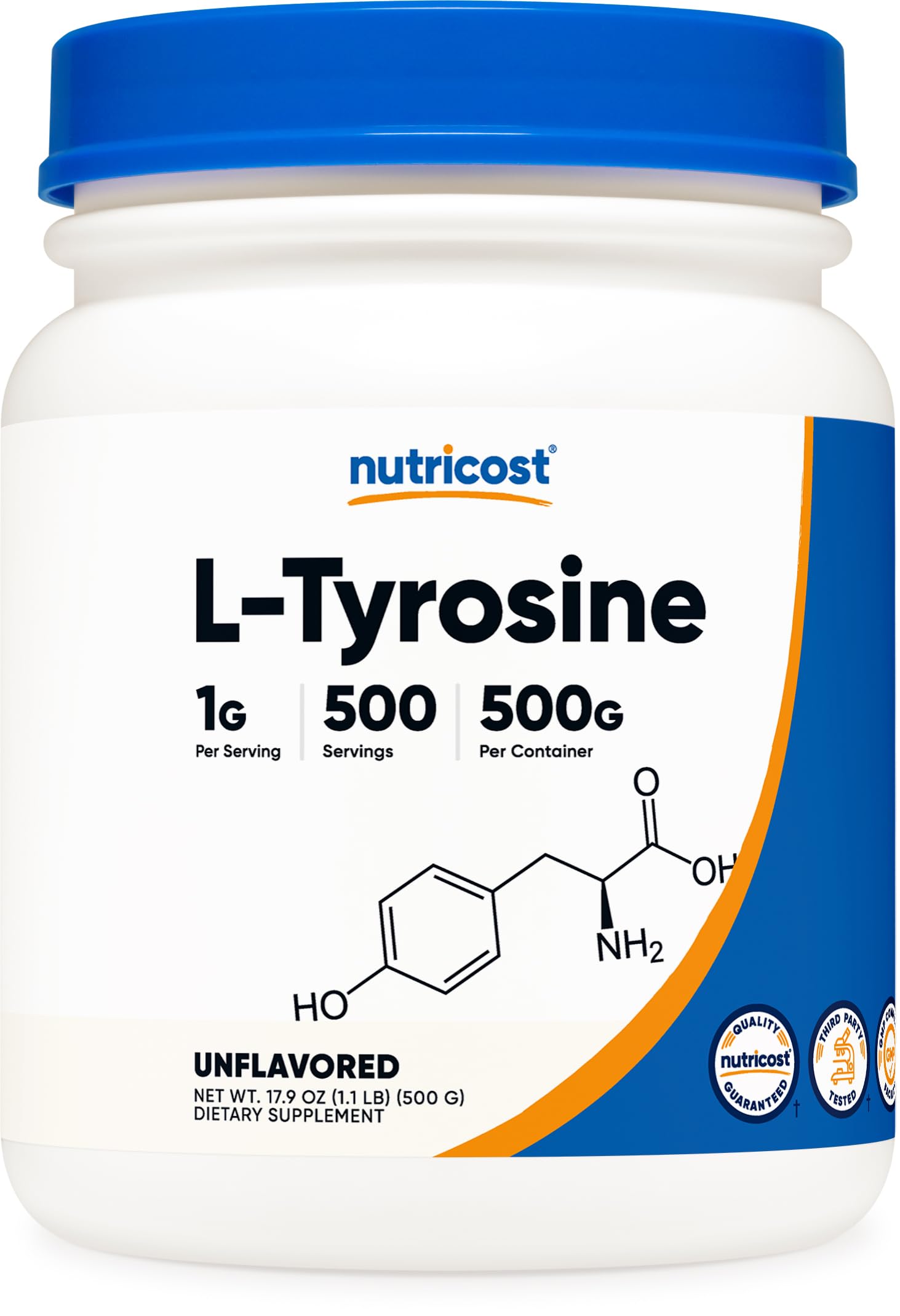
**L-Tyrosine** at 500mg per capsule in the preferred free-form, which your body absorbs more efficiently than the N-Acetyl (NALT) version. The label suggests 1-3 capsules daily, putting you at 500-1,500mg — right within the 500-2,000mg range studied for supporting focus and mental performance under stress. At even a single capsule, you're hitting the minimum effective dose.
Tyrosine is your body's raw material for making dopamine, norepinephrine, and thyroid hormones. The clinical research is clearest for acute stress situations — sleep deprivation, cold exposure, demanding tasks — where it helps preserve working memory and attention. If you're looking for a general cognitive boost during normal, low-stress conditions, the evidence is weaker.
Since tyrosine relies on **vitamin B6** and **vitamin C** as cofactors to complete the dopamine and norepinephrine pathway, you'll want to make sure you're getting enough of both from your diet or other supplements — they're not included here.
BioStacks
Other Ingredients (3)
Silicon DioxideAnti-caking
Fine silica powder used to prevent clumping
HypromelloseCapsule
Plant-derived capsule material from cellulose
Stearic AcidLubricant
Saturated fatty acid used as tablet lubricant
How to Take It
Best taken in the morning
Take in the morning. It competes with other amino acids for uptake, so a protein-heavy meal blunts it.
On an empty stomach
Keep it away from protein-heavy meals
On the label
Suggested Usage: Take 1 capsule 1 to 3 times daily, preferably between meals.
General guidance based on the ingredients, not a substitute for the label or your doctor.
Price Check
$11.01
Cheaper than 81% of 38 tyrosine supplements
Track this supplement in your stack
Get personalized insights, interactions, and coverage recommendations.
Get Started FreeSimilar Supplements
Sources & Scoring
Nutrient data (RDA, UL, and safety thresholds) sourced from the NIH Office of Dietary Supplements and the National Academies Dietary Reference Intakes (DRI).
This is not medical advice. Consult a healthcare provider before making changes to your supplement routine.
The score analyzes what's on the label: ingredient doses vs. studied ranges, chemical forms, evidence levels, and known interactions. It does not verify label accuracy or test for contaminants — for that, look for third-party certifications like USP or NSF.