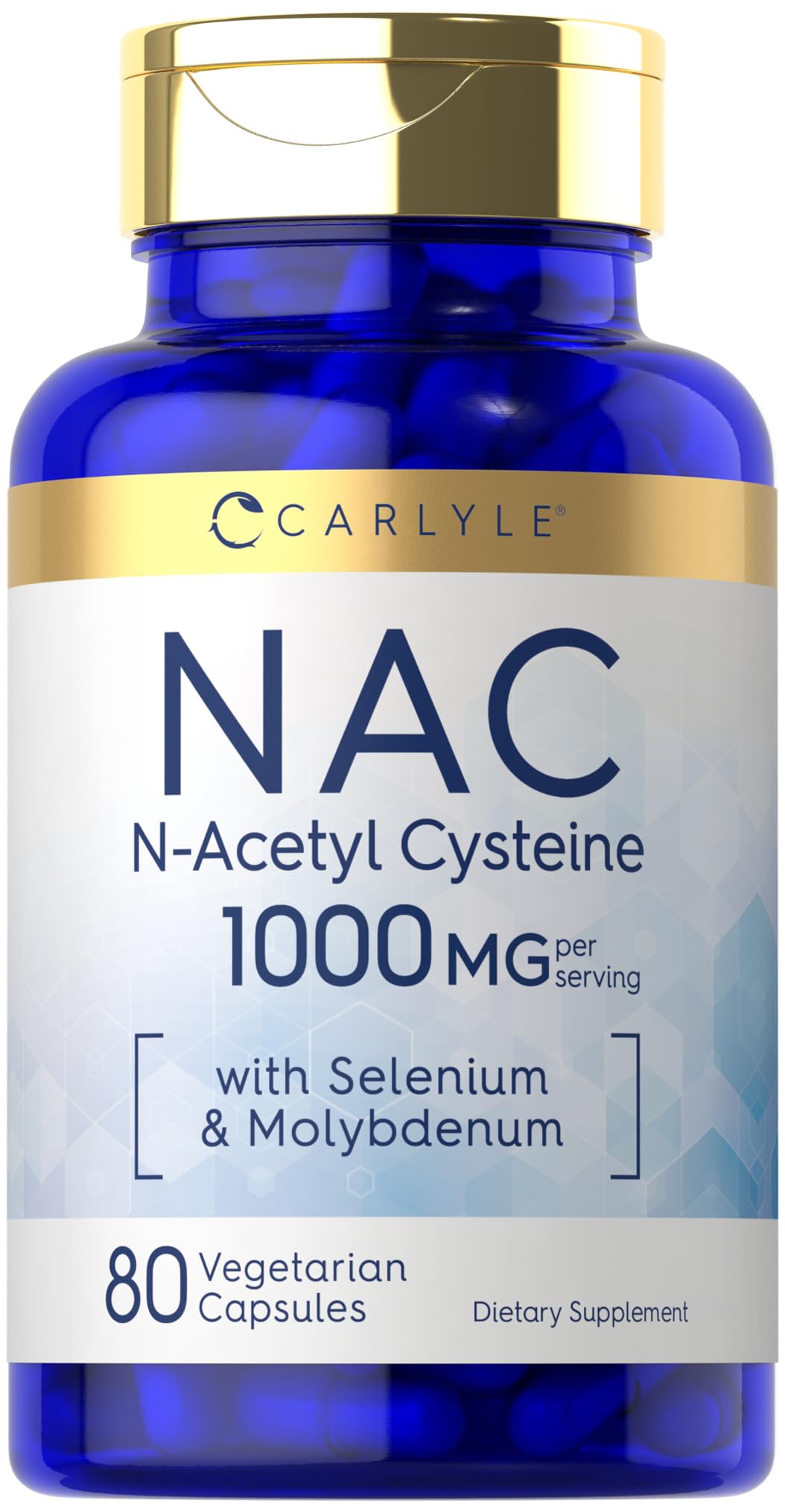
Each capsule delivers 600 mg of **N-Acetyl-L-Cysteine (NAC)**, a form of the amino acid cysteine that your body uses to produce **glutathione** — your cells' primary antioxidant and detoxification molecule. At the suggested two capsules per day (1,200 mg total), you're right in the middle of the clinically studied range of 600–1,800 mg, well-supported for replenishing glutathione levels, supporting liver health, and helping break down mucus in your respiratory tract.
The formula includes 25 mcg of **selenium** per capsule (50 mcg daily) as L-selenomethionine, a highly bioavailable form. Selenium activates one of the key enzymes in your body's antioxidant defense system, so pairing it with NAC means you're getting both the raw material for glutathione production and the mineral that helps put it to work. The 50 mcg daily dose is close to the 55 mcg RDA and well below the 400 mcg upper limit.
NAC has moderate clinical support across liver health, immune function, and cellular protection. Rather than acting as an antioxidant itself, it feeds your body's own glutathione production — working upstream to strengthen your natural defenses.
BioStacks
Other Ingredients (4)
Citric AcidAcidulant
Natural acid derived from citrus fruits
HypromelloseCapsule
Plant-derived capsule material from cellulose
Microcrystalline CelluloseBinder
Plant-derived cellulose used as a binder and filler in supplements
Stearic AcidLubricant
Saturated fatty acid used as tablet lubricant
How to Take It
Take it anytime
Selenium is easier on the stomach taken with food.
With food
NAC does better on an empty stomach, but something else in this bottle needs food. Taking the whole product with a meal is the better trade — an upset stomach is why most people stop.
Split into 2 doses across the day
On the label
Suggested Usage: Take 1 capsule twice daily.
General guidance based on the ingredients, not a substitute for the label or your doctor.
Price Check
$13.46
Cheaper than 87% of 77 NAC supplements
Track this supplement in your stack
Get personalized insights, interactions, and coverage recommendations.
Get Started FreeSimilar Supplements
Sources & Scoring
Nutrient data (RDA, UL, and safety thresholds) sourced from the NIH Office of Dietary Supplements and the National Academies Dietary Reference Intakes (DRI).
This is not medical advice. Consult a healthcare provider before making changes to your supplement routine.
The score analyzes what's on the label: ingredient doses vs. studied ranges, chemical forms, evidence levels, and known interactions. It does not verify label accuracy or test for contaminants — for that, look for third-party certifications like USP or NSF.