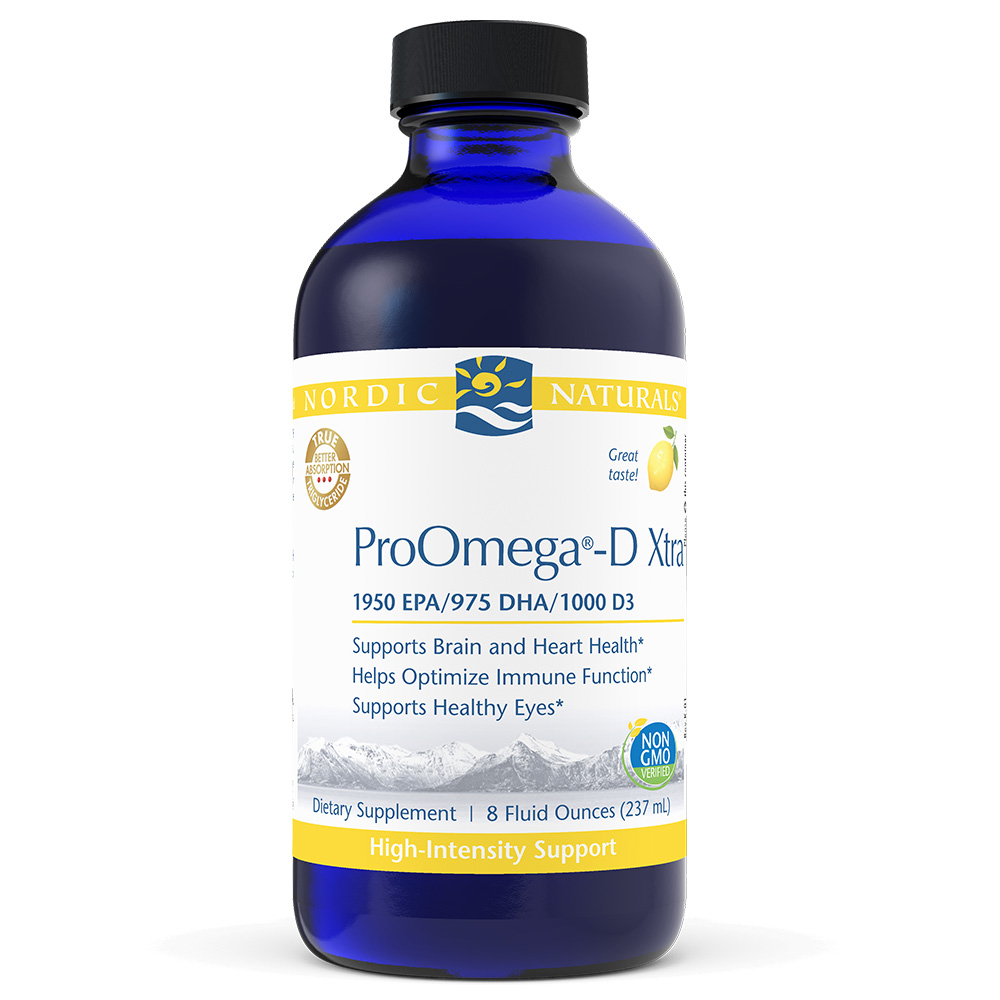
Built for dry eye and cardiovascular support, this liquid delivers a substantial 2,668mg of total **omega-3s** per teaspoon — with 1,680mg EPA and 560mg DHA. That puts you well within the 1,000–3,000mg clinical range in a single daily serving, and the high EPA content is particularly relevant for inflammatory conditions like dry eye.
The omega-3s are in re-esterified triglyceride (rTG) form, which is among the best-absorbed delivery methods available. You're also getting 1,000 IU of **Vitamin D3** as cholecalciferol, adding bone and immune support on top of the omega-3 benefits.
The liquid format means no pill burden, but you'll need to refrigerate after opening and use the bottle within a reasonable window. At 40 servings per bottle, this is roughly a 5-week supply if you stay at the suggested single teaspoon per day.
BioStacks
Nutrition
Calories, macros & sodium.
- Calories40 Calorie(s)
- Total Fat4.5 Gram(s)
- Cholesterol10 mg
Other Ingredients (3)
Natural FlavorsFlavor
Broad regulatory category of flavor constituents derived from natural sources. Composition is proprietary and not disclosed — 'Natural Flavors' can include several hundred different compounds depending on the target flavor profile, including hexane-extracted constituents and proprietary carrier solvents. 'Natural' is a regulatory definition (21 CFR §101.22), not a safety guarantee.
Fish Oil, PurifiedLipid Base
Purified oil from fish used as a carrier and lipid base in omega-3 and fat-soluble supplements
Mixed TocopherolsAntioxidant
Natural vitamin E used as preservative
How to Take It
Take it anytime
Take it with a meal containing fat — the vitamin D in it absorbs poorly without one.
With a meal containing fat
On the label
Suggested Use: Adults and teens: 1 tsp. daily. Children under 12 years: 1/2 tsp. daily. Take along with food, or as directed by your healthcare professional. Shake well before use.
General guidance based on the ingredients, not a substitute for the label or your doctor.
Price Check
No price yet
What 150 heart supplements cost
Track this supplement in your stack
Get personalized insights, interactions, and coverage recommendations.
Get Started FreeSimilar Supplements
Sources & Scoring
Nutrient data (RDA, UL, and safety thresholds) sourced from the NIH Office of Dietary Supplements and the National Academies Dietary Reference Intakes (DRI).
This is not medical advice. Consult a healthcare provider before making changes to your supplement routine.
The score analyzes what's on the label: ingredient doses vs. studied ranges, chemical forms, evidence levels, and known interactions. It does not verify label accuracy or test for contaminants — for that, look for third-party certifications like USP or NSF.