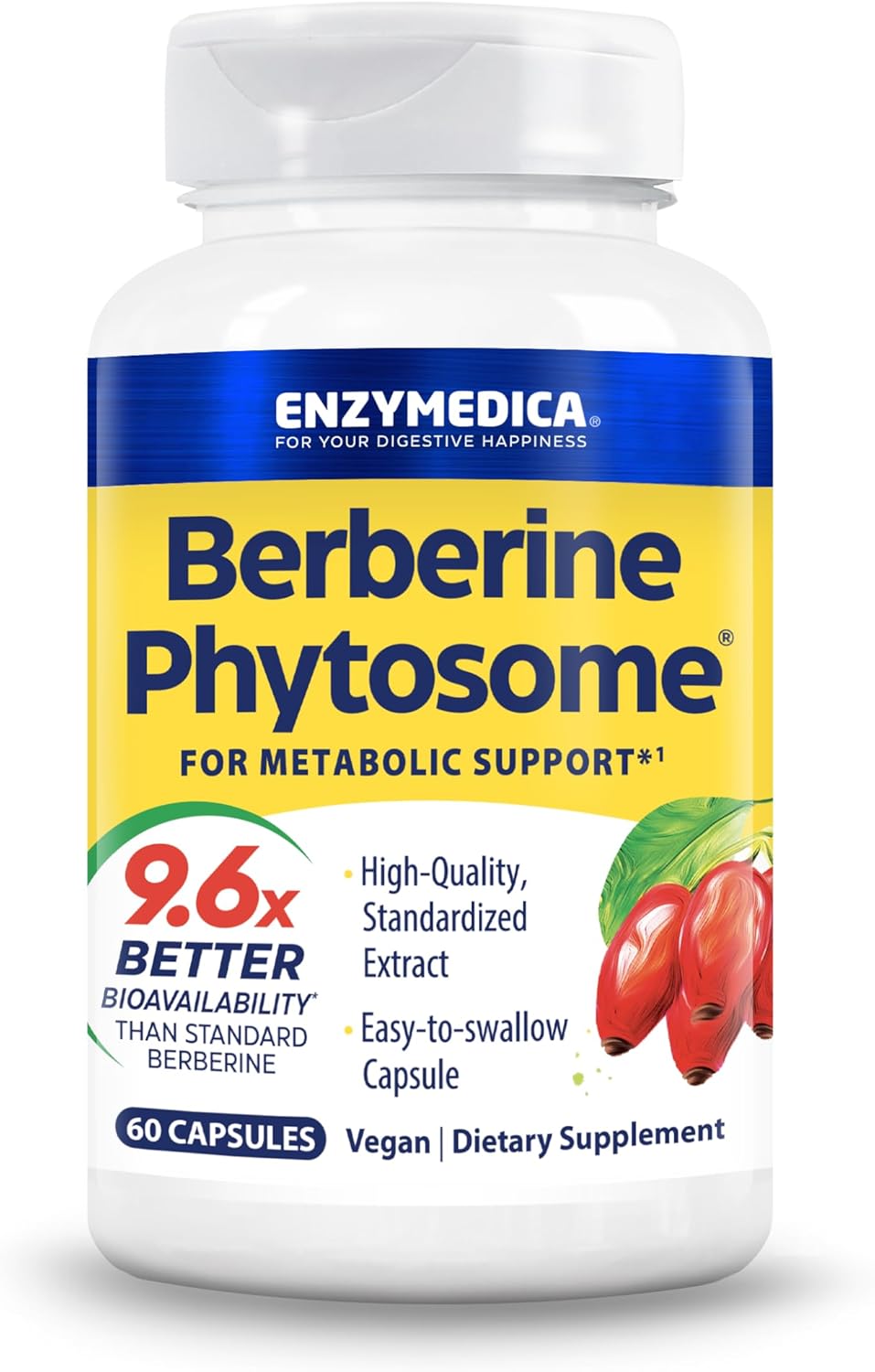
**Berberine** at 500mg per capsule puts you right at the floor of the clinically studied range (500–1,500mg/day) for supporting healthy blood sugar, insulin sensitivity, and lipid levels. The evidence behind berberine is strong — multiple meta-analyses show meaningful effects on fasting glucose and triglycerides.
The form is berberine hydrochloride from Indian barberry root, the same standard form used in most clinical research. Standard berberine has low oral bioavailability (~5%), so taking it with a meal as the label suggests helps with both absorption and the GI discomfort berberine is known for.
The catch is the label directs you to take just one capsule daily — keeping you at the minimum studied dose. The strongest clinical results come from 1,000–1,500mg in divided doses (2–3 times daily with meals). If metabolic support is your goal, you'd likely want to take 2–3 capsules spread throughout the day, which means the 60-count bottle lasts 20–30 days instead of two months.
BioStacks
Best for
Ingredients (1)
Berberine Hydrochloride
100%Dose
500 mg
Target
500–1500 mg
Form
Premium
Other Ingredients (2)
Whole Rice ConcentrateFiller
A rice-derived powder used as a natural, whole-food excipient in supplements
Microcrystalline CelluloseBinder
Plant-derived cellulose used as a binder and filler in supplements
How to Take It
Take it anytime
Take with meals — its glucose effects act on the food you're eating. Usually split 2–3 times daily.
With food
On the label
Directions: Use only as directed. Take 1 VegCap daily with a meal or glass of water.
General guidance based on the ingredients, not a substitute for the label or your doctor.
Price Check
$23.99
Cheaper than 70% of 81 berberine HCl supplements
Track this supplement in your stack
Get personalized insights, interactions, and coverage recommendations.
Get Started FreeSimilar Supplements
Sources & Scoring
Nutrient data (RDA, UL, and safety thresholds) sourced from the NIH Office of Dietary Supplements and the National Academies Dietary Reference Intakes (DRI).
This is not medical advice. Consult a healthcare provider before making changes to your supplement routine.
The score analyzes what's on the label: ingredient doses vs. studied ranges, chemical forms, evidence levels, and known interactions. It does not verify label accuracy or test for contaminants — for that, look for third-party certifications like USP or NSF.