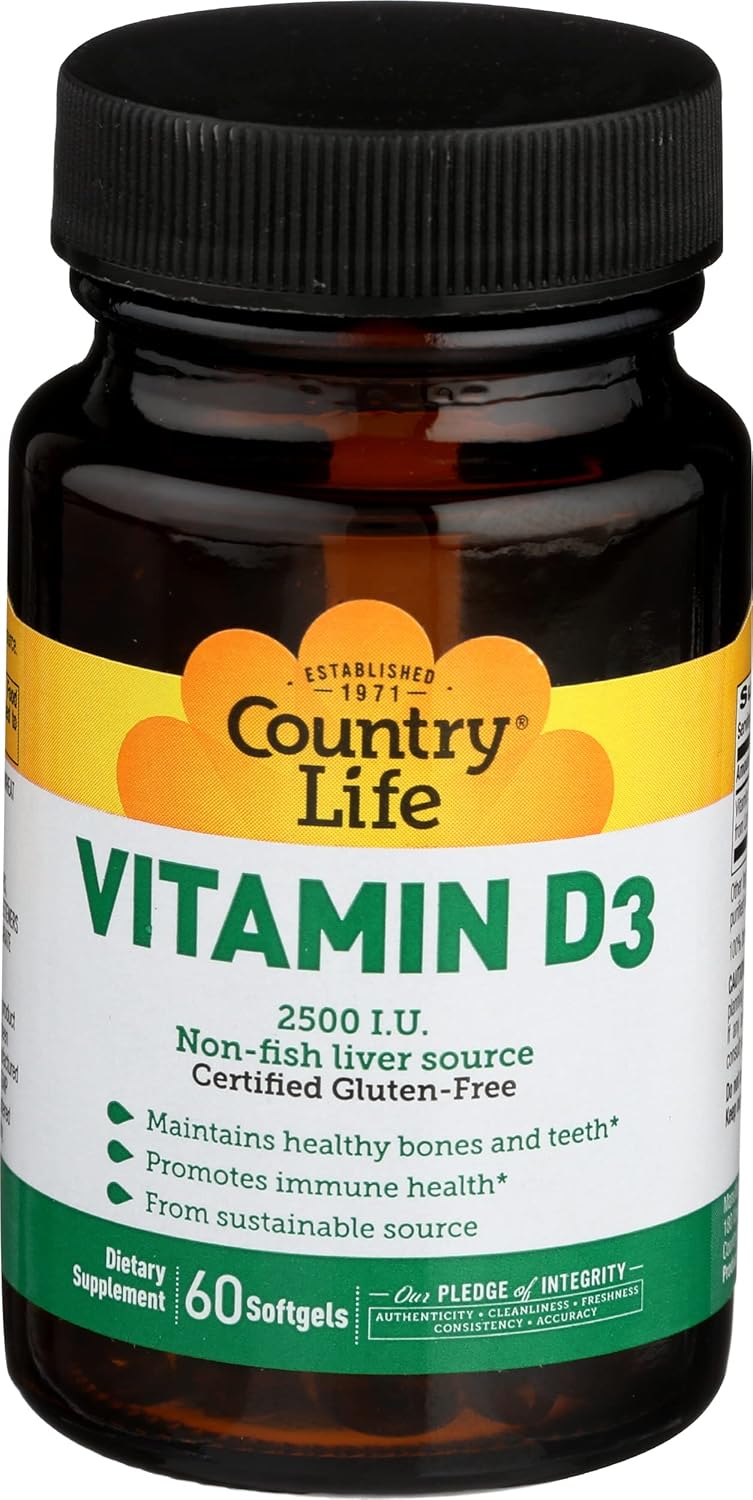
Each softgel delivers 1,000 IU of **Vitamin D3** as cholecalciferol — the form your body produces from sunlight and the most effective supplemental form for raising blood levels. The label recommends two softgels daily, which puts you at 2,000 IU — comfortably within the 1,000–5,000 IU clinical range used in bone, immune, and mood research. If you're maintaining already-adequate levels, that dose covers you well.
The softgel format with safflower oil is a practical detail worth noting — **Vitamin D3** is fat-soluble, so delivering it dissolved in oil means you don't need to worry about taking it with a fatty meal for absorption. This product covers a wide range of health areas including bone density, immune function, and hormonal balance, all backed by strong clinical evidence.
If you're correcting a deficiency or live in a northern climate with limited sun exposure, 2,000 IU may not be enough — many practitioners recommend 3,000–5,000 IU in those situations, which would mean 3–5 softgels daily. You'd also miss out on **Vitamin K2**, which works with D3 to direct calcium into bones rather than arteries — a pairing worth considering separately.
BioStacks
Other Ingredients (5)
CholecalciferolVitamin
Vitamin D3 added in trace amounts for fortification in protein powders and other supplements
GelatinCapsule
Protein derived from collagen, used in traditional capsule shells
Safflower Seed OilCarrier
Light, neutral oil from safflower seeds used as a carrier in softgels for fat-soluble nutrients
GlycerinHumectant
Sweet-tasting liquid used in soft capsules and liquids
fish liver oil
Not reviewed yet
How to Take It
Take it anytime
Fat-soluble — take with your largest fat-containing meal. Time of day doesn't matter.
With a meal containing fat
Split into 2 doses across the day
On the label
As dietary supplement for adults, take one (1) softgel twice daily, preferably with meals, or as directed by a healthcare practitioner.
General guidance based on the ingredients, not a substitute for the label or your doctor.
Price Check
$13.13
Cheaper than 67% of 552 vitamin D supplements
Track this supplement in your stack
Get personalized insights, interactions, and coverage recommendations.
Get Started FreeSimilar Supplements
Sources & Scoring
Nutrient data (RDA, UL, and safety thresholds) sourced from the NIH Office of Dietary Supplements and the National Academies Dietary Reference Intakes (DRI).
This is not medical advice. Consult a healthcare provider before making changes to your supplement routine.
The score analyzes what's on the label: ingredient doses vs. studied ranges, chemical forms, evidence levels, and known interactions. It does not verify label accuracy or test for contaminants — for that, look for third-party certifications like USP or NSF.