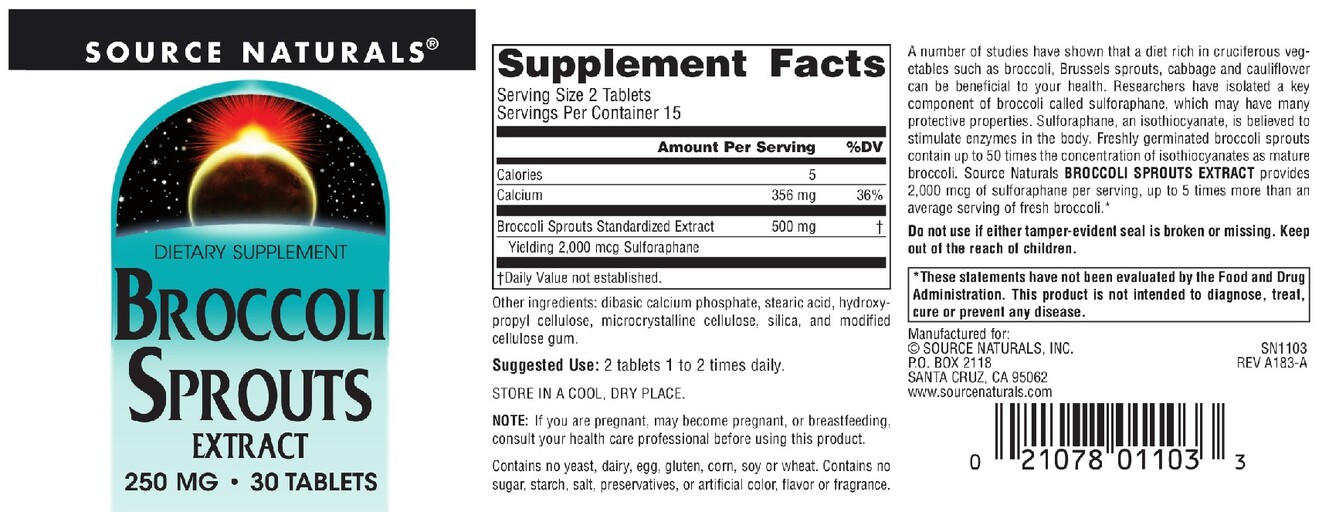
This product is built around **Sulforaphane**, the compound your body uses to switch on its own antioxidant defenses — a system with early human evidence for lowering blood pressure and improving blood sugar markers. Each 2-tablet serving yields 2,000 mcg (2 mg) of actual sulforaphane, inside the 1–9 mg daily range used in research. At 1 to 2 servings a day, you're comfortably in effective territory.
What sets the label apart is that it commits to a sulforaphane yield, not just the glucoraphanin precursor it comes from. That precursor only becomes active once an enzyme converts it, so a label quoting the raw precursor can overstate what you absorb — here you know the active amount you're getting.
The honest caveat is the evidence. Sulforaphane is promising but still maturing — many trials are small and roughly half remain unpublished. Treat this as supportive antioxidant coverage, not a proven fix for any condition.
BioStacks
Ingredients (2)
Sprouted Broccoli Extract BlendYielding 2,000 mcg Sulforaphane
100%Dose
2 mg
Target
1–9 mg
Form
—
Calcium
83 mgTrace amount — not scored
Other Ingredients (6)
Magnesium StearateLubricant
A salt of stearic acid used as a lubricant in tablet and capsule production
Silicon DioxideAnti-caking
Fine silica powder used to prevent clumping
Calcium CarbonateBuffer
Common calcium salt used as a buffering agent, filler, or mineral fortification in supplements
Microcrystalline CelluloseBinder
Plant-derived cellulose used as a binder and filler in supplements
Microcrystalline CelluloseBinder
Plant-derived cellulose used as a binder and filler in supplements
Stearic AcidLubricant
Saturated fatty acid used as tablet lubricant
How to Take It
Take it anytime
Timing doesn't matter for this one — taking it consistently does.
With or without food
On the label
2 tablets 1 to 2 times daily.
General guidance based on the ingredients, not a substitute for the label or your doctor.
Price Check
$13.40
Cheaper than 71% of 294 calcium supplements
Track this supplement in your stack
Get personalized insights, interactions, and coverage recommendations.
Get Started FreeSimilar Supplements
Sources & Scoring
Nutrient data (RDA, UL, and safety thresholds) sourced from the NIH Office of Dietary Supplements and the National Academies Dietary Reference Intakes (DRI).
This is not medical advice. Consult a healthcare provider before making changes to your supplement routine.
The score analyzes what's on the label: ingredient doses vs. studied ranges, chemical forms, evidence levels, and known interactions. It does not verify label accuracy or test for contaminants — for that, look for third-party certifications like USP or NSF.