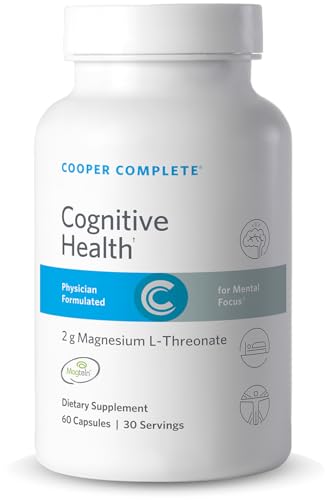
**Magtein** is a patented form of **Magnesium L-Threonate** — the only magnesium form shown in human trials to cross the blood-brain barrier and raise brain magnesium levels. At 2g per serving (3 capsules), you're getting the exact dose used in the clinical research on memory, learning, and cognitive function. That yields 144mg of elemental magnesium, which sits comfortably within the supplemental range for general magnesium benefits like muscle relaxation, sleep support, and stress management.
The brain-health angle is what sets this apart. If your goal is cognitive support — sharper recall, better focus, or age-related memory concerns — this delivers the studied dose in full. Magnesium deficiency is extremely common and often undetected, so even the baseline magnesium support here is meaningful for energy, mood, and nerve function.
The tradeoff is pill burden and total magnesium. Three capsules daily gives you just 144mg of elemental magnesium — well under the 310–420mg RDA for total intake. If you're looking for broader magnesium coverage for muscle cramps or heart health, you'd need to supplement additional magnesium in another form alongside this.
BioStacks
Best for
Ingredients (2)
Magtein
100%Dose
2000 mg
Target
100–400 mg
Form
Premium
Magnesium
100%Dose
144 mg
Target
100–400 mg
Form
Premium
Nutrition
Calories, macros & sodium.
- Calories10 Calorie(s)
Other Ingredients (4)
MaltodextrinBinder
Spikes blood sugar faster than table sugar (glycemic index 85–105). Research links it to gut bacteria changes that may promote intestinal inflammation (Nickerson et al. 2015). Used as a cheap filler — adds nothing beneficial.
Magnesium StearateLubricant
A salt of stearic acid used as a lubricant in tablet and capsule production
Silicon DioxideAnti-caking
Fine silica powder used to prevent clumping
GelatinCapsule
Protein derived from collagen, used in traditional capsule shells
How to Take It
Best taken in the evening
Magnesium L-threonate is designed to raise magnesium in the brain — shown in animals. The human cognition trial dosed 1.5–2 g/day, usually split with a dose in the evening.
With or without food
Space it a couple of hours from Iron and Calcium
On the label
Suggested Use: 3 capsules daily, preferably in divided doses. Start with 1 capsule daily and gradually increase to 3 capsule's daily.
General guidance based on the ingredients, not a substitute for the label or your doctor.
Price Check
$30.79
Pricier than 78% of 579 magnesium supplements
Track this supplement in your stack
Get personalized insights, interactions, and coverage recommendations.
Get Started FreeSimilar Supplements
Sources & Scoring
Nutrient data (RDA, UL, and safety thresholds) sourced from the NIH Office of Dietary Supplements and the National Academies Dietary Reference Intakes (DRI).
This is not medical advice. Consult a healthcare provider before making changes to your supplement routine.
The score analyzes what's on the label: ingredient doses vs. studied ranges, chemical forms, evidence levels, and known interactions. It does not verify label accuracy or test for contaminants — for that, look for third-party certifications like USP or NSF.