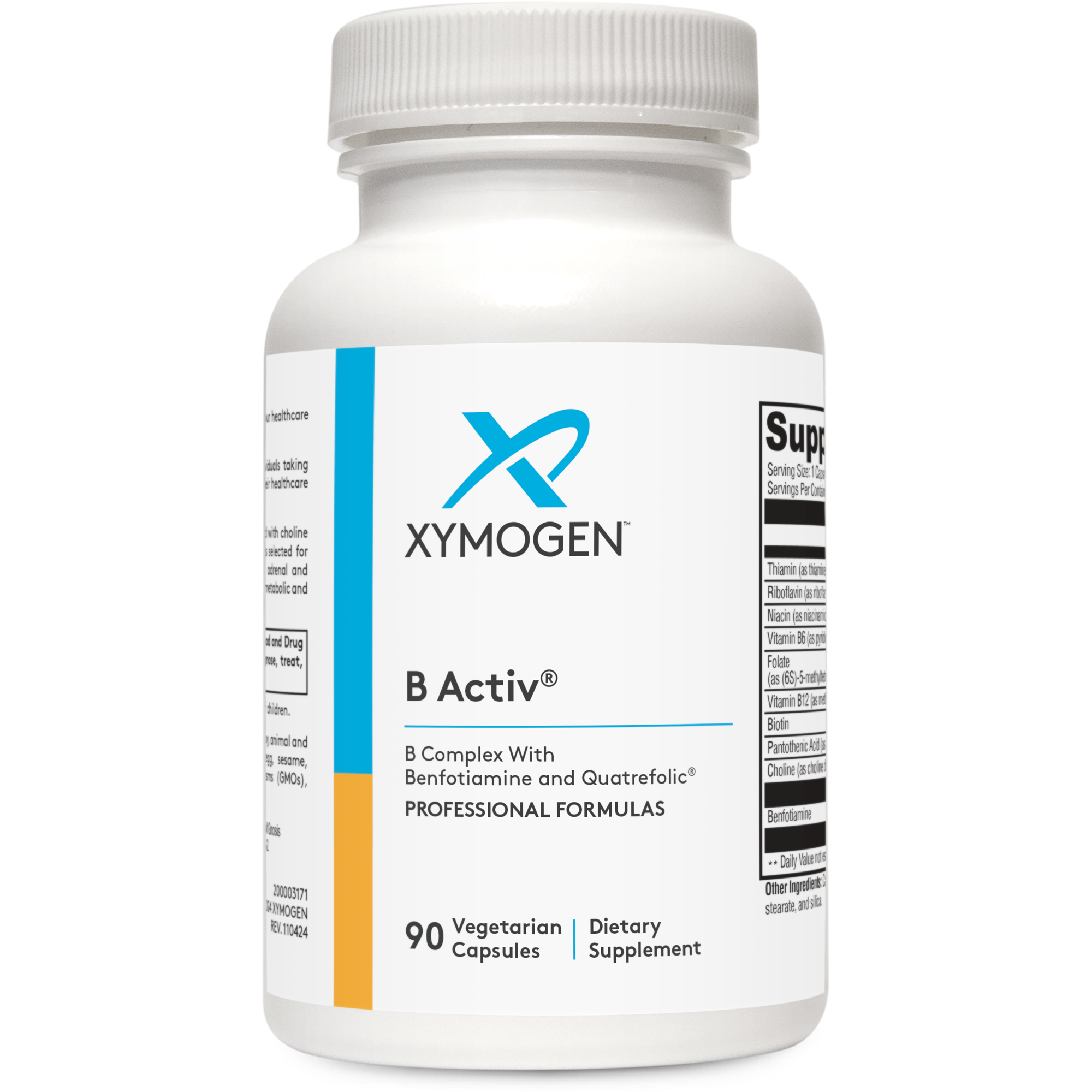
This B complex uses bioactive forms across the board — your body can absorb and use each vitamin directly without conversion. That matters especially for **Folate** and **B12**, which work together to support DNA synthesis, red blood cell formation, and mood regulation. You're getting 400mcg of methylfolate and 400mcg of **B12** as methylcobalamin, both within studied ranges.
**Thiamine** at 110mg and **Pantothenic Acid** at 110mg are generously dosed for energy metabolism and stress response. **Niacin** at 140mg (mostly flush-free niacinamide) is solid. However, **Riboflavin** at 10mg and **B6** at 10mg sit below the typical 25mg B-complex floor — the premium active forms help with utilization, but you're still getting less than half the usual dose.
The weak spot is **Choline** at 28mg — well below the 100mg minimum meaningful supplemental dose. At this level, it's not contributing much to the brain and liver support you'd want from choline.
BioStacks
Best for
Ingredients (9)
Pantothenic Acid
100%Dose
110 mg
Target
50–500 mg
Form
Premium
Vitamin B12
100%Dose
400 mcg
Target
250–5000 mcg
Form
Premium
Thiamine
100%Dose
110 mg
Target
25–100 mg
Form
Premium
Folate
100%Dose
400 mcg
Target
400–800 mcg
Form
Premium
Niacin
100%Dose
140 mg
Target
25–500 mg
Form
Standard
Other Ingredients (6)
Silicon DioxideAnti-caking
Fine silica powder used to prevent clumping
Calcium LaurateEmulsifier
Calcium salt of lauric acid used as a lubricant
HypromelloseCapsule
Plant-derived capsule material from cellulose
LeucineFlow Aid
Branched-chain amino acid used as a processing aid
Magnesium CitrateMineral
Magnesium salt with bioavailable citrate form
Microcrystalline CelluloseBinder
Plant-derived cellulose used as a binder and filler in supplements
How to Take It
Best taken in the morning
Many people prefer B-vitamins earlier in the day; take with food to avoid nausea.
With food
On the label
Suggested use: Take 1 capsule one to three times daily or as recommended by your health-care practitioner.
General guidance based on the ingredients, not a substitute for the label or your doctor.
Price Check
$27.00
Near the median of 239 energy supplements
Track this supplement in your stack
Get personalized insights, interactions, and coverage recommendations.
Get Started FreeSimilar Supplements
Sources & Scoring
Nutrient data (RDA, UL, and safety thresholds) sourced from the NIH Office of Dietary Supplements and the National Academies Dietary Reference Intakes (DRI).
This is not medical advice. Consult a healthcare provider before making changes to your supplement routine.
The score analyzes what's on the label: ingredient doses vs. studied ranges, chemical forms, evidence levels, and known interactions. It does not verify label accuracy or test for contaminants — for that, look for third-party certifications like USP or NSF.