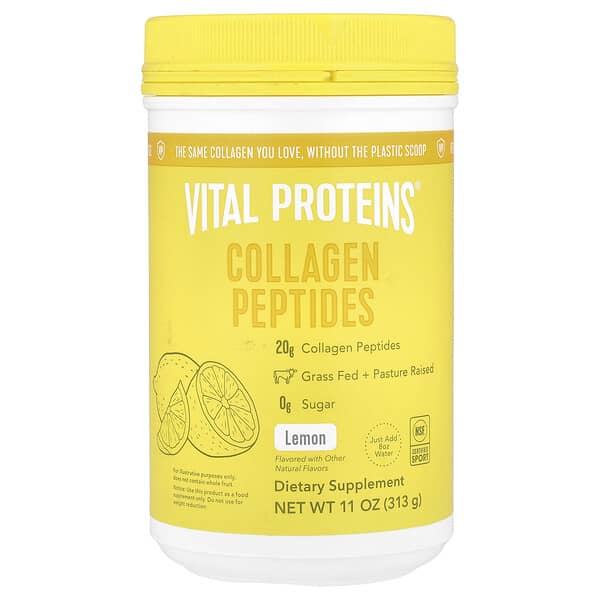
You're getting 20g of **Collagen Peptides** per scoop — right at the top of the 5–20g clinical range studied for skin, joint, and bone support. That's a full effective dose in a single serving, which is uncommon for collagen powders that often default to 10g. At this dose, you're well-covered for skin elasticity and hydration benefits, and you're hitting the range where joint and connective tissue support starts to show up in research.
The collagen is sourced from bovine hide and hydrolyzed into peptides, which means smaller molecules that your body absorbs more efficiently. The powder format makes it easy to mix into coffee, smoothies, or water without capsule burden. With 18g of protein per serving, it doubles as a modest protein boost — though it's not a complete protein since collagen lacks tryptophan.
One thing to keep in mind: collagen synthesis in your body requires **Vitamin C** as a cofactor, and this product doesn't include any. Pairing it with a vitamin C source — from food or a separate supplement — will help you get the most out of each serving.
BioStacks
Ingredients (1)
Collagen Peptides
100%Dose
20 Gram(s)
Target
5–20 g
Form
Standard
Nutrition
Calories, macros & sodium.
- Calories70 Calorie(s)
- Sodium110 mg
- Protein18 Gram(s)
Other Ingredients (1)
Bovine Hide Collagen PeptidesProtein Source
Hydrolyzed collagen derived from bovine hide, commonly used as the primary protein source in collagen supplements
How to Take It
Take it anytime
Timing doesn't matter — daily consistency over weeks is what moves outcomes.
With or without food
On the label
Directions: Combine 1-2 scoops with 8 fl oz of liquid, mix thoroughly.
General guidance based on the ingredients, not a substitute for the label or your doctor.
Price Check
$47.00
Pricier than 87% of 136 collagen peptides supplements
Track this supplement in your stack
Get personalized insights, interactions, and coverage recommendations.
Get Started FreeSimilar Supplements
Sources & Scoring
Nutrient data (RDA, UL, and safety thresholds) sourced from the NIH Office of Dietary Supplements and the National Academies Dietary Reference Intakes (DRI).
This is not medical advice. Consult a healthcare provider before making changes to your supplement routine.
The score analyzes what's on the label: ingredient doses vs. studied ranges, chemical forms, evidence levels, and known interactions. It does not verify label accuracy or test for contaminants — for that, look for third-party certifications like USP or NSF.