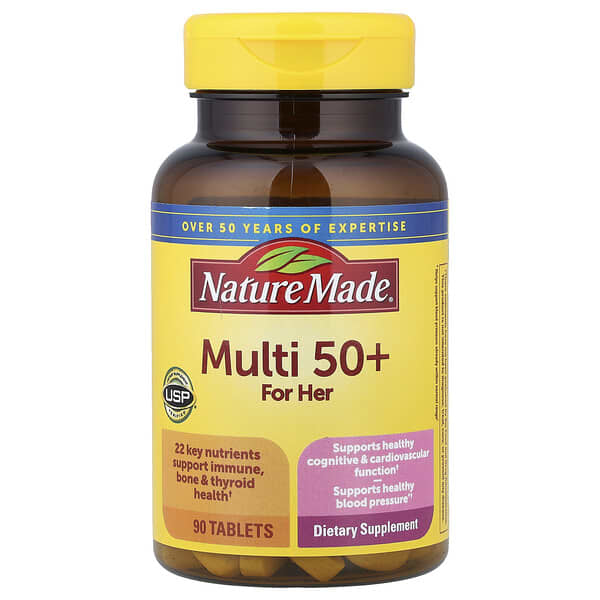
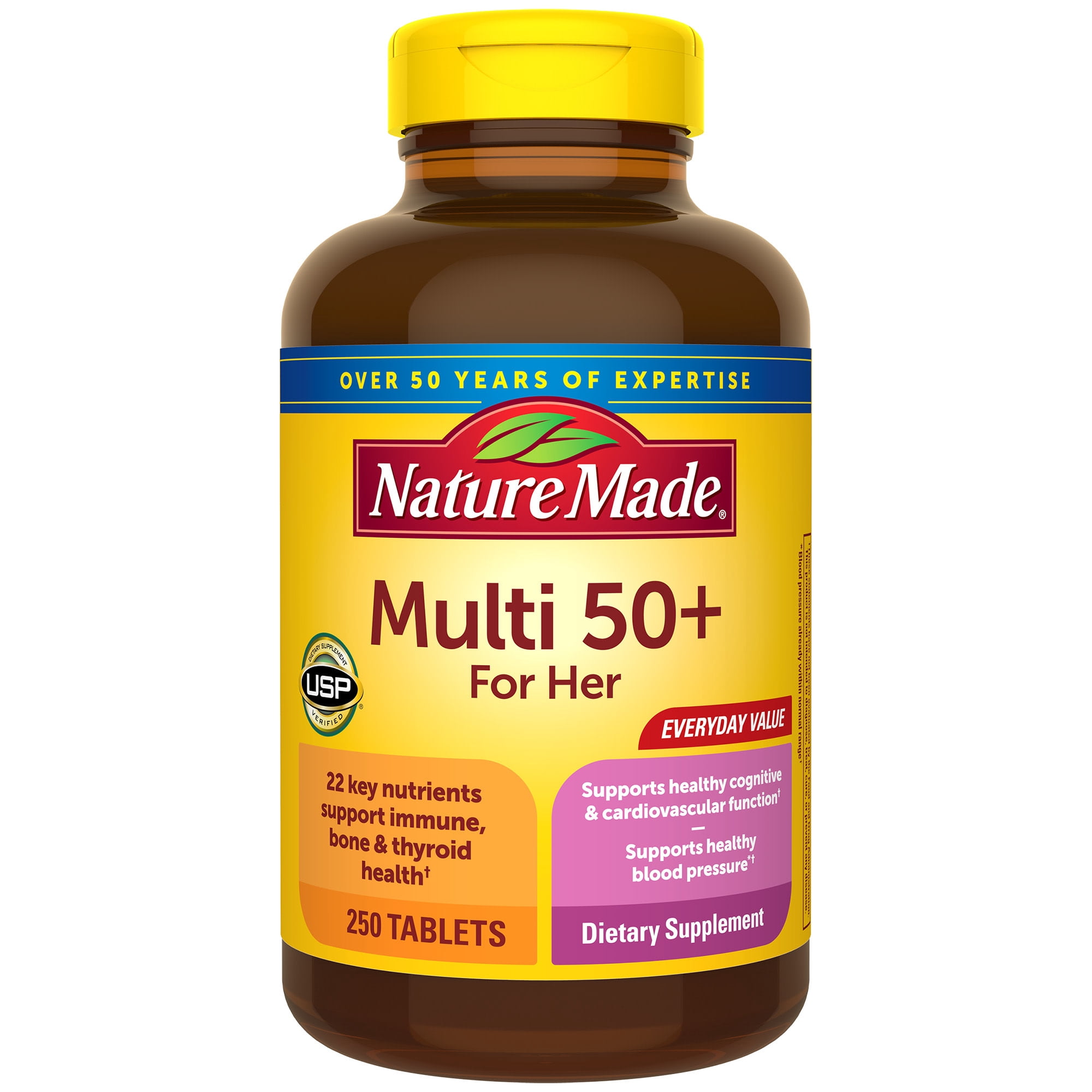
This is a once-daily nutritional safety net for women past 50 — it tops up the everyday vitamins and minerals your diet may be missing rather than pushing any single nutrient to a clinical dose. The cleanest piece is **Vitamin D3** at 1,000 IU, which sits at the bottom of the range used to maintain healthy blood levels and comes in the active D3 form your body uses directly. Most of the rest lands around basic daily-value amounts.
For bone support — a real priority after menopause — you're getting **Calcium** at 300mg alongside that vitamin D, which is what lets your body actually absorb the calcium. The formula also skips iron, the right call once you're post-menopausal and no longer losing it each month. Zinc at 24mg and vitamin A both fall within their effective ranges for everyday immune support.
The catch is form and dose. The minerals use low-absorption forms — calcium as carbonate, zinc and magnesium as oxides — so you take in less of each than the milligram numbers suggest. And the amounts are tuned for daily-value coverage, not measurable results: vitamin C is 120mg versus the 250mg-plus used in research, magnesium is 50mg of a 100–400mg range, and the B vitamins sit well under their studied doses. Use this as general insurance, not a tool to move a specific health goal.
BioStacks
13 / 100Very Poor
Best for
Score Breakdown
Formulation
48
Safety
23
Final score
13/100
Ingredients (22)
Molybdenum
100%Dose
90 mcg
Target
45–75 mcg
Form
—
Vitamin B6
100%Dose
6 mg
Target
1.3–25 mg
Form
—
Niacin
80%Dose
20 mg
Target
25–500 mg
Form
—
Pantothenic Acid
30%Dose
15 mg
Target
50–500 mg
Form
—
Biotin
3%Dose
30 mcg
Target
1000–5000 mcg
Form
—
Other Ingredients (35)
Artificial ColorsColorant
May trigger hyperactivity in sensitive children; potential link to allergic reactions
FD&C Yellow No. 6Colorant
May trigger sensitivity in some individuals; behavioral concerns in susceptible children
Titanium DioxideColorant
Banned in the EU (2022) over concerns that its ultra-fine particles may damage DNA in gut cells. Still allowed in the US. Used only for white coloring — provides no health benefit.
Artificial FlavorsFlavor
Composition is proprietary and not disclosed on the label, so allergens or solvents cannot be verified. Naturally flavored alternatives are more transparent.
MaltodextrinBinder
Spikes blood sugar faster than table sugar (glycemic index 85–105). Research links it to gut bacteria changes that may promote intestinal inflammation (Nickerson et al. 2015). Used as a cheap filler — adds nothing beneficial.
Beta-Carotene (color)Color
Beta-carotene used in small amounts as a colorant/antioxidant.
BiotinFood
Vitamin B7, a water-soluble B-vitamin.
Folic AcidVitamin
Synthetic form of vitamin B9 used for fortification — supports red blood cell formation and neural tube development. Pharmacologically distinct from the natural/active form (5-methyltetrahydrofolate, methylfolate).
Track this supplement in your stack
Get personalized insights, interactions, and coverage recommendations.
Get Started FreeSimilar Supplements
Products that cover similar health dimensions based on their ingredients.
Sources & Scoring
Nutrient data (RDA, UL, and safety thresholds) sourced from: NIH Office of Dietary Supplements and National Academies Dietary Reference Intakes (DRI).
This is not medical advice. Consult a healthcare provider before making changes to your supplement routine.
The score analyzes what's on the label: ingredient doses vs. clinical ranges, chemical forms, evidence levels, and known interactions. It does not verify label accuracy or test for contaminants — for that, look for third-party certifications like USP or NSF.