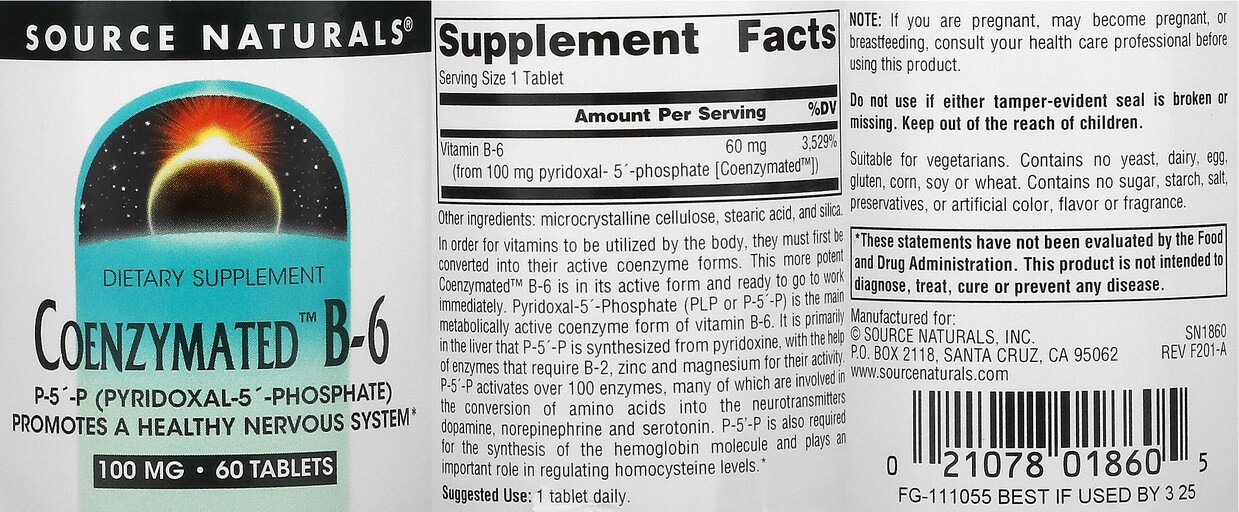
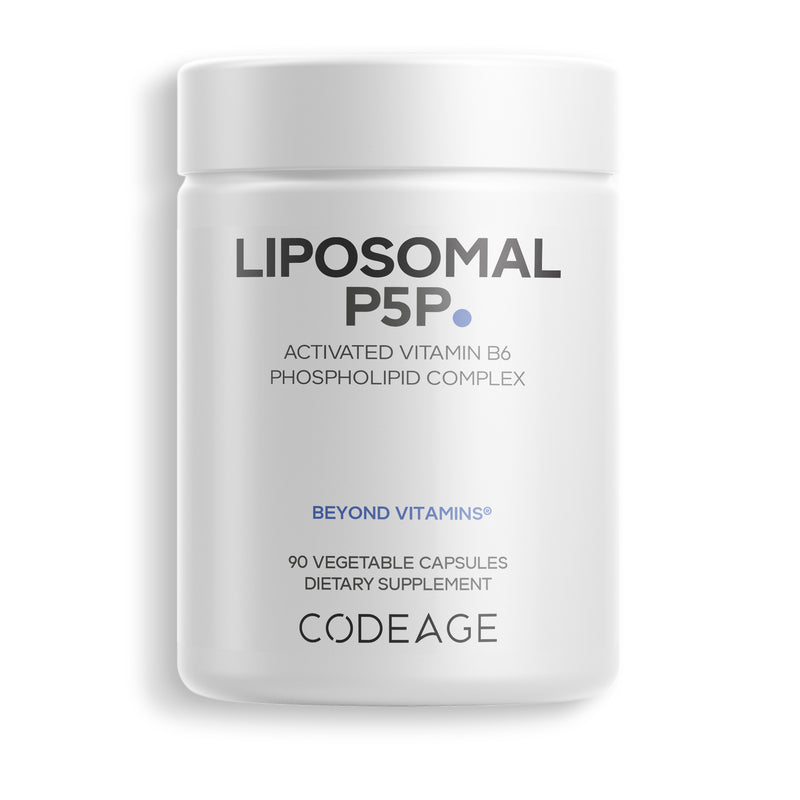
**P5P** (pyridoxal-5'-phosphate) is the active form of vitamin B6 — the one your body actually uses for producing serotonin, dopamine, and GABA. At 50 mg (delivering 34 mg of usable B6), you're well within the 25–100 mg clinical range and safely below the 100 mg upper limit.
The advantage of P5P over standard pyridoxine is that it skips the liver conversion step entirely. Some people convert pyridoxine inefficiently, and high-dose pyridoxine above 100 mg/day has been associated with nerve issues — a risk P5P doesn't carry.
Keep your expectations grounded, though. B6 is a cofactor — it helps other processes work rather than producing dramatic effects on its own. You'll get the most out of it if you're addressing a deficiency, or stacking it with nutrients it activates, like magnesium for enhanced absorption or 5-HTP to support serotonin conversion.
BioStacks
Best for
Ingredients (2)
Pyridoxal 5' Phosphate
100%Dose
50 mg
Target
25–100 mg
Form
Premium
Vitamin B6
100%Dose
34 mg
Target
25–100 mg
Form
Premium
Other Ingredients (4)
Coating (unspecified)Coating
Generic tablet coating declaration where the label does not itemize the coating's components; modern aqueous film coatings are typically cellulose-based (HPMC) with a plasticizer
Silicon DioxideAnti-caking
Fine silica powder used to prevent clumping
Microcrystalline CelluloseBinder
Plant-derived cellulose used as a binder and filler in supplements
Stearic AcidLubricant
Saturated fatty acid used as tablet lubricant
How to Take It
Best taken in the morning
Many people prefer B-vitamins earlier in the day; take with food to avoid nausea.
With food
On the label
Adults take one (1) tablet daily with food. For best utilization, take with food. As a reminder, discuss the supplements and medications that you take with your health care providers.
General guidance based on the ingredients, not a substitute for the label or your doctor.
Price Check
$17.49
Near the median of 89 vitamin B6 supplements
Track this supplement in your stack
Get personalized insights, interactions, and coverage recommendations.
Get Started FreeSimilar Supplements
Sources & Scoring
Nutrient data (RDA, UL, and safety thresholds) sourced from the NIH Office of Dietary Supplements and the National Academies Dietary Reference Intakes (DRI).
This is not medical advice. Consult a healthcare provider before making changes to your supplement routine.
The score analyzes what's on the label: ingredient doses vs. studied ranges, chemical forms, evidence levels, and known interactions. It does not verify label accuracy or test for contaminants — for that, look for third-party certifications like USP or NSF.