If you're looking for everyday nutritional insurance, this women's multivitamin covers the basics — but doses most nutrients well below the ranges used in clinical research. Your **Vitamin D3** comes in at 40mcg (1,600 IU), which is within the studied range, and **Folate** at 400mcg DFE meets the RDA — important if you're of childbearing age. **Iodine** at 150mcg hits the RDA as well.
Beyond those, most B vitamins are dosed at or near RDA levels rather than clinical supplement ranges. **Vitamin B12** is only 4.8mcg (RDA is 2.4mcg) in the cyanocobalamin form, which requires conversion by your body. **Zinc** at 2.75mg is just 25% of the RDA. The fruit and veggie blend at 200mg total is too small to deliver measurable phytonutrient benefits.
If you're looking for basic nutritional insurance at RDA levels, this covers the essentials. But if you're trying to address a specific deficiency or health goal, the doses here likely won't move the needle.
BioStacks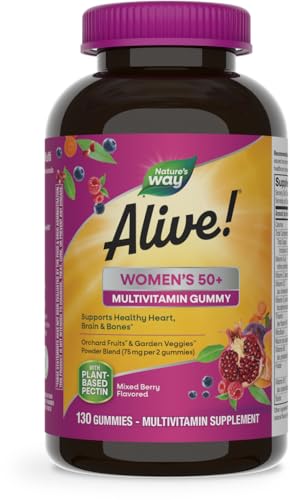
Best for
Ingredients (18)
Vitamin D3
100%Dose
1600 IU
Target
1000–5000 IU
Form
Premium
Iodine
100%Dose
150 mcg
Target
150–500 mcg
Form
Premium
Vitamin B6
14%Dose
3.4 mg
Target
25–100 mg
Form
Premium
Vitamin A
96%Dose
675 mcg
Target
700–1500 mcg
Form
Standard
Biotin
4%Dose
37.5 mcg
Target
1000–5000 mcg
Form
—
Nutrition
Calories, macros & sodium.
- Calories25 Calorie(s)
- Sodium20 mg
- Total Carbohydrates6 Gram(s)
- Total Sugars4 Gram(s)
Other Ingredients (10)
SucroseSweetener
Added sugars and high glycemic load; dental caries risk
Tapioca SyrupSweetener
High glycemic index similar to glucose syrup. Adds significant sugars and calories — often the primary ingredient by weight in gummy supplements. 'Organic' labeling does not change the glycemic impact.
Coconut OilCarrier
Edible oil from coconut used as a release/anti-sticking agent and carrier in gummies and soft formats
Natural FlavorsFlavor
Broad regulatory category of flavor constituents derived from natural sources. Composition is proprietary and not disclosed — 'Natural Flavors' can include several hundred different compounds depending on the target flavor profile, including hexane-extracted constituents and proprietary carrier solvents. 'Natural' is a regulatory definition (21 CFR §101.22), not a safety guarantee.
Fruit Juice (unspecified)Colorant
Juice or juice concentrate used primarily for natural color and flavor in gummies
BeeswaxCoating
Natural wax produced by honeybees, used as a coating and binding agent in softgels and tablets
Citric AcidAcidulant
Natural acid derived from citrus fruits
PectinGelling Agent
Plant polysaccharide from citrus peels or apple pomace used to gel pectin-based gummies
How to Take It
Take it anytime
No evidence a formula this broad works better at any particular hour. Take it with a meal containing fat — the vitamins A, D and E in it absorb poorly without one.
With a meal containing fat
Space it a couple of hours from Iron and Calcium
On the label
Recommendation: Women chew 3 gummies daily, preferably with food.
General guidance based on the ingredients, not a substitute for the label or your doctor.
Price Check
$17.99
Cheaper than 73% of 798 multivitamins
Track this supplement in your stack
Get personalized insights, interactions, and coverage recommendations.
Get Started FreeSimilar Supplements
Nature's Way
Alive! Women's 50+ Gummy Multivitamin
🛡️ for Immune
44
Nature's Way
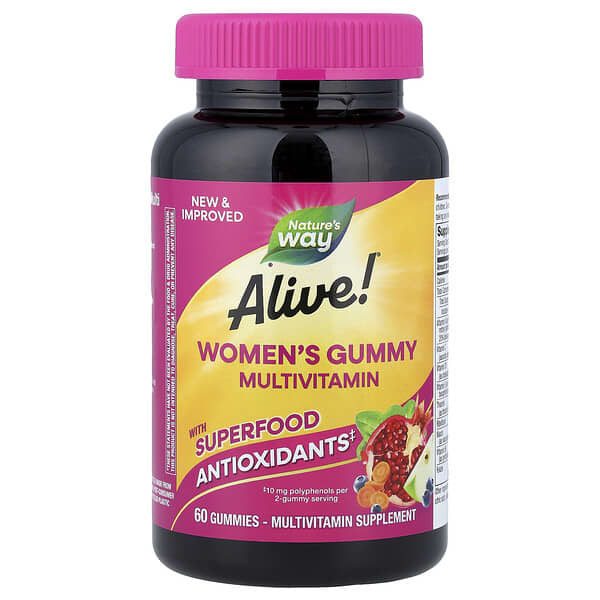
Alive!® Women's Gummy Multivitamin, Mixed Berry
🛡️ for Immune
42
Nature's Way
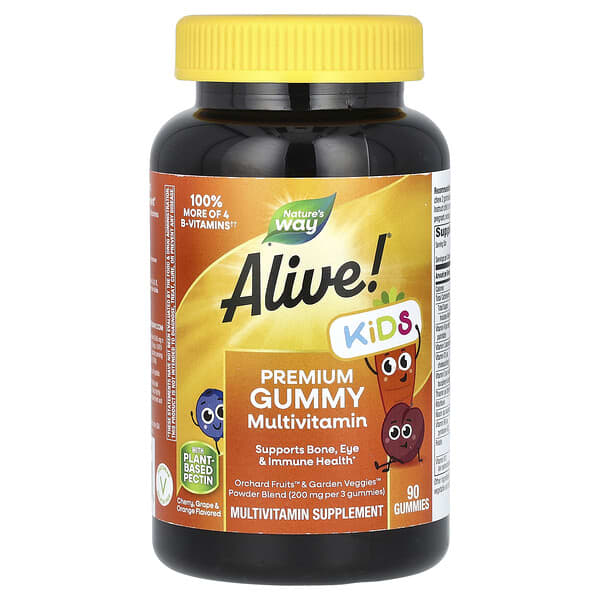
Alive! Kids, Premium Gummy Multivitamin, Cherry, Grape & Orange, 90 Gummies
🛡️ for Immune
33
Nature's Way
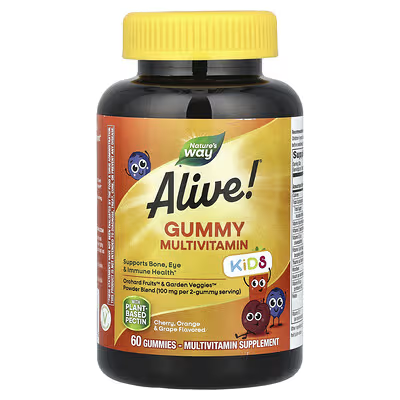
Alive! Kids, Gummy Multivitamin, Cherry, Orange & Grape, 60 Gummies
🛡️ for Immune
24
Webber Naturals
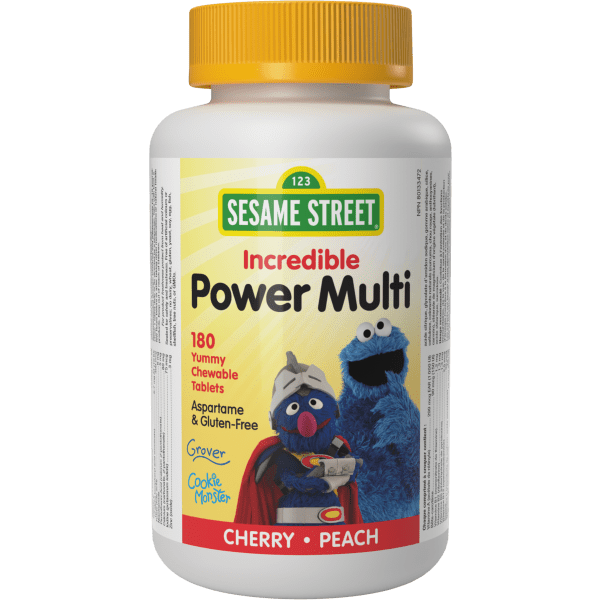
Sesame Street Incredible Power Multi Chewables
🤰 for Pregnancy
21
Sources & Scoring
Nutrient data (RDA, UL, and safety thresholds) sourced from the NIH Office of Dietary Supplements and the National Academies Dietary Reference Intakes (DRI).
This is not medical advice. Consult a healthcare provider before making changes to your supplement routine.
The score analyzes what's on the label: ingredient doses vs. studied ranges, chemical forms, evidence levels, and known interactions. It does not verify label accuracy or test for contaminants — for that, look for third-party certifications like USP or NSF.