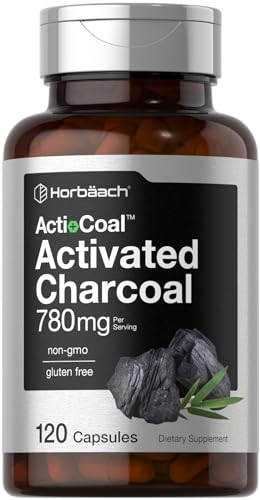
Each serving gives you 560mg of **Activated Charcoal**, which sits right at the low end of the studied range. The label recommends 2-3 servings daily — at two servings (1,120mg), you're hitting the EFSA-approved dose for reducing intestinal gas (1g before and after a gas-producing meal). At three servings, you reach 1,680mg, comfortably within the clinical range. The evidence behind charcoal for digestive comfort is limited but real: one double-blind trial showed reduced gas and bloating, and EFSA has approved the gas-reduction claim at adequate doses.
The biggest thing to know before buying: **Activated Charcoal** adsorbs indiscriminately. It will bind medications, vitamins, and other supplements you take within 1-2 hours, reducing their absorption. The label's direction to take it 3-4 hours away from meals and other supplements is critical — ignore that spacing and you risk neutralizing whatever else you're taking.
BioStacks
Ingredients (1)
Charcoal
100%Dose/day
1680 mg
Target
500–2000 mg
Form
—
Other Ingredients (1)
GelatinCapsule
Protein derived from collagen, used in traditional capsule shells
How to Take It
Take it anytime
Timing doesn't matter for this one — taking it consistently does.
With or without food
Split into 3 doses across the day
On the label
Recommendation: Take 2 capsules two to three times daily, 3-4 hours before/after meals or as recommended by a healthcare professional.
General guidance based on the ingredients, not a substitute for the label or your doctor.
Price Check
$12.49
Cheaper than 65% of 18 activated carbon supplements
Track this supplement in your stack
Get personalized insights, interactions, and coverage recommendations.
Get Started FreeSimilar Supplements
Sources & Scoring
Nutrient data (RDA, UL, and safety thresholds) sourced from the NIH Office of Dietary Supplements and the National Academies Dietary Reference Intakes (DRI).
This is not medical advice. Consult a healthcare provider before making changes to your supplement routine.
The score analyzes what's on the label: ingredient doses vs. studied ranges, chemical forms, evidence levels, and known interactions. It does not verify label accuracy or test for contaminants — for that, look for third-party certifications like USP or NSF.