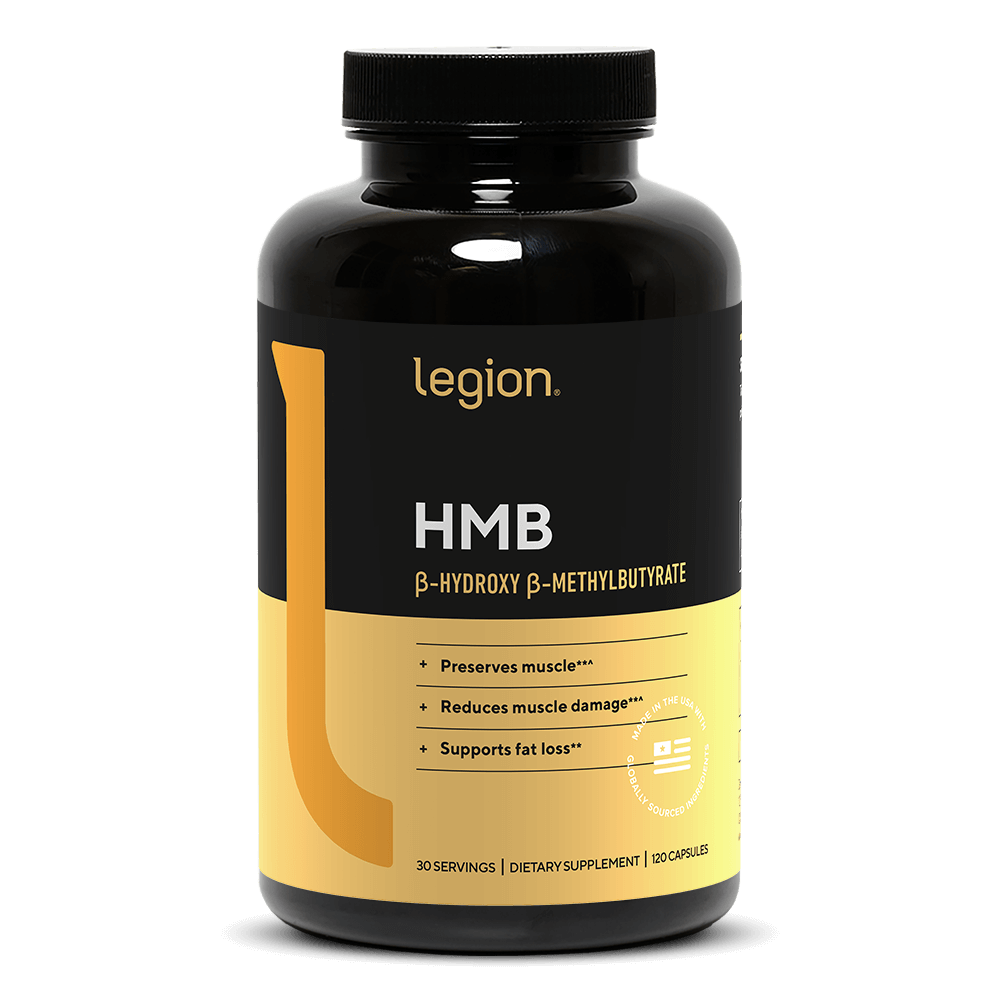
If your goal is preserving muscle mass during calorie restriction, aging, or periods of inactivity, **HMB** (beta-hydroxy beta-methylbutyrate) at 1,000mg per 2-capsule serving is designed for exactly that. However, the clinical dose used in most research is 1.5–3g per day, meaning one serving gets you to only about one-third to two-thirds of the studied range.
To reach the standard 3g research dose, you'd need to take 6 capsules daily — three servings — which means the 120-serving container would last just 40 days. At 2 capsules, you're below the threshold where most studies show significant anti-catabolic effects.
If you're supplementing HMB to protect against muscle loss, getting to at least 1.5g daily (3 capsules) is the minimum to align with clinical evidence. The product gives you the flexibility to scale your dose, but the label's suggested 2-capsule serving undershoots the research.
BioStacks
Other Ingredients (3)
Magnesium StearateLubricant
A salt of stearic acid used as a lubricant in tablet and capsule production
Capsule ShellCapsule
Generic capsule shell where the label does not specify the material. Common materials are hypromellose (HPMC) for vegetarian capsules and gelatin for traditional capsules — both are GRAS-listed and safe. Fish gelatin and pullulan variants also exist.
Microcrystalline CelluloseBinder
Plant-derived cellulose used as a binder and filler in supplements
How to Take It
Take it anytime
Timing doesn't matter for this one — taking it consistently does.
With or without food
On the label
Recommended Use: As a dietary supplement, take 2 capsules daily with 8-12 oz of water or as directed by your healthcare professional.
General guidance based on the ingredients, not a substitute for the label or your doctor.
Price Check
$19.95
Cheaper than 82% of 18 HMB supplements
Track this supplement in your stack
Get personalized insights, interactions, and coverage recommendations.
Get Started FreeSimilar Supplements
Sources & Scoring
Nutrient data (RDA, UL, and safety thresholds) sourced from the NIH Office of Dietary Supplements and the National Academies Dietary Reference Intakes (DRI).
This is not medical advice. Consult a healthcare provider before making changes to your supplement routine.
The score analyzes what's on the label: ingredient doses vs. studied ranges, chemical forms, evidence levels, and known interactions. It does not verify label accuracy or test for contaminants — for that, look for third-party certifications like USP or NSF.