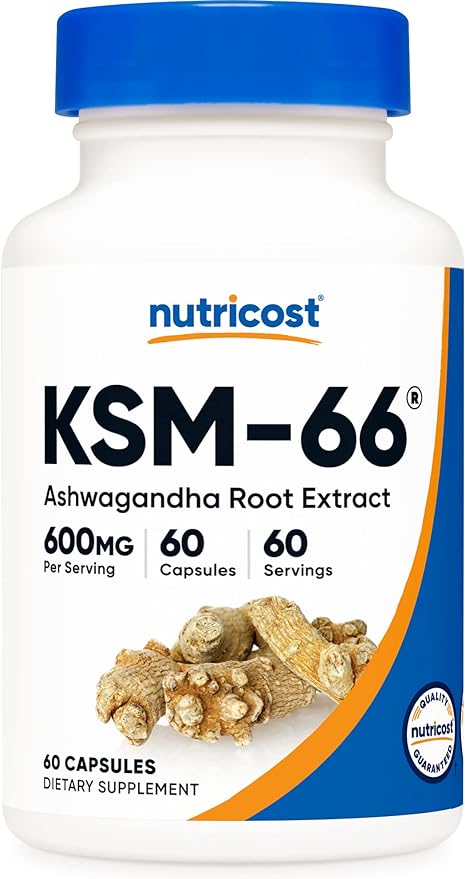
For stress relief and cortisol management, this delivers 600mg of **KSM-66 Ashwagandha** per capsule — hitting the top of the 300–600mg clinical range used in research. KSM-66 is the most studied branded ashwagandha extract, standardized to a minimum 5% withanolides, and multiple RCTs show it can reduce your perceived stress and lower cortisol levels within 8 weeks.
The formula includes 5mg of **BioPerine** (black pepper extract) to support absorption. The single-capsule serving keeps things simple, and the 60-capsule count gives you a full two-month supply at one per day.
One thing to keep in mind: ashwagandha may interact with thyroid medications and is not recommended during pregnancy. If you're taking it for sleep support, some studies used doses split between morning and evening, so a single 600mg dose may work differently than two 300mg doses spread throughout your day.
BioStacks
Best for
Ingredients (2)
Organic KSM-66 Ashwagandha Extract
100%Dose
600 mg
Target
300–600 mg
Form
Premium
BioPerine Black Pepper Extract
100%Dose
5 mg
Target
5–20 mg
Form
—
Other Ingredients (4)
Magnesium StearateLubricant
A salt of stearic acid used as a lubricant in tablet and capsule production
Silicon DioxideAnti-caking
Fine silica powder used to prevent clumping
HypromelloseCapsule
Plant-derived capsule material from cellulose
StarchBinder
Carbohydrate polymer used as a binder, filler, and disintegrant in tablets and capsules
How to Take It
Best taken in the evening
KSM-66 is root-only and less sedating than Sensoril. Trials have dosed it both morning and evening, so either works — take it with food.
With food
General guidance based on the ingredients, not a substitute for the label or your doctor.
Price Check
$14.95
Cheaper than 78% of 146 ashwagandha supplements
Track this supplement in your stack
Get personalized insights, interactions, and coverage recommendations.
Get Started FreeSimilar Supplements
Sources & Scoring
Nutrient data (RDA, UL, and safety thresholds) sourced from the NIH Office of Dietary Supplements and the National Academies Dietary Reference Intakes (DRI).
This is not medical advice. Consult a healthcare provider before making changes to your supplement routine.
The score analyzes what's on the label: ingredient doses vs. studied ranges, chemical forms, evidence levels, and known interactions. It does not verify label accuracy or test for contaminants — for that, look for third-party certifications like USP or NSF.