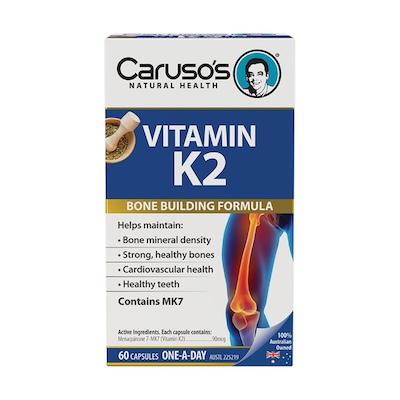
**Vitamin K2** at 100 mcg in the MK-7 form — the version your body retains for days rather than hours, which makes it effective for long-term bone and cardiovascular support at lower doses. This sits right at the bottom of the studied range (100–200 mcg), so you're getting a functional dose for directing calcium into your bones and teeth instead of letting it accumulate in arteries.
The softgel format pairs the vitamin with sunflower seed oil, which helps absorption since K2 is fat-soluble. With 240 softgels in the bottle at one per day, you're looking at an 8-month supply — practical if you plan to take it consistently, which matters for K2 since the bone-density benefits build over months.
If you're specifically targeting bone density or pairing this with a calcium supplement, you may want to take two softgels to reach 200 mcg — the upper end of the clinical range where more of the bone health research sits. At one softgel, you're covered for maintenance but not at the stronger studied dose.
BioStacks
Best for
Ingredients (1)
Vitamin K
100%Dose
100 mcg
Target
90–200 mcg
Form
Premium
Other Ingredients (5)
Caramel ColorColor
Class III and IV caramel colors contain 4-methylimidazole (4-MEI), classified by IARC as Group 2B (possibly carcinogenic to humans) in 2011 (Monograph Vol. 101). California Prop 65 lists 4-MEI as a known carcinogen; products delivering >29 mcg/day require a cancer warning label. NTP TR-535 (2007) found 4-MEI caused lung tumors in mice. Major cola brands (Coca-Cola, Pepsi) voluntarily reformulated 2012-2014 to reduce 4-MEI below California thresholds. Because labels never specify Class I (sugar + heat only, safer) vs Class III/IV (ammonia-process, contains 4-MEI), consumers cannot verify which they're consuming. Combined with the additive's purely cosmetic purpose, the risk:benefit ratio is unfavorable for any supplement.
GelatinCapsule
Protein derived from collagen, used in traditional capsule shells
GlycerinHumectant
Sweet-tasting liquid used in soft capsules and liquids
Sunflower Seed OilCarrier
Common vegetable oil from sunflower seeds used as a carrier in softgels for fat-soluble nutrients
Purified WaterSolvent
Water meeting USP specifications used as solvent/vehicle in gummies and liquids
How to Take It
Take it anytime
Fat-soluble — take with a meal containing fat for better absorption. Time of day doesn't matter.
With a meal containing fat
On the label
Recommended Use: As a dietary supplement, take 1 softgel daily with 8-12 oz of water or as directed by your healthcare professional.
General guidance based on the ingredients, not a substitute for the label or your doctor.
Price Check
$17.95
Near the median of 144 vitamin K supplements
Track this supplement in your stack
Get personalized insights, interactions, and coverage recommendations.
Get Started FreeSimilar Supplements
Sources & Scoring
Nutrient data (RDA, UL, and safety thresholds) sourced from the NIH Office of Dietary Supplements and the National Academies Dietary Reference Intakes (DRI).
This is not medical advice. Consult a healthcare provider before making changes to your supplement routine.
The score analyzes what's on the label: ingredient doses vs. studied ranges, chemical forms, evidence levels, and known interactions. It does not verify label accuracy or test for contaminants — for that, look for third-party certifications like USP or NSF.