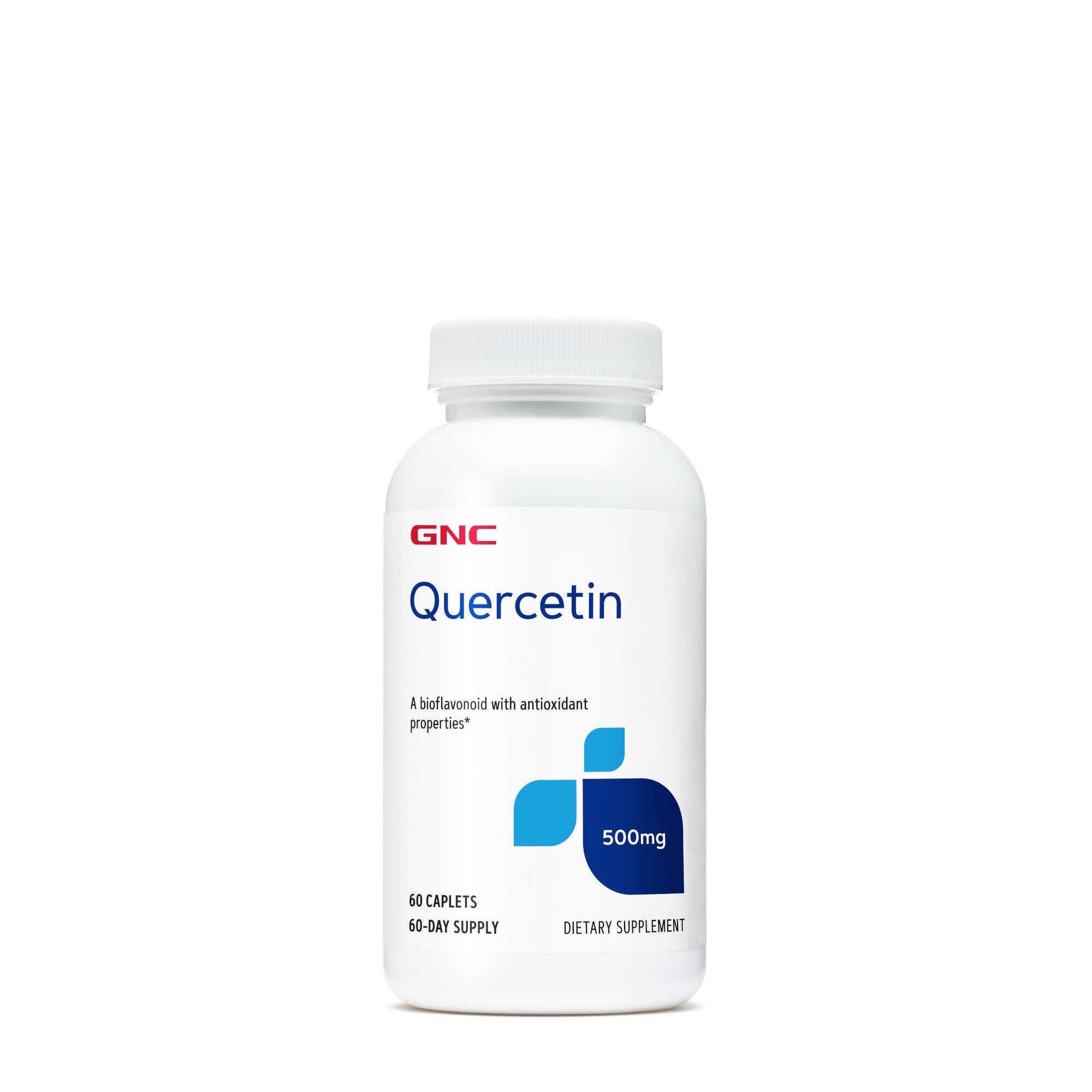
At 500mg per capsule, this **Quercetin** lands right at the bottom of the studied range (500–1,000mg/day), so a single daily VegCap reaches the minimum effective dose used in research for inflammation and allergy support. Quercetin acts as a natural antihistamine by stabilizing the mast cells that release histamine, and meta-analyses show it lowers inflammatory markers like CRP and IL-6 at 500mg and up.
The catch is absorption: plain quercetin is poorly absorbed on its own. Forms paired with bromelain or vitamin C, or sold as a phytosome, get considerably more into your bloodstream — so taking this with a meal containing some fat or vitamin C helps you get more from each capsule.
For everyday allergy and antioxidant support you're covered at one capsule a day. If you're targeting blood pressure or stronger anti-inflammatory effects, the research leans toward the upper half of the range, which would mean two capsules.
BioStacks
Other Ingredients (3)
Silicon DioxideAnti-caking
Fine silica powder used to prevent clumping
Microcrystalline CelluloseBinder
Plant-derived cellulose used as a binder and filler in supplements
Stearic AcidLubricant
Saturated fatty acid used as tablet lubricant
How to Take It
Take it anytime
Poorly absorbed on its own — take with a fat-containing meal.
With a meal containing fat
On the label
Directions: Use only as directed. Take 1 VegCap daily with a meal or glass of water.
General guidance based on the ingredients, not a substitute for the label or your doctor.
Price Check
$28.39
Near the median of 71 quercetin supplements
Track this supplement in your stack
Get personalized insights, interactions, and coverage recommendations.
Get Started FreeSimilar Supplements
Sources & Scoring
Nutrient data (RDA, UL, and safety thresholds) sourced from the NIH Office of Dietary Supplements and the National Academies Dietary Reference Intakes (DRI).
This is not medical advice. Consult a healthcare provider before making changes to your supplement routine.
The score analyzes what's on the label: ingredient doses vs. studied ranges, chemical forms, evidence levels, and known interactions. It does not verify label accuracy or test for contaminants — for that, look for third-party certifications like USP or NSF.