BioStacks
Best for
Ingredients (16)
Pantothenic Acid
50%Dose
25 mg
Target
50–500 mg
Form
—
Biotin
5%Dose
50 mcg
Target
1000–5000 mcg
Form
—
Vitamin C
100%Dose
500 mg
Target
25–200 mg
Form
Not listed
Riboflavin
20%Dose
5 mg
Target
25–100 mg
Form
Budget
Vitamin A
100%Dose
750 mcg RAE
Target
700–1500 mcg
Form
Not listed
Other Ingredients (20)
Aloe Vera Leaf JuiceFood
Juice from the inner leaf (fillet) of Aloe barbadensis; decolorized/purified for oral use.
BiotinFood
Vitamin B7, a water-soluble B-vitamin.
Borage (Starflower) OilOil
Oil from borage/starflower seeds, a source of the omega-6 GLA; here appears as an oil-base other-ingredient.
Copper CitrateMineral Source
A citrate salt of copper used as a copper source.
Grape Seed Extract (base)Botanical
Polyphenol-rich grape seed extract; here listed on the other-ingredients line
Fruit Juice (unspecified)Colorant
Juice or juice concentrate used primarily for natural color and flavor in gummies
Magnesium StearateLubricant
A salt of stearic acid used as a lubricant in tablet and capsule production
Silicon DioxideAnti-caking
Fine silica powder used to prevent clumping
How to Take It
Check the label before you take this
This product combines a stimulant with a sleep-supporting ingredient, so there's no single good time to take it. Follow the label and keep it well away from bedtime.
With a meal containing fat
Keep it away from iron-rich meals
Space it a couple of hours from Iron and Calcium
On the label
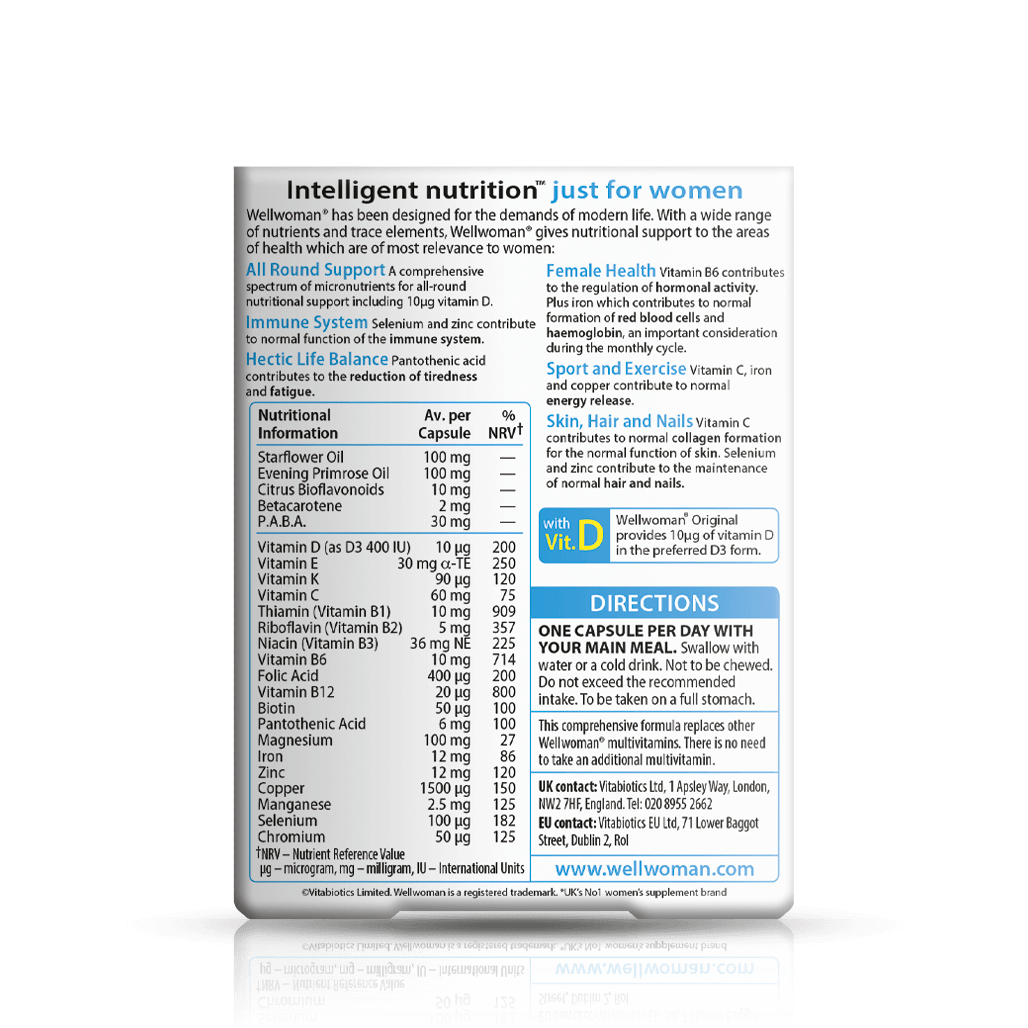
Adults and children 13 and over take two capsules a day with meals. Do not exceed recommended daily intake.
General guidance based on the ingredients, not a substitute for the label or your doctor.
Price Check
No price yet
What 798 multivitamins cost
Track this supplement in your stack
Get personalized insights, interactions, and coverage recommendations.
Get Started FreeSimilar Supplements
Sources & Scoring
Nutrient data (RDA, UL, and safety thresholds) sourced from the NIH Office of Dietary Supplements and the National Academies Dietary Reference Intakes (DRI).
This is not medical advice. Consult a healthcare provider before making changes to your supplement routine.
The score analyzes what's on the label: ingredient doses vs. studied ranges, chemical forms, evidence levels, and known interactions. It does not verify label accuracy or test for contaminants — for that, look for third-party certifications like USP or NSF.