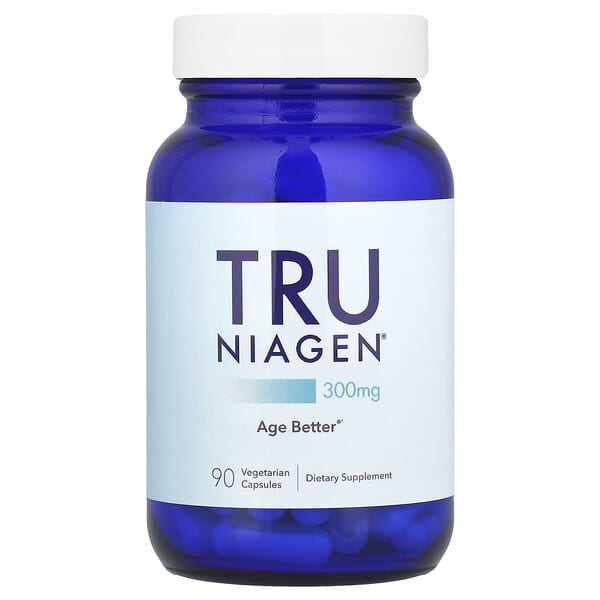
This product targets cellular aging by supplying 300mg of **Nicotinamide Riboside** (NIAGEN), an NAD+ precursor that helps your body replenish the coenzyme responsible for energy metabolism, DNA repair, and sirtuin activation. At 300mg, you're above the 250mg minimum studied in humans.
NAD+ levels naturally decline as you age — research estimates roughly a 40% drop between ages 30 and 70. NR has been shown to dose-dependently raise NAD+ blood levels, and 300mg daily has demonstrated measurable increases in clinical studies.
The caveat is that most rigorous clinical trials used 1,000mg daily (often split into two doses). At 300mg, you're getting a meaningful but lower-end dose. If you're looking for the full research-backed protocol, you'd need to take more than one capsule — which makes this a 30-day supply turn into 10 days or less.
BioStacksAsk AI about this product
What it does
The product name and ingredient list do not agree; purpose cannot be confirmed.
NAD+ Precursor (NR)
niagenPremium
Label lists NIAGEN Nicotinamide Riboside (300 mg). Benefit information is limited.
Ingredients (1)
Other ingredients
Silicon DioxideAnti-caking
Fine silica powder used to prevent clumping
Vegetable StearateLubricant
A plant-derived salt of stearic acid (typically magnesium or calcium) used as a tablet lubricant
Microcrystalline CelluloseBinder
Plant-derived cellulose used as a binder and filler in supplements
Microcrystalline CelluloseBinder
Plant-derived cellulose used as a binder and filler in supplements
Lab testing
How to take it
With or without food
On the label
Read the entire label and follow the directions carefully prior to use. Directions: Take one (1) capsule daily, or as recommended by a healthcare practitioner.
Price check
$40.50
Cheaper than 75% of 17 NAD+ precursor (NR) supplements
Similar products

Sources & Scoring
Nutrient data (RDA, UL, and safety thresholds) sourced from the NIH Office of Dietary Supplements and the National Academies Dietary Reference Intakes (DRI).
This is not medical advice. Consult a healthcare provider before making changes to your supplement routine.
The score analyzes what's on the label: ingredient doses vs. studied ranges, chemical forms, evidence levels, and known interactions. It does not verify label accuracy or test for contaminants — for that, look for third-party certifications like USP or NSF.
Not medical advice. Consult your healthcare professional.