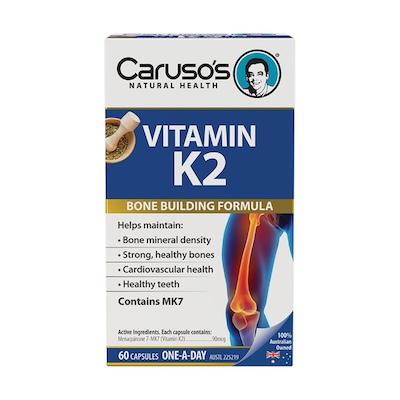
**Vitamin K2** at 100 mcg per capsule, using MenaQ7 — a patented MK-7 form with a half-life of roughly 96 hours. That long half-life means a single daily capsule keeps your levels steady, which is what makes MK-7 the preferred form for directing calcium into your bones and teeth instead of letting it accumulate in arteries.
100 mcg lands right at the low end of the studied range (90–200 mcg), so you're getting a clinically relevant dose for bone density support. If you're pairing this with a calcium or **vitamin D3** supplement, the K2 helps ensure that calcium goes where it should — a combination backed by solid clinical evidence.
At the higher end of the research, 180–200 mcg showed stronger effects on bone mineral density and arterial flexibility. If bone health is your primary goal, you could take two capsules daily to reach 200 mcg — the 120-count bottle gives you flexibility to adjust.
BioStacks
Best for
Ingredients (1)
Vitamin K2
100%Dose
100 mcg
Target
90–200 mcg
Form
Premium
Other Ingredients (4)
Rice FlourFiller
Rice-based ingredients carry risk of inorganic arsenic contamination (FDA and Consumer Reports). Rice accumulates arsenic from soil at higher rates than other grains. Used as a cheap filler — adds nothing beneficial.
Silicon DioxideAnti-caking
Fine silica powder used to prevent clumping
Ascorbyl PalmitateAntioxidant
Fat-soluble form of vitamin C used as preservative
HypromelloseCapsule
Plant-derived capsule material from cellulose
How to Take It
Take it anytime
Fat-soluble — take with a meal containing fat for better absorption. Time of day doesn't matter.
With a meal containing fat
On the label
Suggested Usage: Take 1 capsule daily with a meal.
General guidance based on the ingredients, not a substitute for the label or your doctor.
Price Check
$24.48
Near the median of 144 vitamin K supplements
Track this supplement in your stack
Get personalized insights, interactions, and coverage recommendations.
Get Started FreeSimilar Supplements
Sources & Scoring
Nutrient data (RDA, UL, and safety thresholds) sourced from the NIH Office of Dietary Supplements and the National Academies Dietary Reference Intakes (DRI).
This is not medical advice. Consult a healthcare provider before making changes to your supplement routine.
The score analyzes what's on the label: ingredient doses vs. studied ranges, chemical forms, evidence levels, and known interactions. It does not verify label accuracy or test for contaminants — for that, look for third-party certifications like USP or NSF.