BioStacksAsk AI about this product
What it does
A combination of 25 label ingredients.
Carnitine
Form not confirmedGrade —
Helps transport fats for normal energy production; extra carnitine does not reliably improve exercise performance.
Choline Bitartrate
Form not confirmedGrade —
Supports normal cell membranes and nerve signaling; extra choline does not automatically improve memory.
Ingredients (25)
Other ingredients
Magnesium StearateLubricant
A salt of stearic acid used as a lubricant in tablet and capsule production
Fruit Juice (unspecified)Colorant
Juice or juice concentrate used primarily for natural color and flavor in gummies
Silicon DioxideAnti-caking
Fine silica powder used to prevent clumping
Coating (unspecified)Coating
Generic tablet coating declaration where the label does not itemize the coating's components; modern aqueous film coatings are typically cellulose-based (HPMC) with a plasticizer
Microcrystalline CelluloseBinder
Plant-derived cellulose used as a binder and filler in supplements
StarchBinder
Carbohydrate polymer used as a binder, filler, and disintegrant in tablets and capsules
Microcrystalline CelluloseBinder
Plant-derived cellulose used as a binder and filler in supplements
CrospovidoneDisintegrant
Cross-linked synthetic polymer used as a tablet disintegrant to help tablets break apart quickly in the stomach
Lab testing
How to take it
With a meal containing fat
Keep it away from coffee, tea and dairy
Space it a couple of hours from Calcium, Magnesium and Green Tea Leaf Extract
On the label
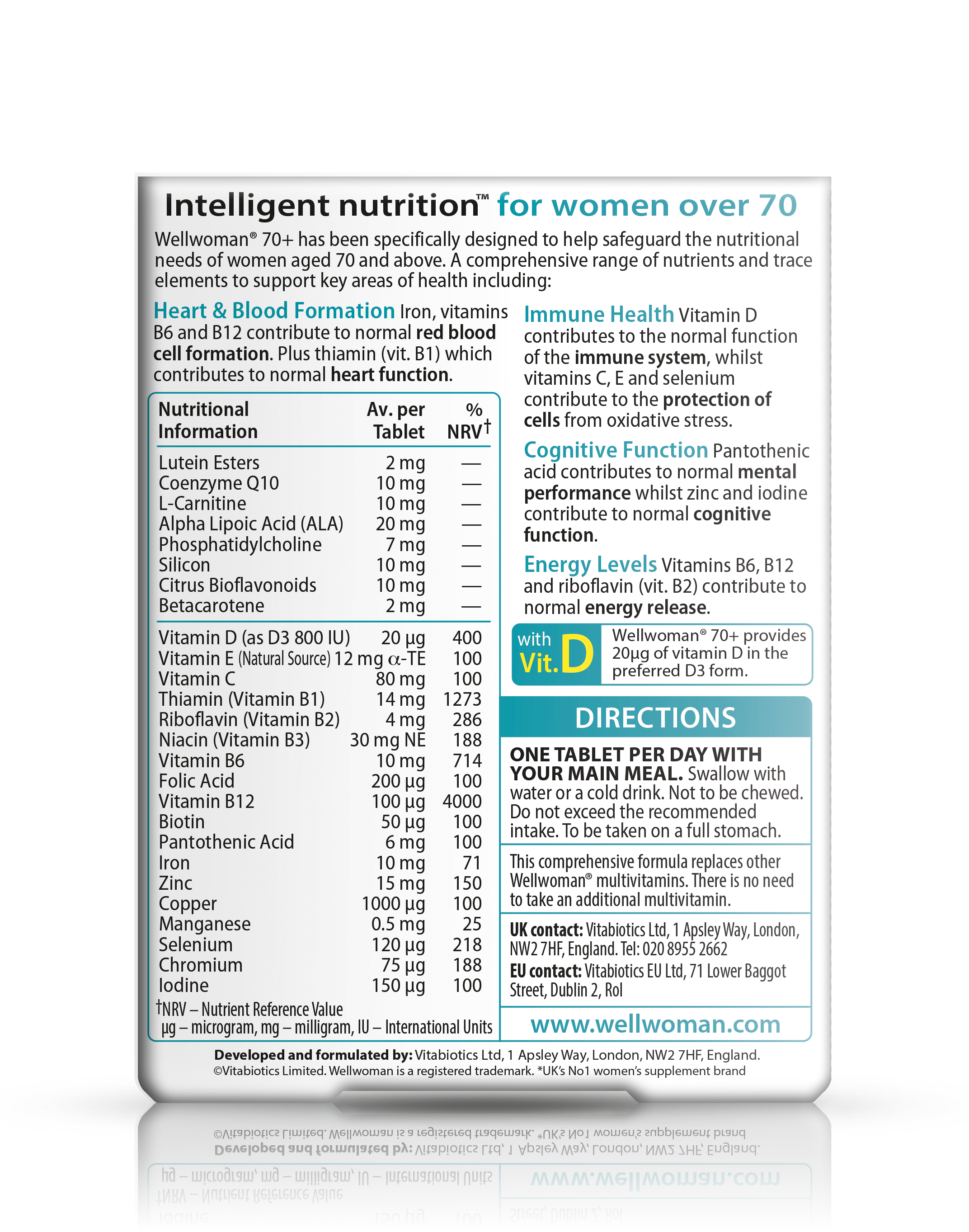
TWO TABLETS PER DAY WITH YOUR MAIN MEAL. Swallow with water or a cold drink. Not to be chewed. Do not exceed the recommended intake. Liverel® should only be taken on a full stomach. Liverel® can be continued for as long as required. There is no need to take an additional multivitamin with this comprehensive formula. Suitable for vegetarians No preservatives or artificial colours No yeast or lactose Gluten free Liverel is not tested on animals
Price check
£17.35≈ $22.03 USD
£0.58 / serving
Near the median of 798 multivitamins
Similar products
Sources & Scoring
Nutrient data (RDA, UL, and safety thresholds) sourced from the NIH Office of Dietary Supplements and the National Academies Dietary Reference Intakes (DRI).
This is not medical advice. Consult a healthcare provider before making changes to your supplement routine.
The score analyzes what's on the label: ingredient doses vs. studied ranges, chemical forms, evidence levels, and known interactions. It does not verify label accuracy or test for contaminants — for that, look for third-party certifications like USP or NSF.
Not medical advice. Consult your healthcare professional.