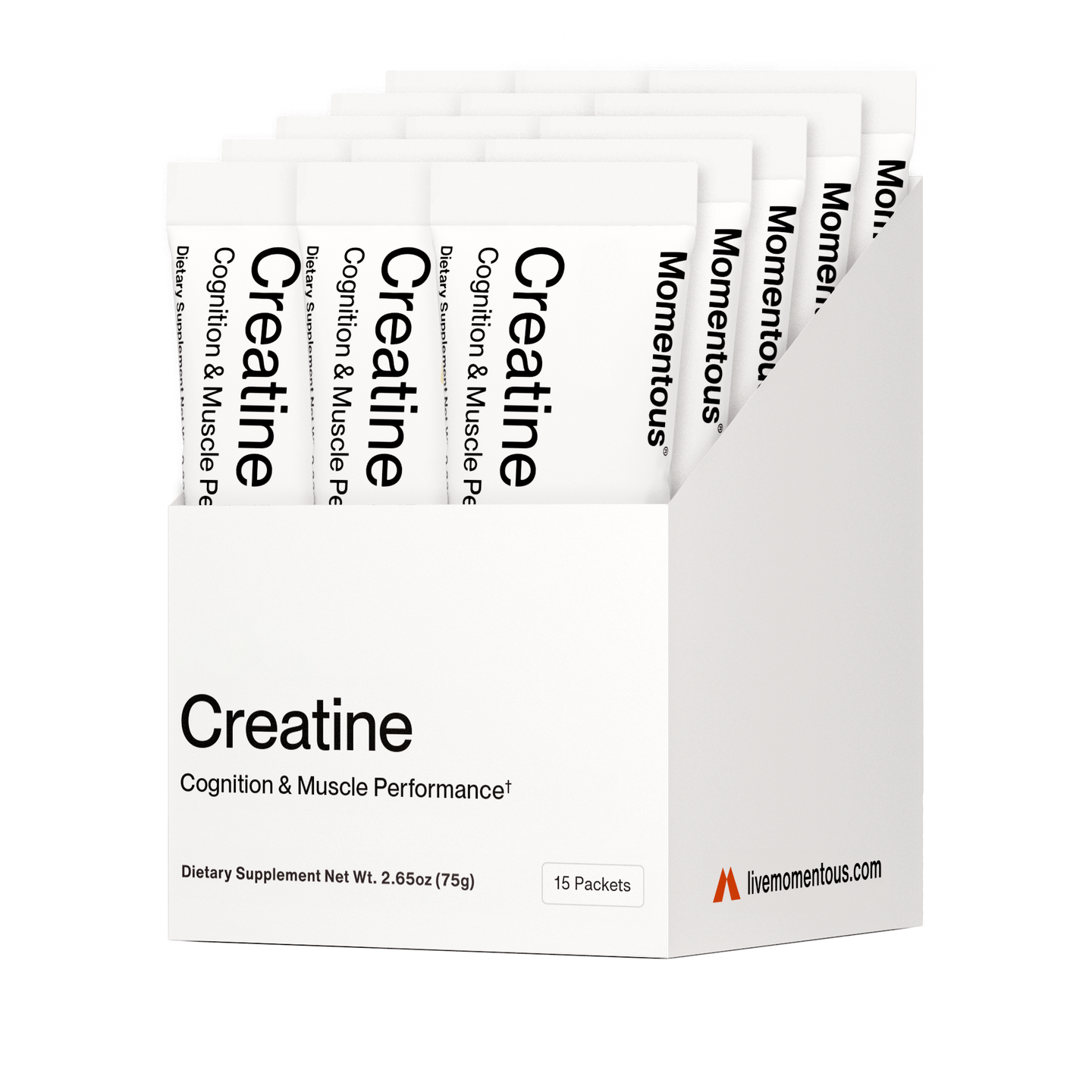
This creatine powder delivers a full 5g of **Creatine Monohydrate** per scoop — the gold-standard daily dose for building strength, power, and high-intensity output. That sits at the top of the clinically studied 3–5g range, so a single scoop covers your training needs with no need to stack servings. Monohydrate is the most-researched form there is, backed by hundreds of trials, and newer 'premium' versions haven't beaten it in head-to-head studies.
Beyond the gym, creatine has growing research for mental energy and focus, though most brain studies use around 10g daily — double what one scoop provides. At 5g you're fully covered for muscle and performance but may fall short for cognition-specific goals; the label's loading protocol (two scoops daily for the first week) is the only point you'd reach that higher intake. There's nothing else in the formula, so it mixes into water or juice and keeps daily dosing simple.
BioStacks
Ingredients (1)
CreaSyn
100%Dose
5 Gram(s)
Target
3–5 g
Form
Premium
Other Ingredients
No other ingredients listed
How to Take It
Take it anytime
Timing is irrelevant — total daily intake and consistency are all that matter.
With or without food
On the label
Suggested use: Take daily with water or juice upon waking and post-workout, or on non-training days, after a meal. Loading phase - 1 scoop twice daily (total of 10 g/ day) for 5-7 days. Maintain phase- 1 scoop daily (total of 5 g/day). Cycling protocol: 8 weeks on, 2 weeks off. Repeat.
General guidance based on the ingredients, not a substitute for the label or your doctor.
Price Check
$29.99
Near the median of 155 creatine monohydrate supplements
Track this supplement in your stack
Get personalized insights, interactions, and coverage recommendations.
Get Started FreeSimilar Supplements
Sources & Scoring
Nutrient data (RDA, UL, and safety thresholds) sourced from the NIH Office of Dietary Supplements and the National Academies Dietary Reference Intakes (DRI).
This is not medical advice. Consult a healthcare provider before making changes to your supplement routine.
The score analyzes what's on the label: ingredient doses vs. studied ranges, chemical forms, evidence levels, and known interactions. It does not verify label accuracy or test for contaminants — for that, look for third-party certifications like USP or NSF.