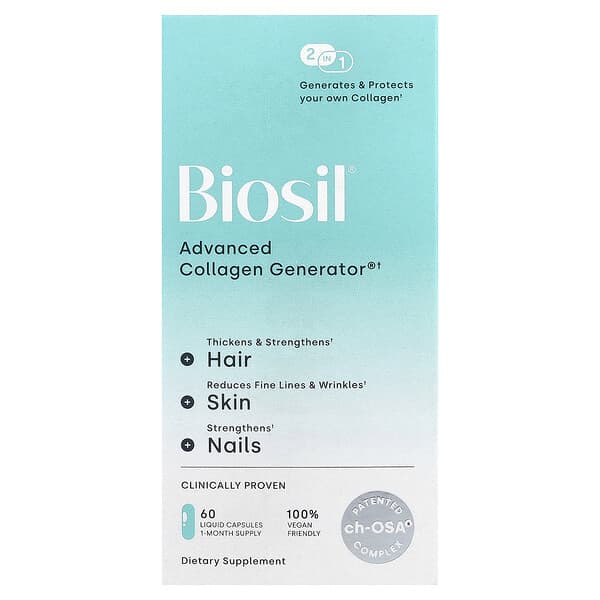
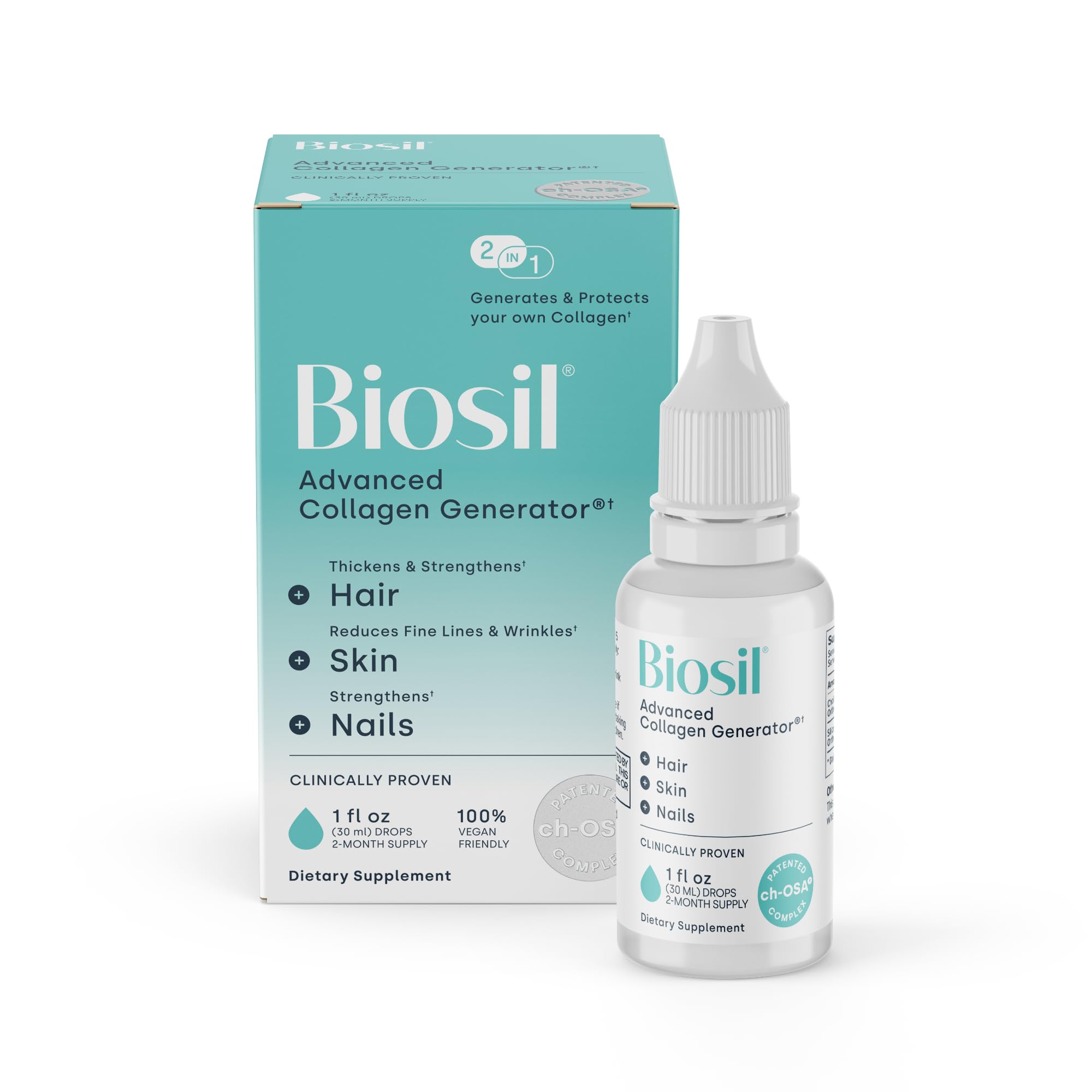
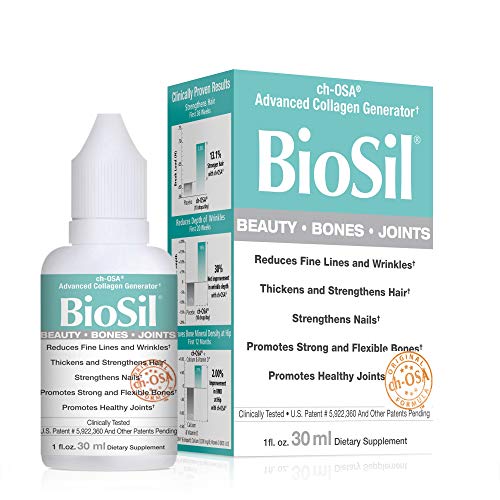
This BioSil liquid delivers 6mg of **Silicon** (as ch-OSA) to support your body's own collagen for hair, skin, and nails — a well-absorbed form, but at a dose near the low end of the studied range. Despite the "Collagen Generator" name, there's no collagen in the bottle: silicon is a trace mineral your body uses to build and cross-link its own collagen, which is why the form matters here. ch-OSA absorbs at roughly 50%, much higher than most dietary or plant-based silica, so the small amount you take actually reaches your tissues.
The other ingredient, **Choline**, isn't just along for the ride — it's what stabilizes the orthosilicic acid and keeps it absorbable. You're also getting 120mg of choline per serving, a meaningful amount that supports liver function and fat metabolism. The liquid format (6 drops) makes it easy to take or add to water.
The main thing to weigh is the dose. At 6mg of silicon you clear the general supportive threshold, but the ch-OSA trials behind the hair-thickness and skin-elasticity results used about 10mg of silicon daily — so the label serving gives you roughly 60% of that studied amount. If hair and skin are your primary goals, you're in supportive territory but below the dose those studies used to show measurable change.
BioStacks
Other Ingredients (2)
GlycerinHumectant
Sweet-tasting liquid used in soft capsules and liquids
Purified WaterSolvent
Water meeting USP specifications used as solvent/vehicle in gummies and liquids
How to Take It
Take it anytime
Take with food — higher doses on an empty stomach commonly cause nausea.
With food
On the label
Clinically Proven Directions
General guidance based on the ingredients, not a substitute for the label or your doctor.
Price Check
$33.18
Pricier than 70% of 61 choline supplements
Track this supplement in your stack
Get personalized insights, interactions, and coverage recommendations.
Get Started FreeSimilar Supplements
Sources & Scoring
Nutrient data (RDA, UL, and safety thresholds) sourced from the NIH Office of Dietary Supplements and the National Academies Dietary Reference Intakes (DRI).
This is not medical advice. Consult a healthcare provider before making changes to your supplement routine.
The score analyzes what's on the label: ingredient doses vs. studied ranges, chemical forms, evidence levels, and known interactions. It does not verify label accuracy or test for contaminants — for that, look for third-party certifications like USP or NSF.