BioStacks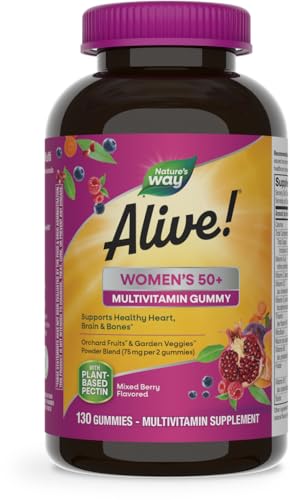
Best for
Ingredients (17)
Vitamin D3
100%Dose
1000 IU
Target
1000–5000 IU
Form
Premium
Biotin
100%Dose
3000 mcg
Target
1000–5000 mcg
Form
—
Vitamin A
100%Dose
1515.2 mcg
Target
700–1500 mcg
Form
Standard
Calcium
100%Dose
200 mg
Target
200–600 mg
Form
Standard
Niacinamide
80%Dose
20 mg
Target
25–500 mg
Form
Standard
Nutrition
Calories, macros & sodium.
- Total Carbohydrates1 Gram(s)
Other Ingredients (22)
BHTPreservative
Potential carcinogen in animal studies; may affect thyroid function; restricted in some countries
Artificial ColorsColorant
May trigger hyperactivity in sensitive children; potential link to allergic reactions
Artificial ColorsColorant
May trigger hyperactivity in sensitive children; potential link to allergic reactions
TalcAnti-caking
IARC classifies cosmetic-grade talc not containing asbestos as Group 2B (possibly carcinogenic to humans); perineal talc use as Group 2A (probably carcinogenic). Johnson & Johnson voluntarily withdrew talc-based baby powder from US/Canada in 2020 and globally in 2022 after extensive litigation tied to ovarian-cancer and mesothelioma cases. The 2018 FDA contamination survey found asbestos in 9 of 52 cosmetic talc products tested. As a supplement excipient talc is a pure manufacturing convenience — no nutritional or functional benefit to the user — so the asbestos-exposure risk has no offsetting upside. Safer alternatives (silicon dioxide, microcrystalline cellulose, rice hulls) are widely available.
Titanium DioxideColorant
Banned in the EU (2022) over concerns that its ultra-fine particles may damage DNA in gut cells. Still allowed in the US. Used only for white coloring — provides no health benefit.
Sodium BenzoatePreservative
Benzene can form in presence of ascorbic acid plus metals/heat/light; may trigger reactions in sensitive individuals
SucroseSweetener
Added sugars and high glycemic load; dental caries risk
Magnesium StearateLubricant
A salt of stearic acid used as a lubricant in tablet and capsule production
How to Take It
Take it anytime
No evidence a formula this broad works better at any particular hour. Take it with a meal containing fat — the vitamins A, D and E in it absorb poorly without one.
With a meal containing fat
Keep it away from high-oxalate foods like spinach
Space it a couple of hours from Iron and Magnesium
General guidance based on the ingredients, not a substitute for the label or your doctor.
Price Check
No price yet
What 798 multivitamins cost
Track this supplement in your stack
Get personalized insights, interactions, and coverage recommendations.
Get Started FreeSimilar Supplements
Nature's Way
Alive! Women's 50+ Gummy Multivitamin
🛡️ for Immune
44
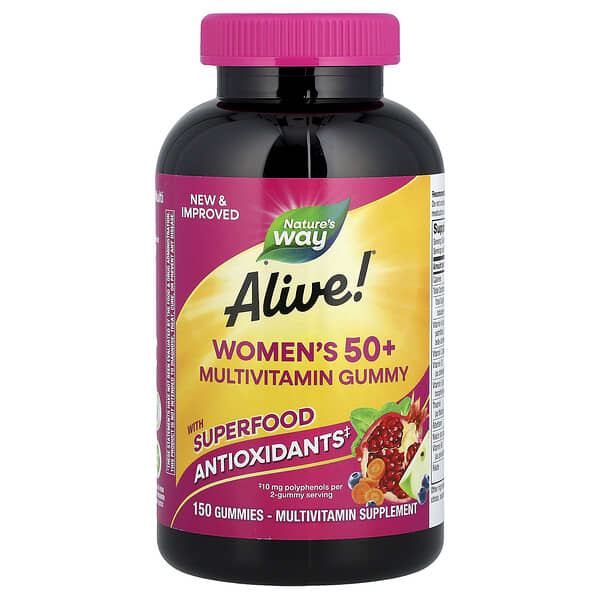
Nature's Way
Alive!® Women's 50+ Multivitamin Gummy, Mixed Berry
🛡️ for Immune
42
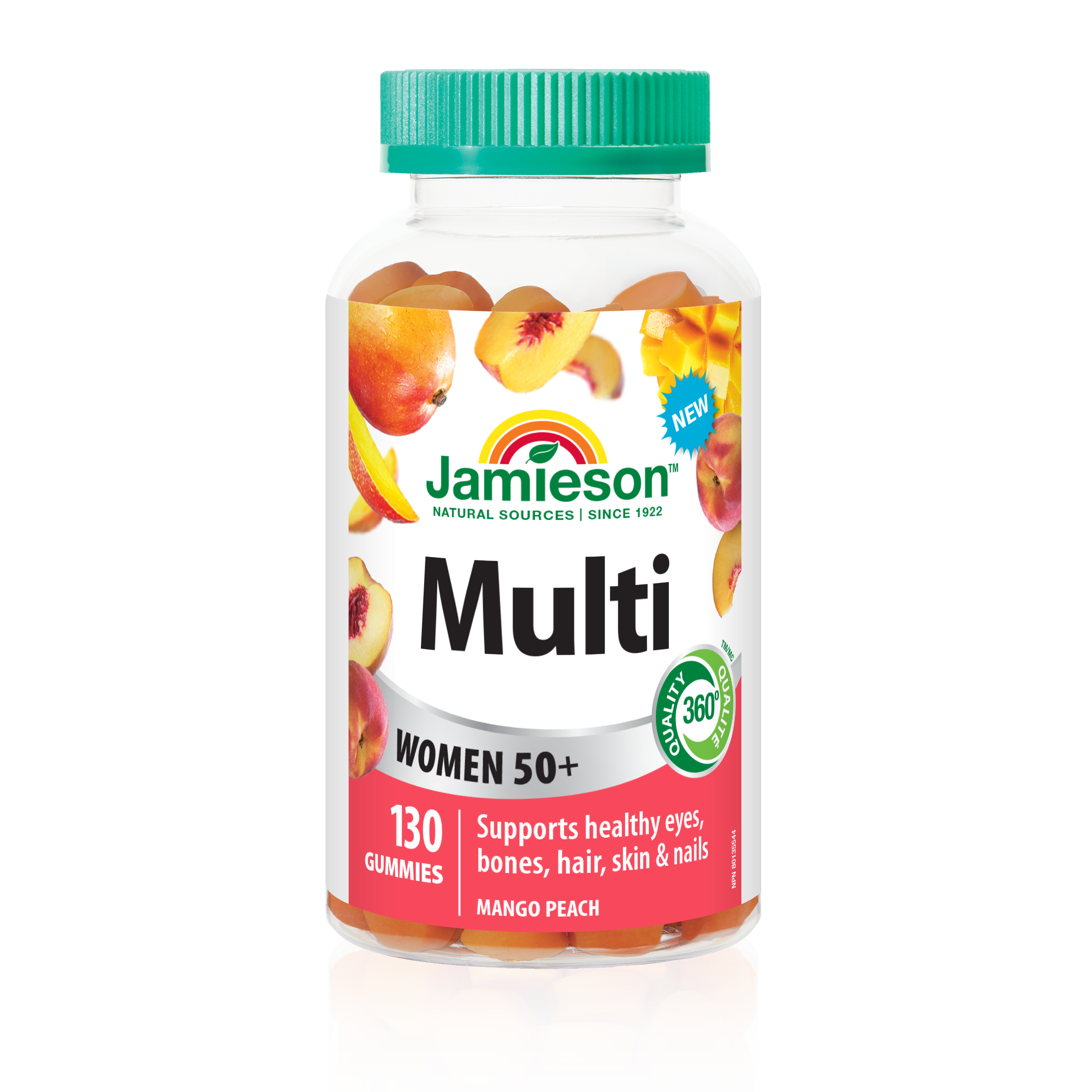
Jamieson
Multivitamin Gummies for Women 50+
🛡️ for Immune
44
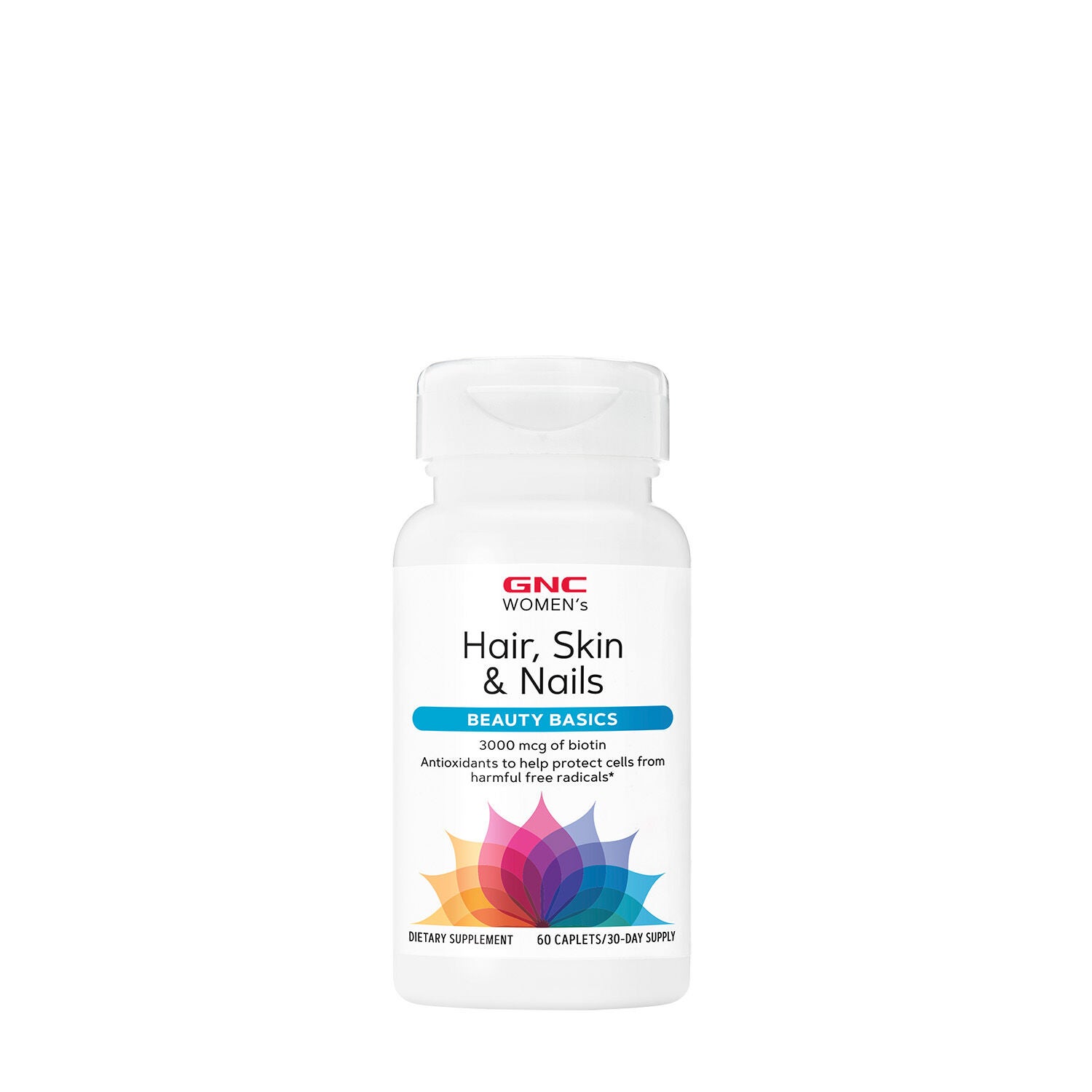
GNC
Women's Hair Skin & Nails Beauty Basics
🦷 for Dental
26
Jamieson
Men's 50+ Multivitamin Gummies
🛡️ for Immune
45
Sources & Scoring
Nutrient data (RDA, UL, and safety thresholds) sourced from the NIH Office of Dietary Supplements and the National Academies Dietary Reference Intakes (DRI).
This is not medical advice. Consult a healthcare provider before making changes to your supplement routine.
The score analyzes what's on the label: ingredient doses vs. studied ranges, chemical forms, evidence levels, and known interactions. It does not verify label accuracy or test for contaminants — for that, look for third-party certifications like USP or NSF.